
Climate Change Measures
◆Promoting CO₂ Emissions Reductions through “Create” and “Utilize” Approach
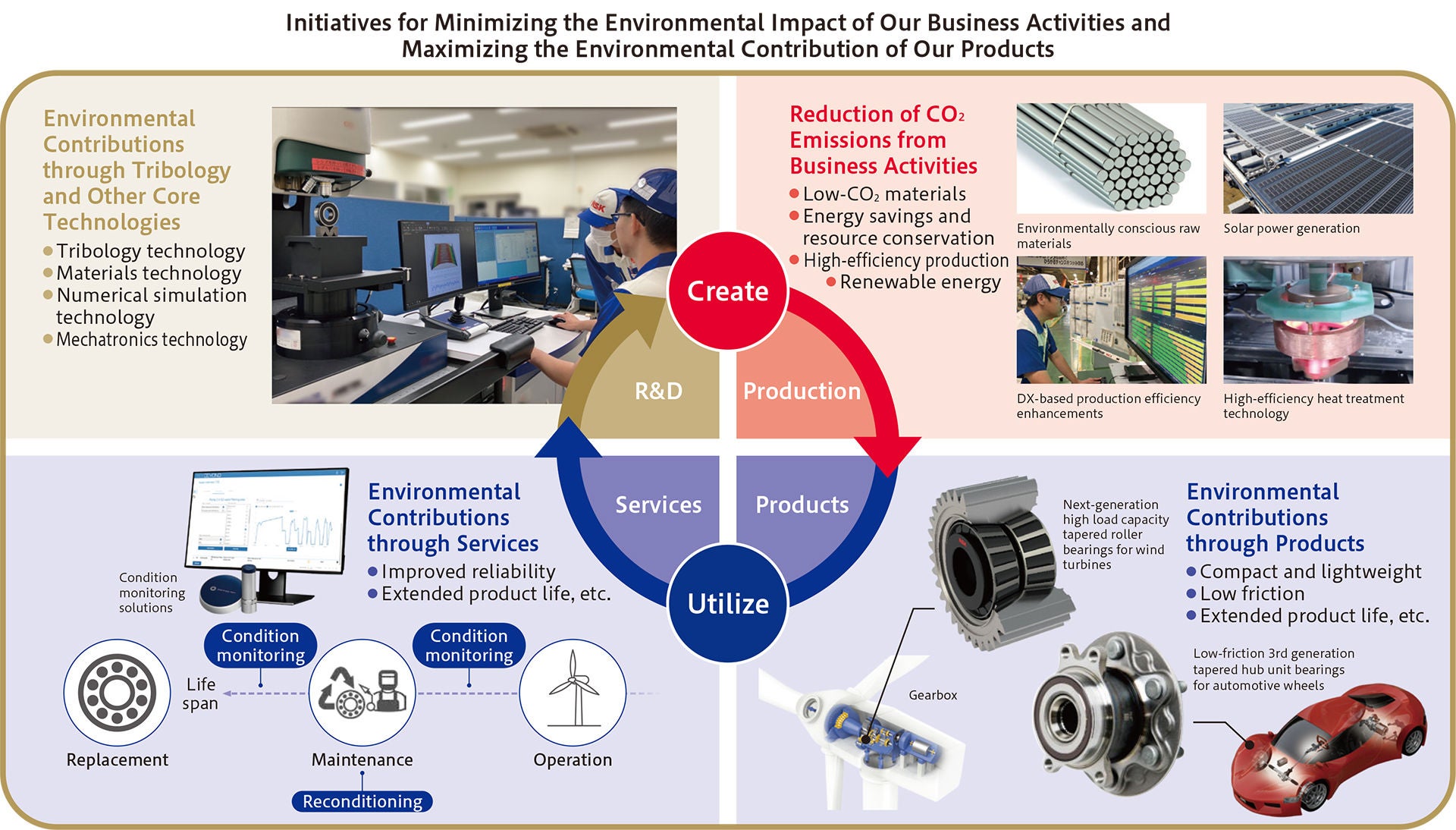
In response to the urgent issue of climate change, NSK contributes to achieving carbon neutrality across the entire supply chain. NSK works to reduce CO2 emissions by lowering energy consumption and taking other measures, not only during the “create” stage, when products are manufactured, but also throughout the entire product life cycle, including the “utilize” stage by customers. Furthermore, the products NSK provides contribute to the efficient use of resources by incorporating the concept of a circular economy. By leveraging its core technologies, honed over more than 100 years since our founding, NSK is dedicated to contributing to the realization of a sustainable society.
For more information, see NSK Report 2025.
1.Create
NSK’s Approach
NSK pursues sustainable business growth while working to reduce energy consumption, its top priority among efforts to achieve carbon neutrality. Under this policy, we promote energy conservation by eliminating inefficiencies, developing and introducing innovative production technologies that improve energy efficiency, and expanding the use of renewable energy.
Targets and Performance
◆Mid-Term Management Plan 2026 (MTP2026) Targets, with Targets and Performance for Each Fiscal Year
| MTP2026 Targets | FY2024 Targets | FY2024 Performance | Initiatives | FY2025 Targets | |
|---|---|---|---|---|---|
| Manufacturing, technology, offices | CO₂ emissions*: 50% reduction from FY2017 | 39% reduction from FY2017 | 55.2% reduction from FY2017 | (1) Promotion of energy savings and fuel conversion
(2) Production technology innovation
(3) Expanded adoption of renewable energy
| 44% reduction from FY2017 |
| Energy usage per unit of sales: 10% reduction from FY2017 | 7.7% reduction from FY2017 | 21.9% reduction from FY2017 | 8.8% reduction from FY2017 | ||
◆ Mechanisms to promote measures
| |||||
* Total greenhouse gas emissions (CO2 equivalent) are obtained by multiplying each type of gas by its global warming coefficient. Emission factors for electricity are variable market standards. These emission factors, which change every year, are published by power companies with which we have contracts, or are given in the International Energy Agency’s CO2 Emissions from Fuel Combustion.
◆CO₂ Reduction Targets and Progress
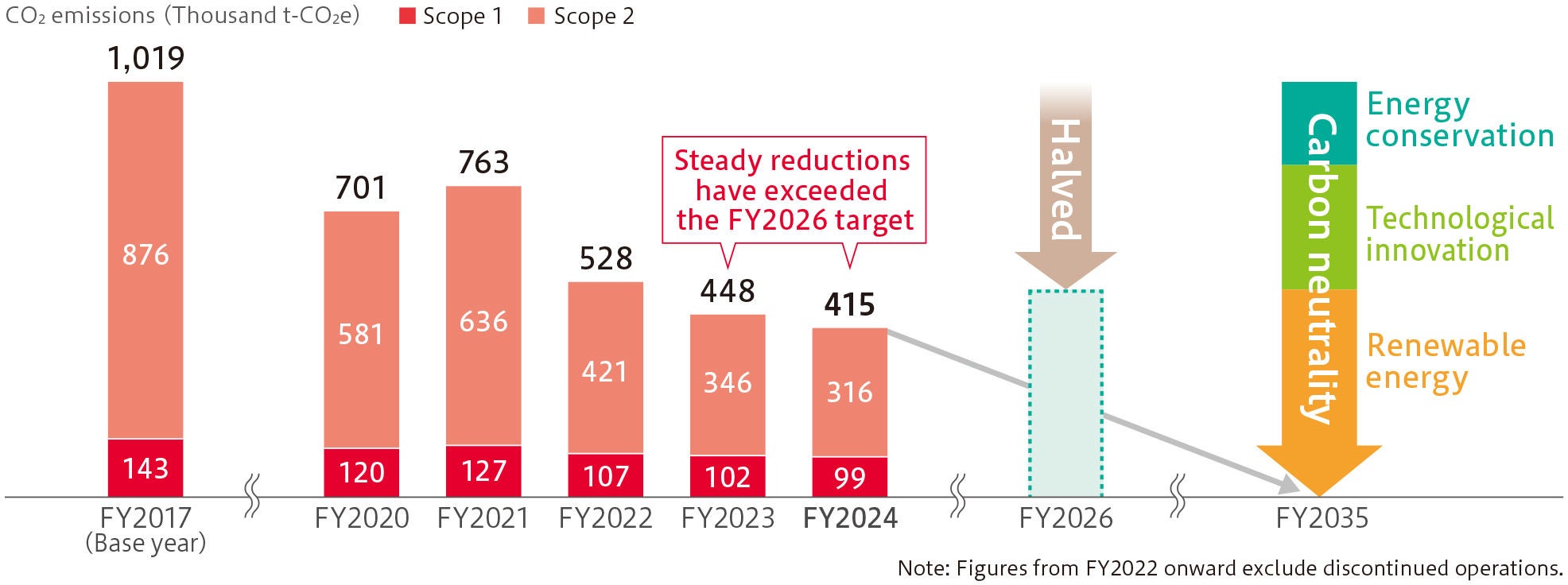
- Aim to reduce Scope 1 and 2 CO2 emissions by 50% by FY2026 from FY2017 levels.
- Aim to achieve carbon neutrality for Scope 1 and 2 by FY2035.
- Aim to reduce Scope 3 CO2 emissions, which include the upstream supply chain, and contribute to the goal set by global society of net zero CO2 emissions by FY2050.
Toward Achieving Carbon Neutrality for Scope 1 and 2 by FY2035
NSK aims to achieve carbon neutrality for Scope 1 and 2 emissions by FY2035, and is working to halve these CO₂ emissions by FY2026 compared to the base year of FY2017 as part of this process. Efforts to minimize environmental impact have progressed smoothly, driving CO2 emissions for FY2024 down to approximately 420,000 tons, thereby achieving the FY2026 target ahead of schedule.
Click here for more details on NSK’s energy consumption, greenhouse gas emissions, and more.
Contribute to the Goal Set by Global Society of Net Zero CO₂ Emissions by 2050
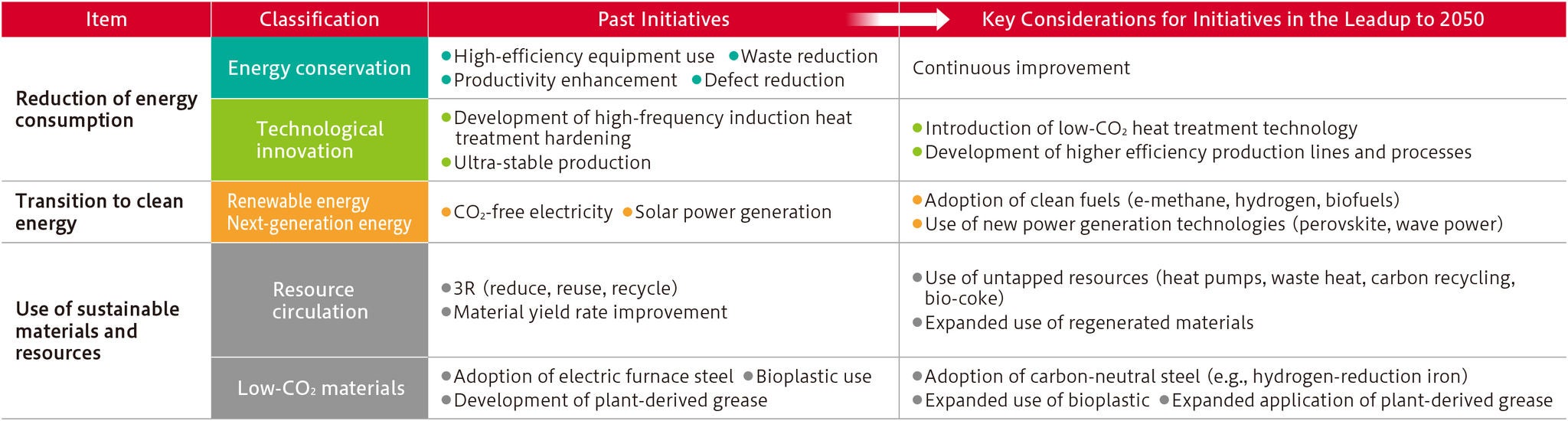
In an effort to achieve a decarbonized society, NSK will increasingly introduce the latest technologies, promote innovative initiatives, and work with suppliers to reduce CO2 emissions throughout the supply chain up to and including Scope 3.
Initiatives
◆Initiatives on “Create” Approach
Energy Reduction
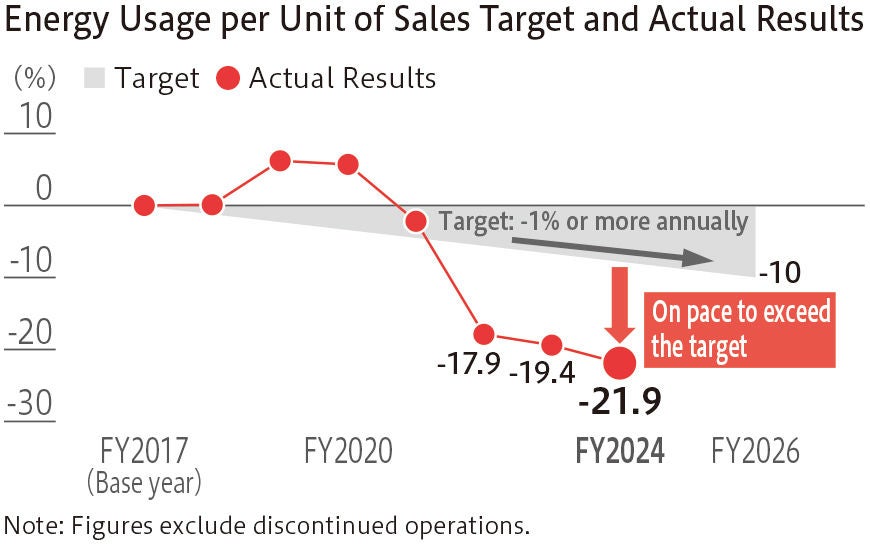
The NSK Group aims to enhance (1) energy conservation and (2) technological innovation initiatives by sharing information across the entire Group and expanding activities at each site to improve energy efficiency and reduce CO2 emissions. We promote ongoing energy conservation activities and the adoption of cutting-edge technology. Since FY2017, we have set an annual target of reducing energy usage per unit of sales by more than 1% each year. As of FY2024, we achieved energy usage per unit of sales of -21.9%, exceeding our target of -7.7%.
(1) Energy Conservation
NSK plants are pursuing more advanced energy management by utilizing digital tools to monitor and analyze the energy consumption of each piece of equipment. Building on this foundation, the plants are deploying energy-saving initiatives such as improving the operational efficiency of production equipment, reducing compressed air consumption, optimizing the number of compressors in operation, and enhancing the energy efficiency of air conditioning systems.
Example Initiatives
Saitama Prefecture is known among Japan’s prefectures for taking active steps to combat global warming, aiming to reduce its CO2 emissions by 46% by FY2030 compared to FY2013. To achieve this, the prefecture requires large-scale business sites to set and work toward emission reduction targets. The Saitama Plant is one of NSK’s largest production sites in terms of CO2 emissions and has actively pursued emission reduction initiatives. One such initiative is the conversion of its air conditioning equipment from gas to electricity. The plant’s newly installed electric air conditioning system is about four times more energy-efficient than the previous gas-powered one, leading to a significant reduction in CO2 emissions. Moreover, the electric system produces no exhaust gases, uses no water, operates stably, and requires less maintenance, thereby reducing the plant’s various environmental impacts.
Maintaining comfortable temperature levels inside large plant buildings during summer and winter is problematic due to the power consumption of air conditioning systems and the resulting CO2 emissions. To address this, the Fukushima Plant is combining inverter-controlled air conditioning with a rooftop thermal insulation coating to improve energy efficiency.
By using inverters to precisely control air conditioning operations based on indoor temperatures, the plant effectively reduces its CO2 emissions. Large air conditioning systems in the plant use five or six motors for ventilation, exhaust, and air circulation. High-precision control of each motor’s rotation speed with inverters helps lower CO2 emissions while maintaining a comfortable work environment. Thermal insulation coatings have been applied to the outer walls, their interior surfaces, and the roof of the plant. These coatings reduce the impact of outside temperatures and intense sunlight. This in turn enhances air conditioning efficiency, keeping the plant cooler in summer and warmer in winter.
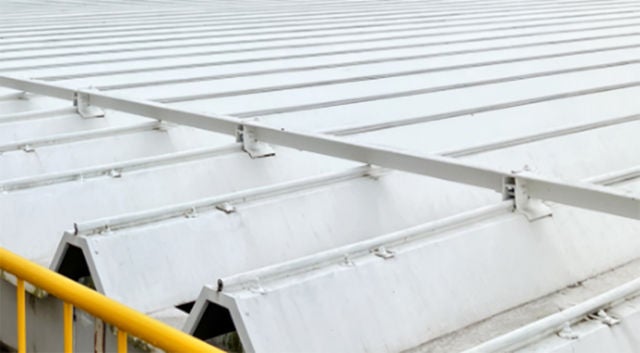
Thermal insulation coating on the roof of the Fukushima Plant
During the heat treatment process, metal components like bearing inner and outer rings are usually heated in a furnace to temperatures above 800℃ to enhance their durability. This requires substantial energy consumption, both electricity and gas. Additionally, radiant heat from the furnaces significantly raises indoor temperatures, posing challenges for improving the workplace environment and reducing air conditioning energy consumption. To address these issues, the Takasaki Plant, Haruna Plant and other plants applied thermal insulation coating to their heat treatment furnaces, minimizing heat loss. This measure not only improved the workplace environment but also enhanced heat treatment efficiency and reduced air conditioning energy consumption, leading to overall energy savings.
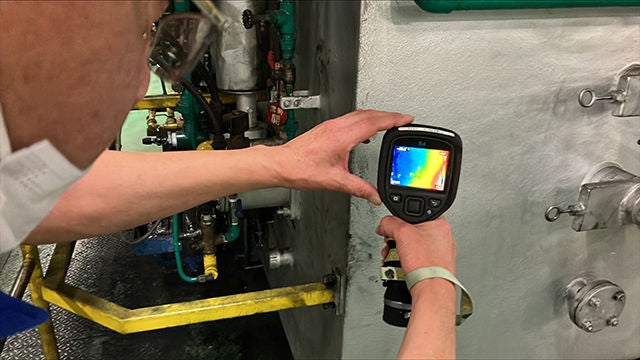
Measuring the surface temperature of a heat treatment furnace (Haruna Plant)
Compressors provide the compressed air necessary for powering production machinery in plants. However, air leaks can occur due to aging pipes and equipment, leading to greater compressor use and wasted electricity. Detecting these leaks is challenging because they are invisible and only produce faint sounds, making it difficult to pinpoint the leak locations. To solve this issue, the Ishibe Plant and other plants now use detection devices that overlay the source of air leak noise on captured images, effectively visualizing leak locations. This technology enables rapid detection of even the smallest leaks within seconds, which were previously undetectable. Since its implementation, the number of detected air leaks doubled in FY2023 compared to FY2021, and the energy-saving effect from repairs tripled, delivering significant results.
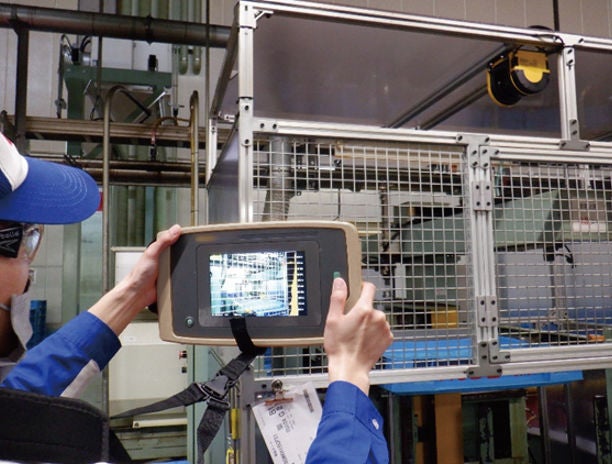
Air leak detection at the Ishibe Plant
(2)Technological Innovation
The NSK Group is reducing Group-wide CO2 emissions by adopting innovative production technologies at its plants worldwide and expanding the range of products for which these technologies are utilized.
Example Initiatives
In an effort to engage in sustainable manufacturing, NSK is working to further stabilize and enhance the efficiency of its manufacturing sites. To this end, we are pursuing innovative initiatives using digital technologies and AI. As a result of our past digital tool development and utilization activities, we are now able to identify the operating status of equipment in real time and analyze abnormalities in detail, which has significantly accelerated the speed of improvement.
In addition to these production visualization and knowledge digitalization efforts, NSK is applying AI to accelerate and enhance status identification and analysis work. These initiatives seek to achieve stable equipment operations and improve the overall efficiency of production lines, thereby contributing to lower environmental impact through waste reduction and optimized energy use.
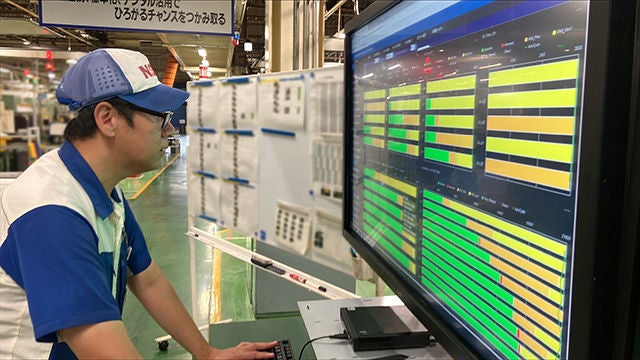
Production visualization (Saitama Plant)
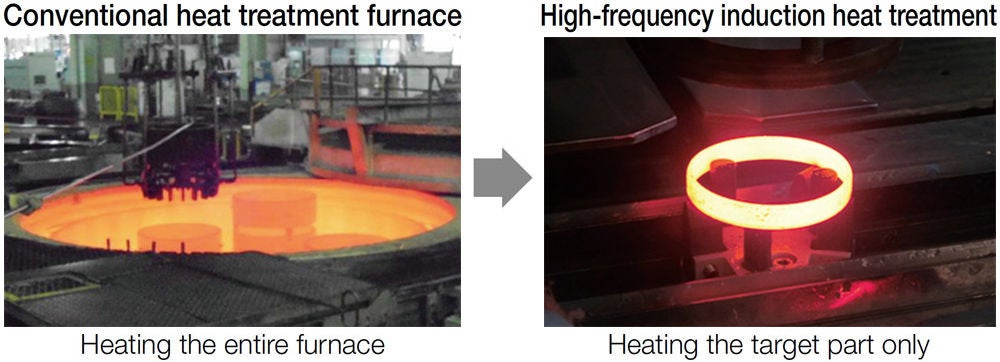
To address the challenge of reducing CO2 emissions in the heat treatment process, we have developed high-frequency induction heat treatment technology and are actively deploying it at NSK plants worldwide. Unlike conventional heat treatment methods, which heat parts by surrounding them in a gas-heated furnace, high-frequency induction heating rapidly and efficiently heats only the part itself. At the Ishibe Plant, the introduction of high-frequency induction heat treatment has not only reduced CO2 emissions but also optimized equipment space utilization, contributing to a safer and more beneficial workplace.
(3) Renewable Energy
NSK is advancing a plan to switch the source of electricity for all locations to renewable energy, and is expanding use of solar power generation at locations in India, the ASEAN region, and South Korea in addition to Japan and China. In FY2024, the Group increased the proportion of renewable energy in its total energy usage to 35.6%.
Example Initiatives
In September 2024, NSK expanded the rooftop solar power generation system at the Fujisawa 2nd Plant by a factor of 6.5. Having installed approximately 2,700 solar panels, the system is now a mega solar-class facility that generates a maximum of 950 kW and reduces CO2 emissions by 456 tons.
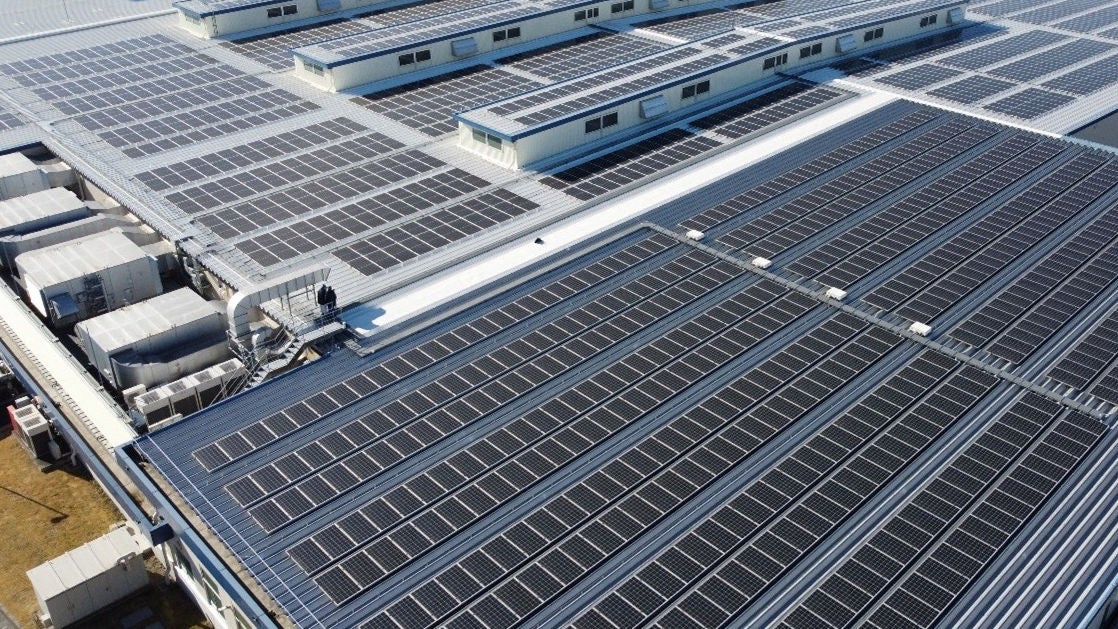
Solar power generation system installed at the Fujisawa 2nd Plant
Kicking Off Carbon Neutrality Education for Plants
Members of the Carbon Neutrality Department visit NSK plants to explain the Company’s carbon neutrality policies and initiatives, and to impress upon employees that they are important stakeholders. These visits include question-and-answer sessions as well as dialogue. With the aim of ensuring that every employee takes the initiative in making everyday improvements, we will implement this initiative at as many plants as possible on an ongoing basis.
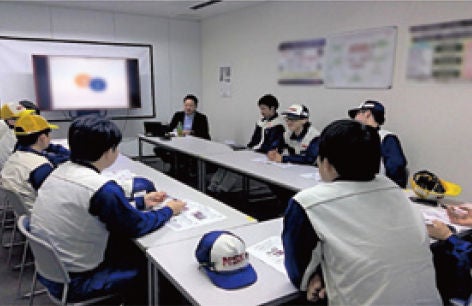
Education for employees with less than 10 years of employment at NSK (NSK Kyushu)
◆Scope 3 Upstream Reductions
Example Initiatives
The majority of NSK’s total CO2 emissions come from upstream Scope 3 sources, making emission reductions in this area a significant challenge. To address this, NSK is expanding collaboration with the suppliers of components such as rings. The scope of collaboration continues to grow, covering about 80% of the procurement value of components with 58 suppliers as of the three-year period, FY2022-2024. NSK representatives visit major suppliers to explain the necessity of carbon neutrality achievement and how it can enhance business resilience. They also encourage each supplier to seek out the most effective CO2 reduction measures tailored to their specific circumstances. Over the past three years, CO2 reduction measures for key products have resulted in a reduction of 5.7%, surpassing the 5.2% target. Going forward, NSK will strengthen collaboration with overseas suppliers to further promote reductions.
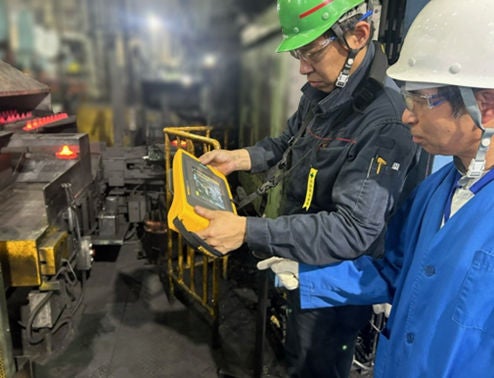
Providing support for supplier installation of air leak detection equipment
NSK has developed the world’s first cage made from 100% plant-derived biomass plastic. Castor bean plants, the raw material source for this biomass plastic, absorb CO2 during their growth process. Consequently, the bio-based plastic reduces CO2 emissions by 80% compared to conventional petroleum-based plastics.

Biomass plastic cage

Castor bean materials
2.Utilize
Manufacturing Philosophy
◆Efforts to Maximize the Environmental Contribution of Our Products
The NSK Group strives to contribute to a safer, smoother society and help protect the global environment, as indicated in its Mission Statement. To achieve this, NSK is developing environmentally friendly products and technologies in line with our "Basic Policy for the Development of Environmentally Friendly Products" by making full use of our Four Core Technologies plus One: tribology, materials, numerical simulation and mechatronics, plus manufacturing engineering.
While many automobiles and industrial machines worldwide consume vast amounts of energy by operating for extended periods, NSK's products aim to reduce this energy consumption to the greatest extent possible through downsizing, weight reduction, and low torque. Furthermore, they are used in renewable energy facilities such as wind turbines, contributing to their spread. On the other hand, because the production and processing of steel, which is a key material for NSK products, requires many resources, NSK promotes waste reduction and efficient use of resources through product life-span extension and recycling. Through these efforts, NSK is working to reduce CO2 emissions throughout the entire product life cycle.
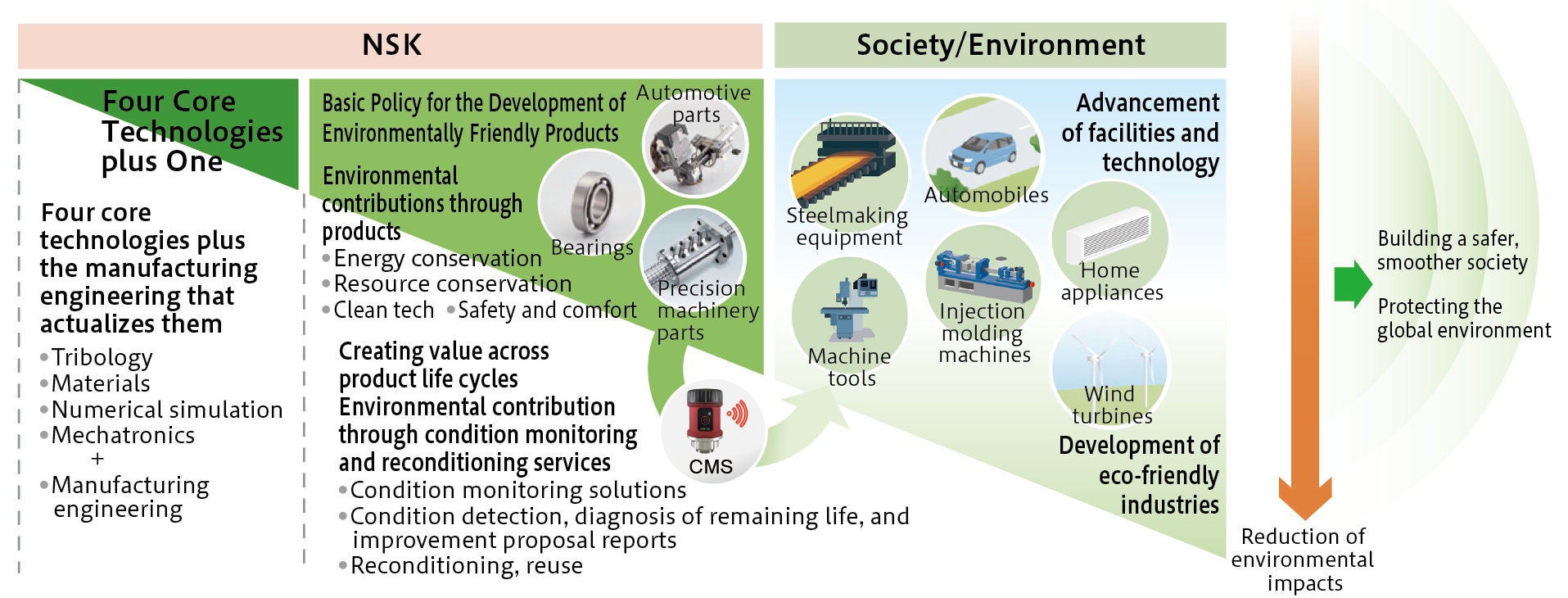
◆Basic Policy for the Development of Environmentally Friendly Products
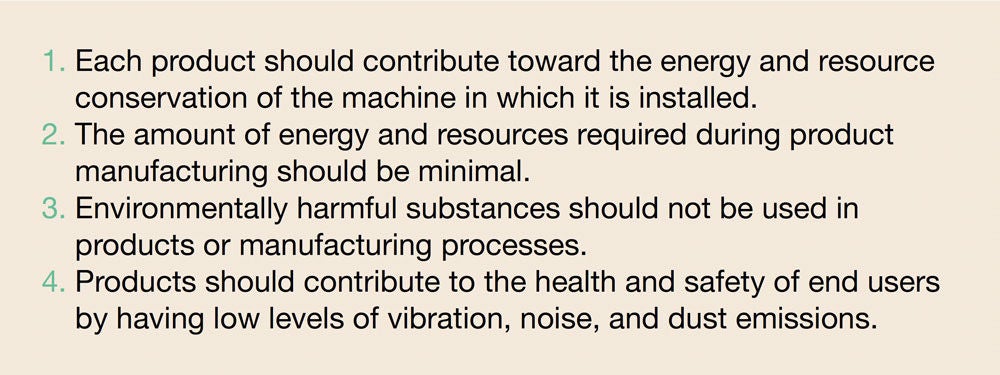
◆Verification Requirements and Assessment Items for Each Stage of the Product Lifecycle
NSK assesses all products throughout their entire lifecycle according to the items listed in the table below, and strives to both maximize its products’ environmental contribution, and minimize their environmental impact by reducing the amount of steel, water, and other resources used and lowering GHG emissions.
| Lifecycle | NSK Initiatives (Contributing to resource and energy conservation, safety, and cleanliness) |
|---|---|
| Procurement of raw materials |
|
Production |
|
| Transport |
|
| Use |
|
| Disposal/recycling |
|
* Environmentally harmful substances: Taking national and regional laws and regulations, as well as industry guidelines, into account, NSK defines environmentally harmful substances as chemical substances that are, or could potentially be, harmful to human health, ecosystems, and/or environmental conservation, including toxic substances, ozone-depleting substances, and substances that pollute air, water, soil, or groundwater. NSK properly manages these substances, including by prohibiting their use. For more information, see “Reducing Use of Environmentally Harmful Substances.”
Targets and Performance
◆Mid-Term Management Plan 2026 (MTP2026) Targets, with Targets and Performance for Each Fiscal Year
| MTP2026 Targets | FY2024 Targets | FY2024 Performance | FY2025 Targets | |
|---|---|---|---|---|
| Creating environmentally friendly products | Create environmentally friendly products with a Neco score of 1.2 or higher (ongoing) | Continue with new developments (Develop 1 or more environmentally friendly products) | Developed 7 environmentally friendly products | Develop 3 environmentally friendly products |
| Avoid at least 3 million t-CO2 emissions during the use of NSK products | 2.47 million t-CO2 | 2.32 million t-CO2 | 2.51 million t-CO2 | |
Indicators for NSK Environmentally Friendly Products
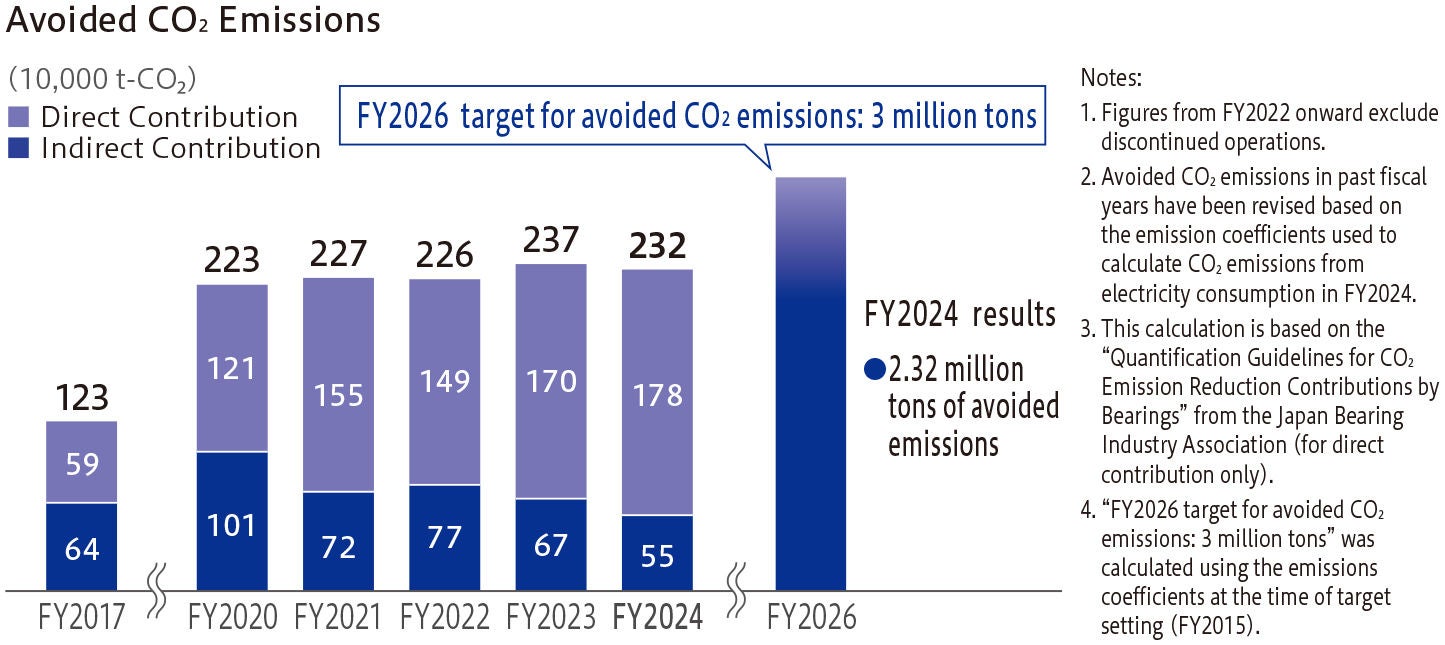
NSK has defined and operates its own indicators showing the environmental contribution of its products: the NSK Eco-efficiency Indicator (Neco), and avoided CO2 emissions. The Neco is used to assess a product’s environmental contribution based on such factors as service life. The NSK avoided CO2 emissions index assesses both avoided emissions resulting from these factors (direct contributions) and indirectly avoided emissions from the use of wind power, etc. (indirect contributions).
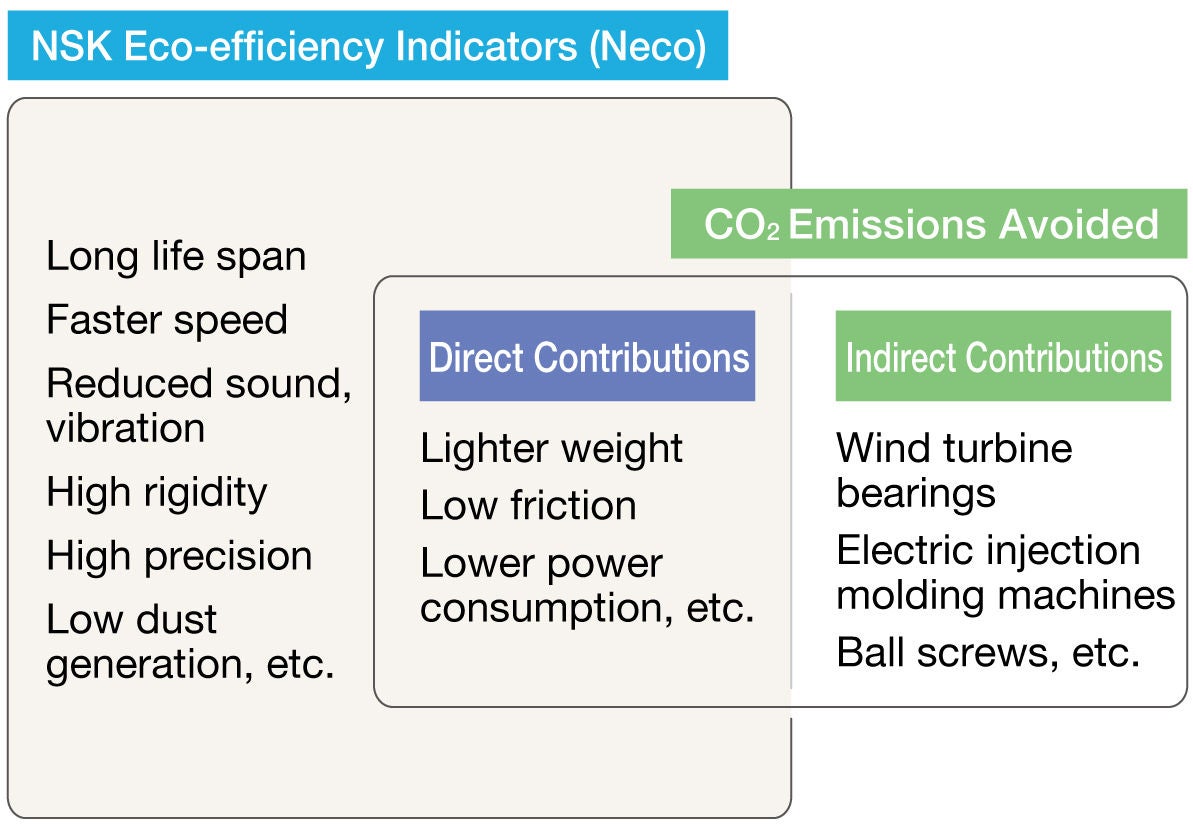
These indicators quantify the extent of a product’s contribution, and NSK uses them to develop products that contribute to the environment by, for example, reducing CO2 emissions.
◆NSK Eco-efficiency Indicator (Neco)
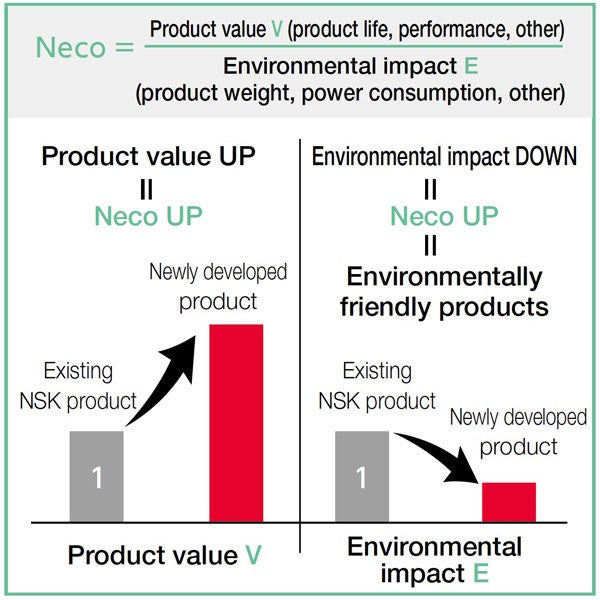
NSK has introduced the Neco score as a unique quantitative metric to comprehensively evaluate environmental contributions at the product development stage.
The Neco score is a numerical value obtained by dividing the product value V by the environmental impact E, which represents in numerical form the degree of improvement over the conventional product with a value of 1. The numerator, product value V, represents factors that assess performance, such as service life, accuracy, and maximum rotation speed. The denominator, environmental impact E, represents factors that assess environmental impact, such as product weight, power consumption, and friction loss. The greater the product value V and the smaller the environmental impact E, the greater the Neco score, indicating a more environmentally friendly product.
In assessing newly developed bearings, for example, the longer the bearing’s service life is, when compared to existing products, the better its high-speed rotation, the lighter and more compact the bearing is, and the lower the friction loss, the higher its Neco value will be, indicating a more environmentally friendly product. In developing new products, NSK aims for a Neco score of 1.2 or higher.
◆Avoided CO₂ Emissions
NSK’s products also contribute to reducing CO2 emissions during the “utilize” stage at customers. We promote such efforts in two categories: direct contribution and indirect contribution. In FY2024, total avoided emissions in both categories were 2.32 million tons. NSK will continue to strengthen these initiatives with the aim of delivering over 3 million tons of avoided emissions by FY2026, thereby contributing to the reduction of CO2 emissions across society as a whole.
Concepts for Products Helping to Avoid CO₂ Emissions at the “Utilize” stage
| Category | Contribution concept | Examples of contributions to CO₂ reduction |
|---|---|---|
| Direct Contributions | Direct contributions to CO₂ emissions reduction through individual NSK product performance |
|
| Indirect Contributions | Indirect contributions through CO₂ emissions avoided by incorporating NSK products into customer equipment and facilities |
|
For more information, see NSK Report 2025.
◆Direct Contributions
In this area, NSK products effectively contribute to the reduction of CO2 emissions by improving the performance of existing products, such as curbing friction loss in bearings, to directly reduce energy loss in the customer machinery in which they are incorporated.
This contribution is calculated using the formula shown below.
CO2 emissions avoided (product basis) = ΔPCO2 × Annual uptime × Duration of use × Product sales volume
ΔPCO2: CO2 emissions avoided per unit of time product is used (CO2/hour)
Annual uptime: Time a product is in operation per year (hours/year)
Duration of use: How long a product is used (years)
Product sales volume: Sales volume of the product in the fiscal year
Note: This calculation is based on the “Quantification Guidelines for CO2 Emission Reduction Contributions by Bearings” from the Japan Bearing Industry Association.
Example: Low Friction Hub Unit Bearings
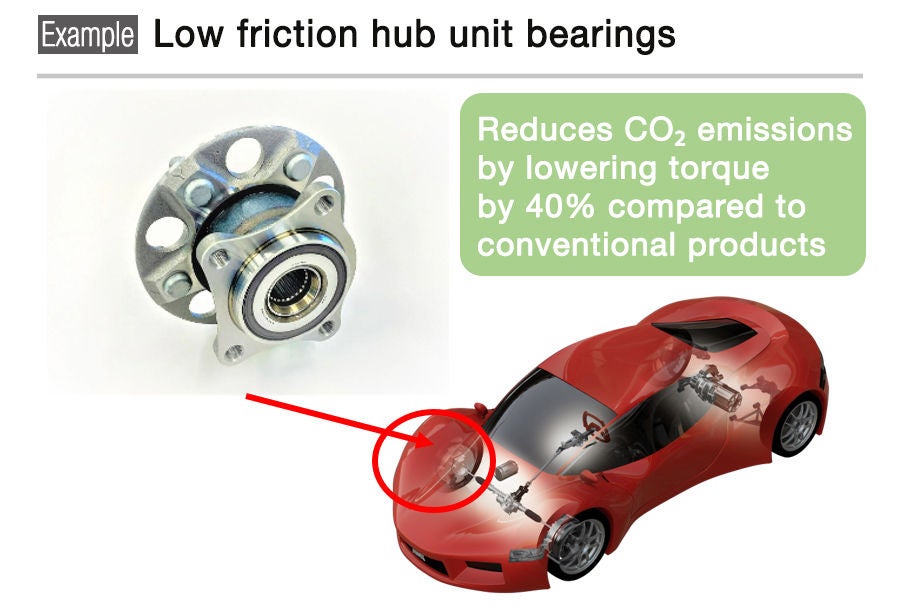
As hub unit bearings are often used in harsh environments in the field, they are equipped with seals to prevent mud and water from getting inside. Although these bearings are expected to improve efficiency by reducing friction, focusing on achieving low friction alone can damage the reliability of the bearings during use.
By optimizing internal bearing design, selecting the optimal grease, and developing low friction seals, NSK has developed a low friction hub unit bearing that delivers 40% lower friction, while still maintaining the field reliability required.
For more information, click here.
Example: MT-Frix™ low-friction ball screws
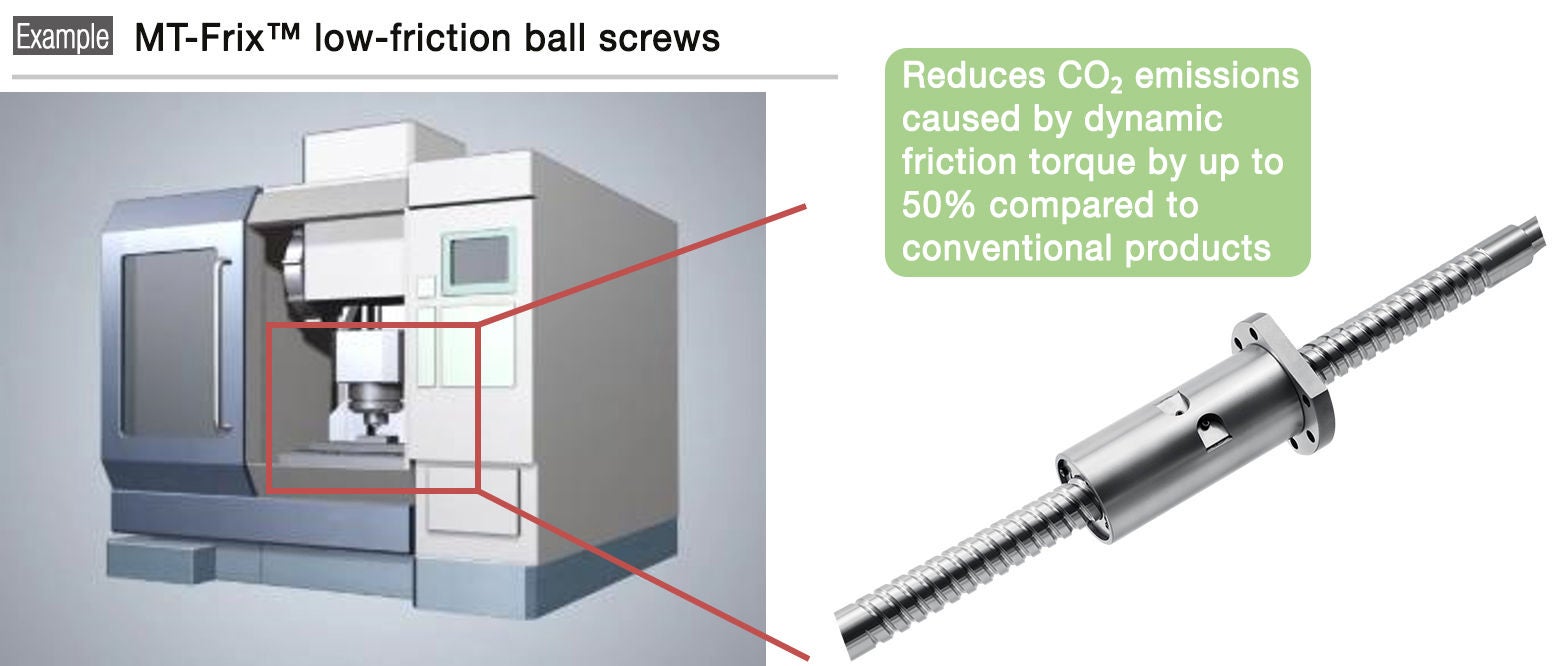
When a ball screw is driven, it generates heat due to dynamic friction torque, and the screw shaft undergoes thermal expansion, which in turn reduces the positioning accuracy. In order to prevent accuracy loss due to heat generation, forced cooling (cooling the generated heat with an auxiliary device, etc.) may be used, but extra energy is consumed when a cooling device is employed. Therefore, in order to achieve both high precision and energy savings, it is necessary to reduce the dynamic friction torque itself.
However, with conventional technology, when the dynamic friction torque is reduced, the rigidity also declines, making the nut more likely to experience displacement, which in turn can result in the problem of reduced machining accuracy. Therefore, reducing dynamic friction torque while maintaining rigidity is needed.
NSK has leveraged its analytical technology to elucidate the precise conditions of contact between the ball and groove inside its ball screws. The findings allowed NSK to optimize the internal specifications, and the result is the newly developed MT-Frix™, a low-friction ball screw with lower dynamic friction torque but the same rigidity and size.
For more information about this product, click here.
◆Indirect Contributions
In this area, NSK products such as bearings for wind turbines and ball screws for electric injection molding machines (with motorized hydraulics) that are used to manufacture plastic products contribute indirectly when employed in customer machinery. Guidelines have been established based on the disclosed contribution rate of bearings in the wind power generation field. The contribution is calculated using the formula below.
CO2 emissions avoided (equipment basis) = ΔPCO2 × Annual uptime × Duration of use × Contribution rate × Penetration (sales volume)
ΔPCO2: CO2 emissions avoided per unit of time equipment is used (CO2/hour)
Annual uptime: Time that equipment is in operation per year (hours/year)
Duration of use: How long equipment is used (years)
Contribution rate: Rate of contribution of NSK products to the equipment (%)
Product penetration (sales volume): Penetration (sales volume) of the product in the fiscal year
Example: Bearings for Wind Turbines
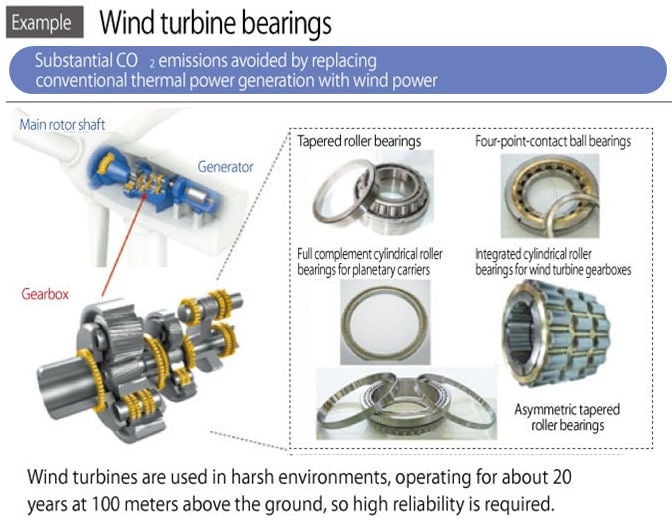
Since replacing turbine parts is difficult, bearings for wind turbines are required to operate for 20 years and must therefore be exceptionally reliable. NSK provides high-quality bearings used in the gearbox. They help determine the performance of the wind turbine and contribute to the spread of renewable energy. Thanks to NSK’s advanced computer-based numerical simulations, extensive expertise in materials and heat treatment, and technologies for testing and evaluating full-size bearings, NSK bearings deliver world-class performance.
◆CO₂ Emission Reduction through Services
In addition to selling products, NSK provides technical services such as maintenance and condition monitoring technology, aiming to reduce CO2 emissions throughout the entire product life cycle - from product restoration to disposal.
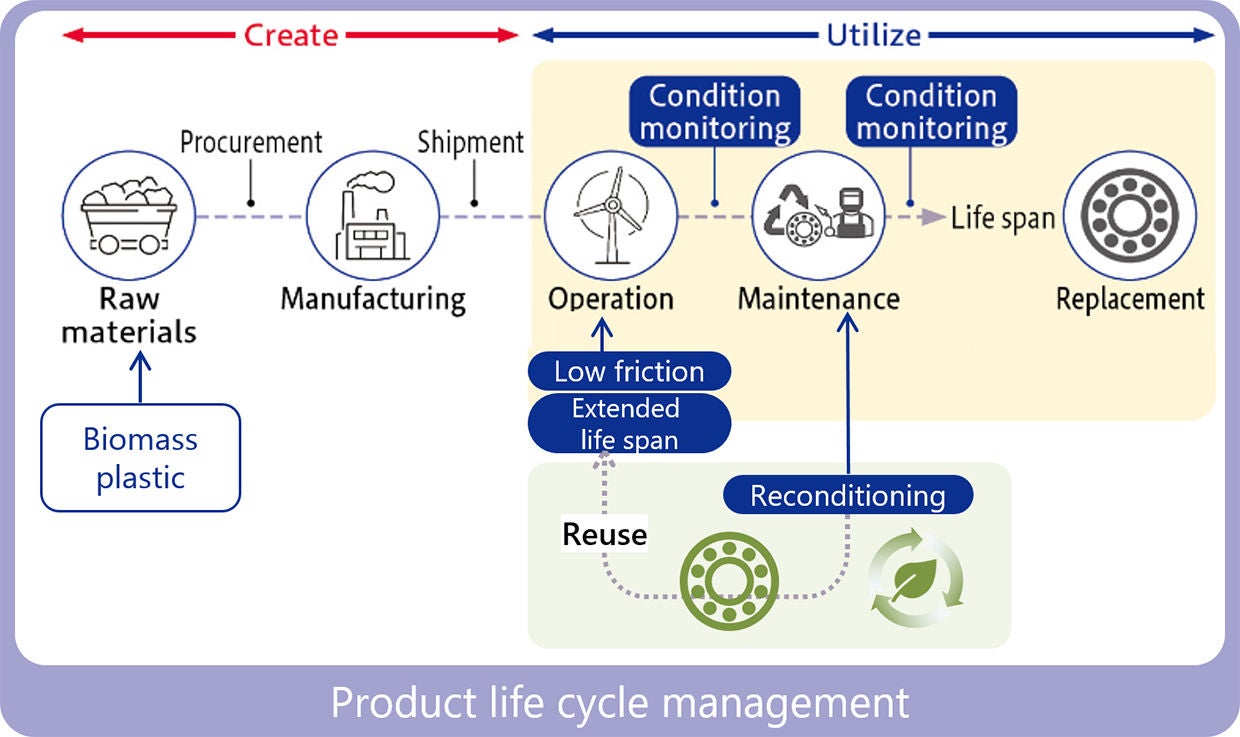
Example: Condition Monitoring Solutions and Reconditioning
Condition monitoring solutions measure and analyze the vibrations of rotating and linear motion mechanisms inside equipment to diagnose the product’s condition and life span.
This contributes to improved machine reliability and extended product life. In addition, reconditioning enables product repair and reuse.
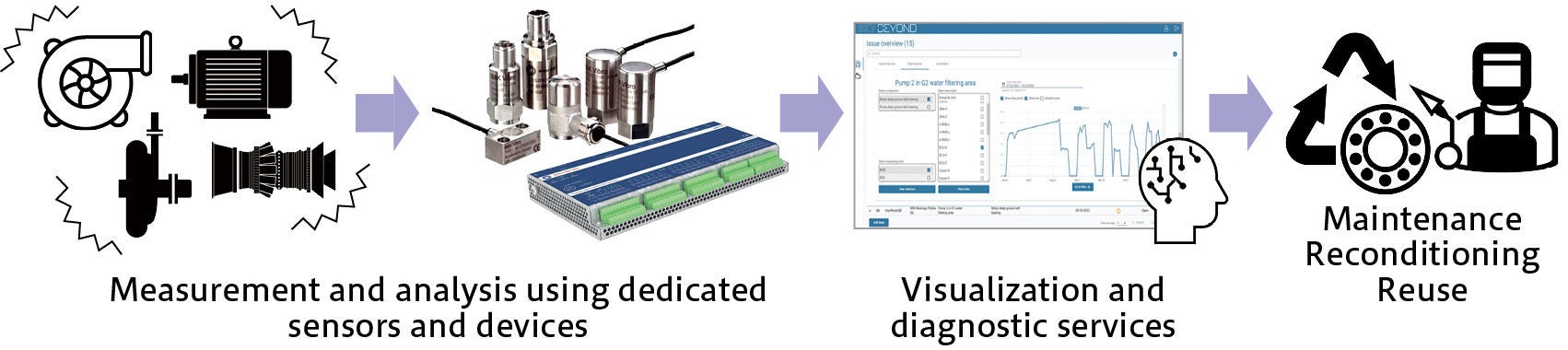
For more information about reconditionable large-size tapered roller bearings for construction equipment, click here .
◆Carbon Footprint Assessment Report
◆Contributing to a Decarbonized Society
NSK recognizes that contributing to a decarbonized society is an opportunity for profitable growth. In particular, NSK is focusing on markets that are expected to see growth in the fields of mobility, renewable energy, and industrial machinery/machine tools. NSK aims to meet society’s needs and achieve sustainable growth by developing products that leverage NSK’s strengths in areas like precision bearings, precision ball screws, and automotive components for electric vehicles in order to expand its sales in highly profitable markets.
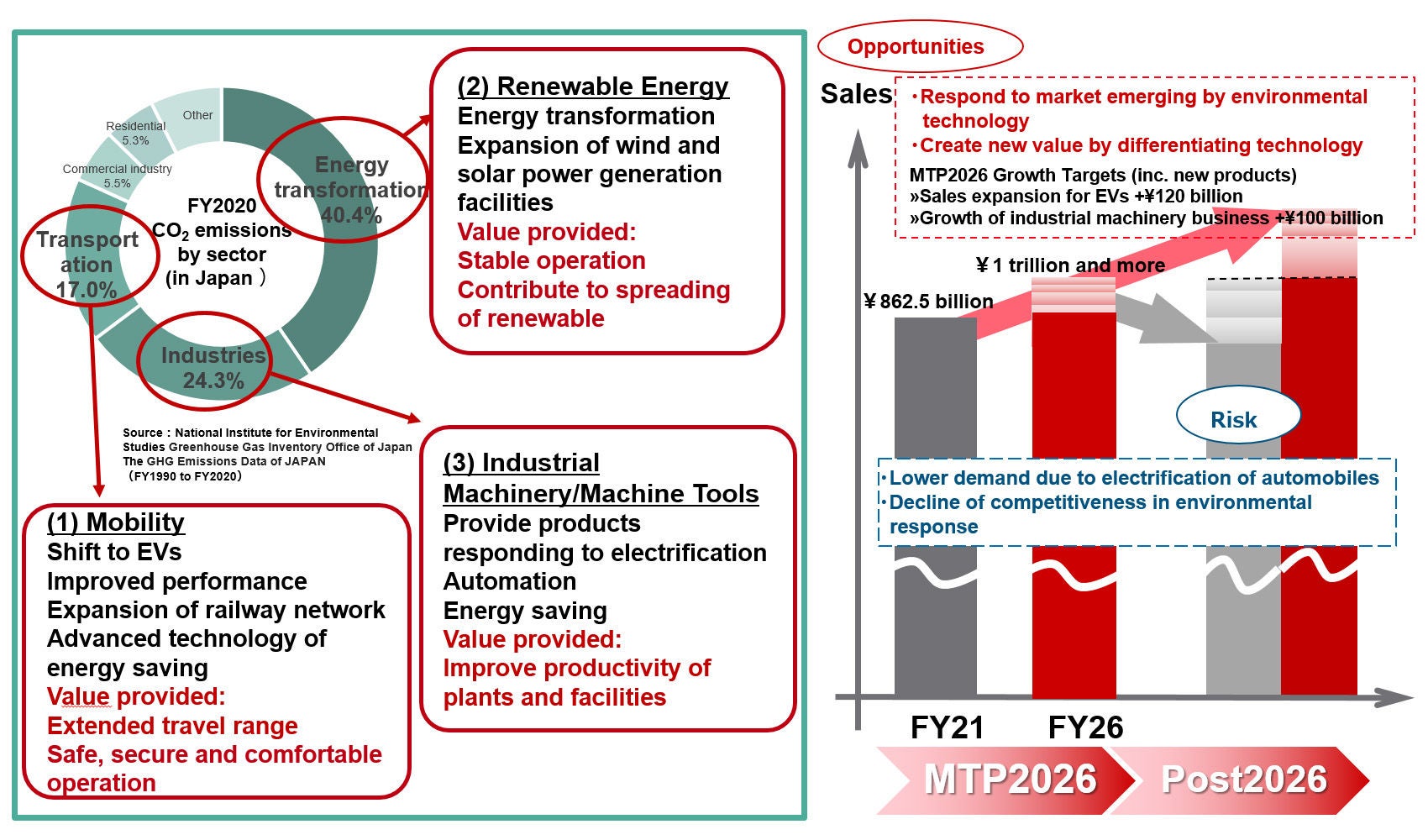
Example: Environmental Contribution through Automotive Electrification
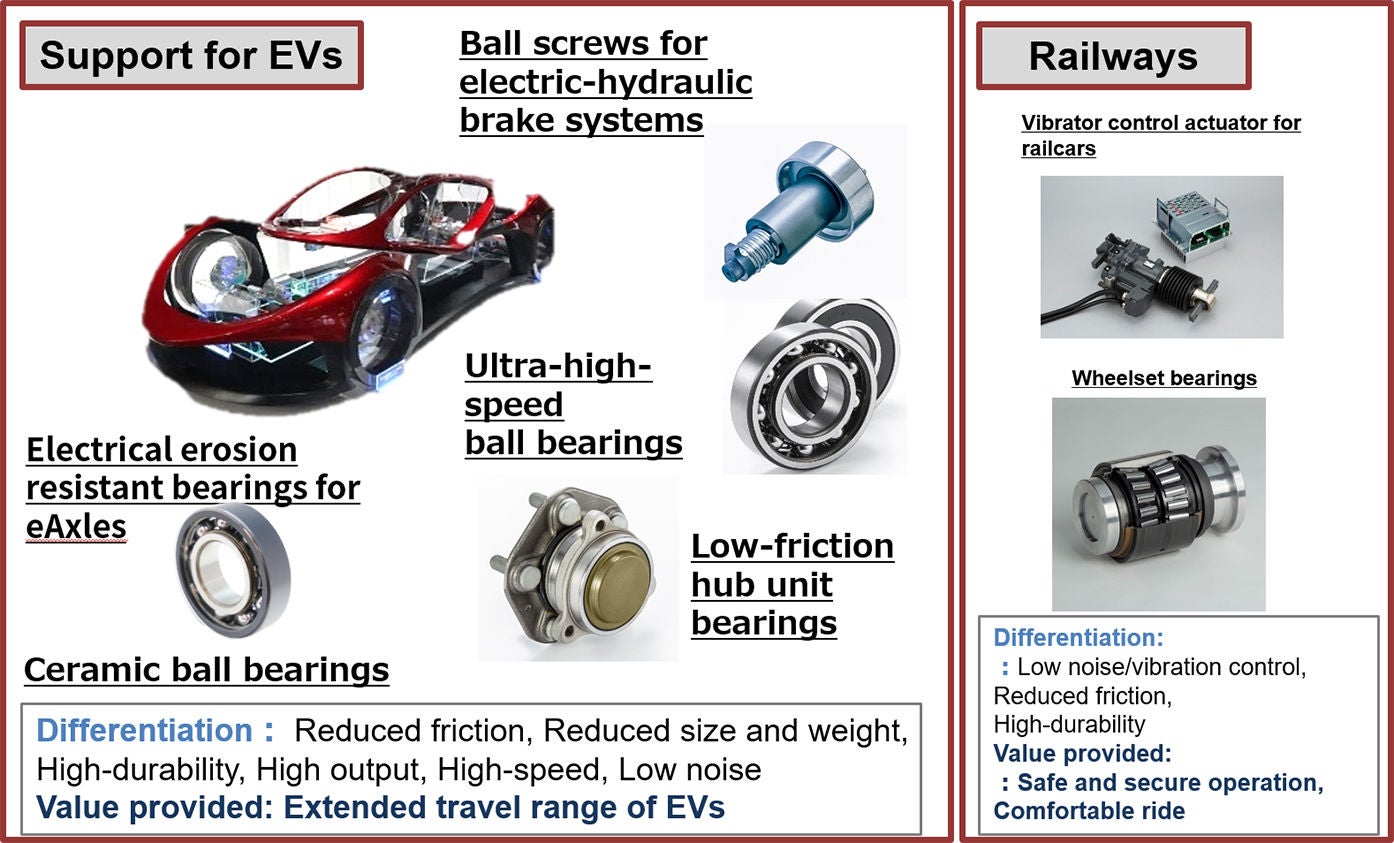
Automotive electrification is indispensable to achieving carbon neutrality. Under MTP2026, NSK sets a sales promotion plan for electric vehicle components and will seek to differentiate its technology and expand its business by offering a new product, ball screws for electro-hydraulic brake systems.
◆External Assessments
Selected for CDP’s “A List” for Climate Change Disclosure
NSK was selected in FY2025 as an “A List” company by the global non-profit CDP for its disclosure of climate change information. NSK actively discloses its climate change initiatives in securities reports, the NSK Report, and on the NSK website. In addition, we publish an industry-first Carbon Footprint Assessment Report on bearings.