
Establishing a Spalling Life Prediction Method for Rolling Bearings utilizing “NSK Micro-UT™”
March 2026
Technology R&D Office 1
Core Technology R&D Center
Technology Development Division Headquarter
1. Introduction
Rolling bearings (hereafter called “bearings”) are mechanical components used in the rotating parts of automobiles and various industrial machines, supporting large loads while ensuring smooth rotation. The basic structure is simple, consisting of four parts: outer ring, inner ring, rolling elements, and retainer (Fig.1).
The load applied inside the bearing is supported by a very narrow contact area between the rolling element and inner ring, and between the rolling element and outer ring. Therefore, a very large force (contact stress) is applied to the contact area (Fig.2). For example, an area of a few square millimeters can support the weight of an automobile. When bearings rotate, large forces repeatedly act on the contact area, resulting in various failures1). “Spalling”, as mentioned in the title, is a phenomenon called metal fatigue caused by such cyclic forces, and is a failure mode where the bearing surface peels off in a scaly pattern (Fig.3). Spalling determines bearing durability, and ISO and JIS standards define the “life” of a bearing as the time it takes for spalling to occur2). Incidentally, when we humans are repeatedly subjected to high stress (force), our minds and bodies become “fatigued”. Like humans, the materials (steel) that make up bearings must be properly controlled to minimize fatigue and extend service life as much as possible. Therefore, NSK's materials research unit has been focusing its research and development efforts on “predicting and preventing spalling”.
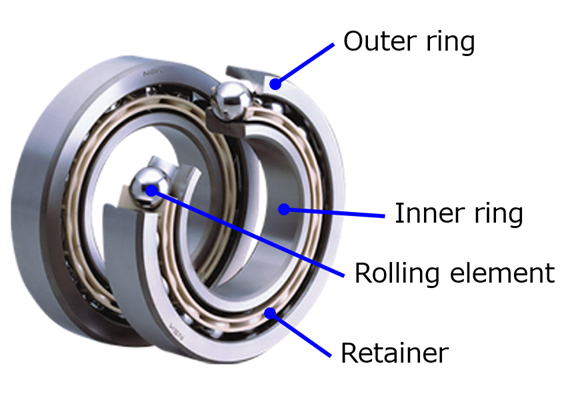
Fig.1 Basic Structure of Rolling Bearings
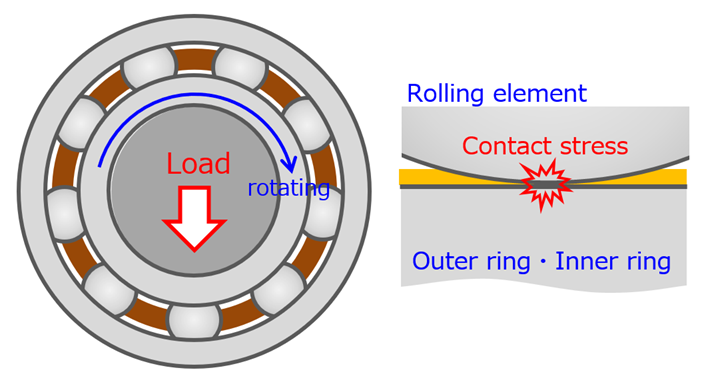
Fig.2 Contact stress on bearing components
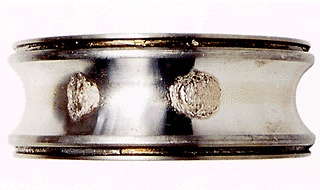
Fig.3 Appearance of spalling1)
2. Research Background and Motivation
Let us explain a little on the characteristics of spalling. It is known that there are various types of spalling3). Among them, there is a type called “Inclusion-initiated spalling” (Fig.4). Bearing steel is used for the inner ring, outer ring, and rolling elements of bearings, but steel contains impurities called “Non-metallic inclusions” (hereafter, inclusions). Inclusions are harder than steel, and when subjected to a force, they increase the force (stress concentration). This stress concentration causes small cracks, which grow and eventually become large cracks that peel off, a phenomenon known as inclusion-initiated spalling. Therefore, it is clear that the degree of inclusions in steel (steel cleanliness) has an effect on the spalling life. Remarkable progress in steelmaking technology between 1960 and 1990 led to a dramatic improvement in the cleanliness of bearing steel. This has resulted in bearings with a longer service life, and nowadays, bearings can have a durability 10 times greater than the life predicted by the bearing life calculation methods specified by ISO and JIS in some cases. This may sound like a good thing, but the reverse side of the story is that most bearings may be scrapped or replaced even though they are still usable, without fully utilizing their inherent durability. If the inclusion-initiated spalling life can be predicted with higher accuracy, it will be possible to safely use up the inherent durability of the bearings. We believe that this will also contribute to the realization of carbon neutrality, which is a social challenge.
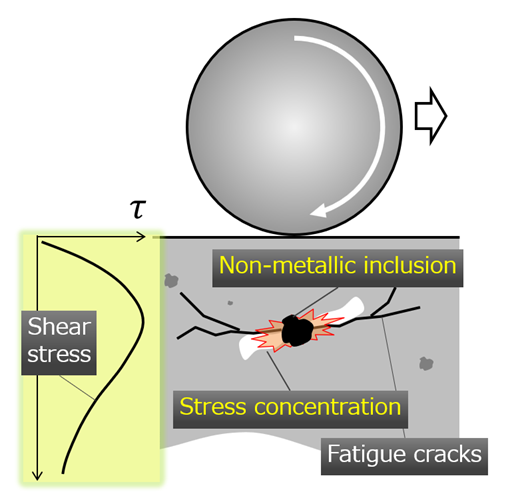
Fig.4 Schematic diagram of inclusion-initiated spalling
3. Issues in Bearing Life Calculation Methods
Since spalling is a failure mode that determines the durability of bearings, it is important to predict the life in advance and select an appropriate bearing to meet the required life of the machine. The life calculation formula for bearings is defined by ISO and JIS, and is expressed by the following equation.

“L10” is called the basic rating life and is the basis for selecting bearings. “P” is the dynamic equivalent load (load applied to the bearing). “C” is the basic dynamic load rating, which means the load where 90% of the bearings can endure 1 million revolutions. C is a value calculated from the design dimensions of the bearing and can be found in NSK's online catalog4).
Here, we would like to touch briefly on the original theory (published by Lundberg and Palmgren in 1947, hereafter called the L-P theory), which was the basis of the life calculation formula in Eq. (1). In the L-P theory, the relationship between bearing life, N and failure probability, S is expressed by the following equation.

Equation (2) is transformed as follows.

In Eq. (3), the parts including “A” and “S” can be treated as constants. In addition, “τ0” represents the shear stress acting inside the bearing due to load, “z0” is the depth of the stress, and “V” is the volume where the stress acts. These values can be calculated from the load and bearing dimensions.
Some readers may have noticed here that the basic theory does not include the “inclusions” factor, which should affect the life. In other words, no matter how much the cleanliness of the bearing steel is improved, it is not reflected in the life calculation at all. This is one of the reasons for the situation where “the durability may be 10 times greater than the service life predicted by the ISO and JIS methods”.
4. Breakthroughs to Achieve Higher Accuracy in Life Prediction
How can the inherent durability of bearings, i.e., inclusion-initiated spalling life, be predicted with higher accuracy? The answer is clear: by incorporating the effect of steel cleanliness into the life calculation theory and developing a new life formula. However, there were two major technical challenges that needed to be overcome.
The first issue is how to reproduce inclusion-initiated spalling. As shown in Fig.4, the process leading to spalling, such as the generation and growth of cracks, occurs inside the material, making it impossible to observe the process. In addition, most of the inclusions that are the origins of spalling are at most several tens of micrometers in size, and in many cases the inclusions are also gone when the surface is peeled off. These make it extremely difficult to conduct quantitative evaluations, such as “For an inclusion of this size, the spalling life would be of this value”.
The second issue relates to the evaluation method of steel cleanliness. It would be simple if inclusions of a fixed size were neatly arranged in a steel, but in reality, inclusions of various sizes, ranging from a few µm to several hundred µm, are randomly distributed. In conventional methods, optical microscopy is often used to evaluate inclusions, but even after more than ten hours of evaluation, only a fraction of the volume of a small bearing can be evaluated at most. Therefore, a new method is required to evaluate the distribution of inclusions in as large an area of the steel as possible and to determine the cleanliness of the steel as a whole.
NSK has established a more accurate bearing life prediction method by solving the above two technical issues. Specific details are introduced below.
5. Test Method to Reproduce Inclusion-initiated Spalling and Derivation of Life formulas
As a solution to the first challenge, a new method for reproducing inclusion-initiated spalling and the derivation of a new life calculation formula will be introduced.
It is practically impossible to understand randomly distributed inclusions and reproduce spalling from targeted inclusions. Therefore, we shelved the idea of spalling from the inclusions themselves and considered the possibility of artificially introducing “defects” that could take the place of the inclusions.
It is generally known that fatigue fracture occurs in high-strength steel initiating from inclusions. In Japan, many research results have been reported, mainly by a research team at Kyushu University, and a fatigue test method using specimens with artificial microdefects was utilized5). Although spalling is a special fatigue phenomenon caused by contact between objects, We NSK has also tried endurance testing of bearings that incorporate this technique.
Since artificial defects are machined into the bearing raceways, cracks can develop from the surface depending on their geometry. Therefore, a simple numerical analysis was conducted to determine what type of defect would be best for crack growth inside the material, and it was found that a drill hole would be suitable. This is because drill holes form edges on the inside, and cracks are expected to generate at the edges and grow inside the material. Based on these considerations, endurance tests were conducted using 6206 deep groove ball bearings and 51305 thrust ball bearings with introducing drill holes the size of inclusions (100 µm in diameter) into their raceways (Fig.5).
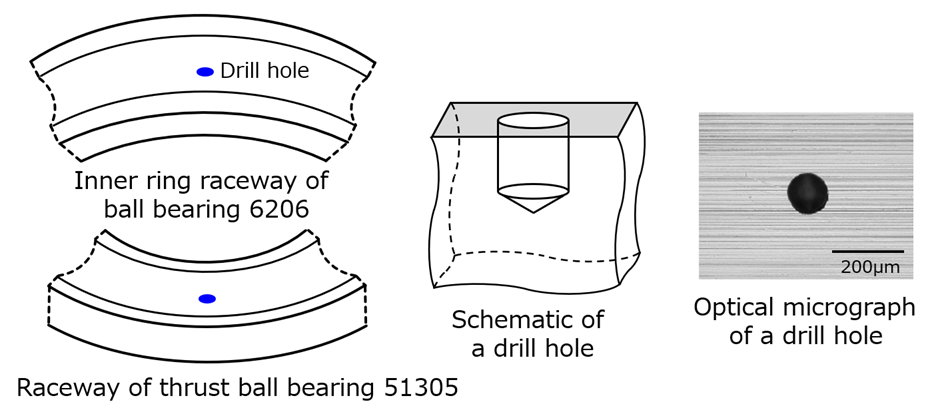
Fig.5 Schematic and optical micrograph of micro drill holes
introduced in raceways of ball bearings
Fig.6 shows the observation results of the spalling area. Although the drill holes were introduced on the raceway surface, as expected, cracks generated from the edges of the drill holes propagated inside the steel, indicating that the same process as inclusion-initiated spalling can be reproduced.
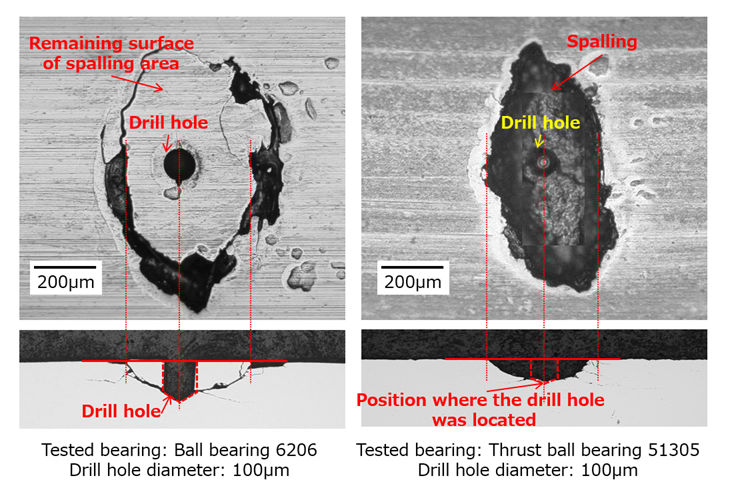
Fig.6 Appearance and cross-sectional observation of spalling area from drill hole
The new test method made it possible to produce spalling from inclusions-like defects of a targeted size. The durability tests were performed under various loading conditions using ball bearings 6206 and 51305 with drill holes of various sizes from 50 to 100 µm in diameter.
In general, the relationship between applied stress and fatigue life (S-N curve) is used to consider fatigue test results. On the other hand, stress concentration due to defects (strictly speaking, stress concentration due to cracks generated from defects) must be considered in this test. In such cases, a parameter called “Stress intensity factor, SIF” is utilized to understand fatigue test results. The SIF is a parameter that represents the increase in stress due to a defect (crack). Under simple loading conditions, the SIF can be calculated from the stress and the size of the defect (crack). However, since the stress generated by object contact is distributed, no general method for calculating the SIF has been established. Therefore, a 3D model simulating contact between a rolling element and a raceway with drill holes was created, and the SIF was calculated by numerical analysis (Fig.7).
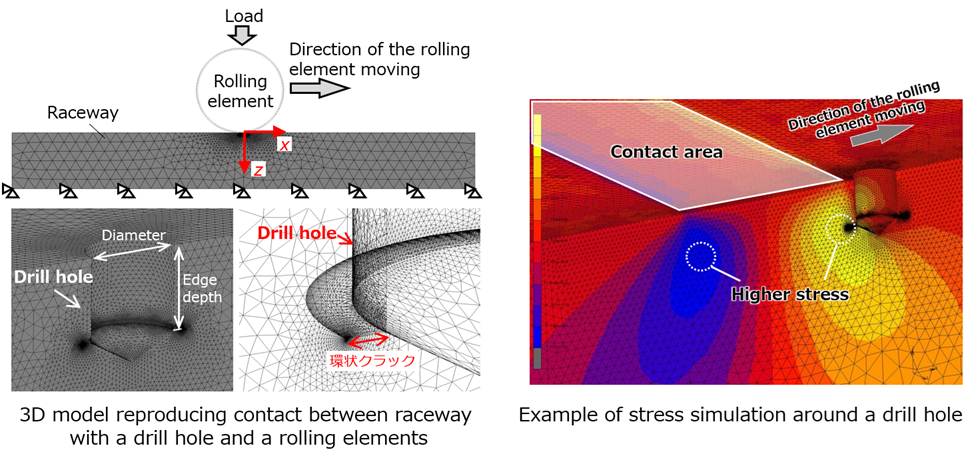
Fig.7 Simulation of stress and stress intensity factor around a drill hole by FEM model
Fig.8 shows the relationship between the life values obtained from the durability tests and the SIF values calculated by simulation, indicating that there is a good correlation between spalling life and SIF.
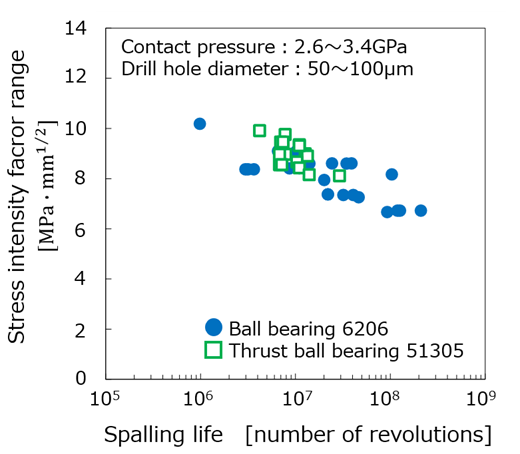
Fig.8 Relationship between stress intensity factor and spalling life
Next, Incorporating the effect of steel cleanliness into the life theory shown in Eq. (2) will be tried. Since the spalling life was found to be correlated with the SIF, which can be used in place of the shear stress τ0 in Eq. (3) to express the following.

In Eq. (4), the symbol “ΔKII” is the stress intensity factor. “ΔKIIth” is called the lower limit of crack propagation and is the stress intensity factor where cracks will not propagate. Now, by transforming Eq. (4) using the basic dynamic load rating, C, the life, L can be expressed as follows. The constants B, α, and β in Eq. (5) can be obtained from the test results in Fig.8.

The above discussion has focused on the spalling life initiated from the drill hole, but what should be calculated is the spalling life from inclusions. The SIF values due to inclusions under shear stress and the lower limit of crack propagation in bearing steel have been shown in previous studies and are expressed by the following equations6).

The “
 ” in Eqs. (6) and (7) is a parameter that represents the size of the inclusion. By using Eqs. (5) through (7), it can be calculated that “For an inclusion of this size, the spalling life would be of this value”. This solves the first technical challenge.
6. Development of “NSK Micro-UT™”, a New Material Cleanliness Evaluation Method
As a solution to the second challenge, the development of an evaluation method for steel cleanliness will be introduced.
Generally, steel cleanliness is evaluated by directly observing inclusions using an optical microscope. As a specific procedure to observe inclusions, a small portion of the steel is cut out, mounted in resin, and the surface is polished to a mirror finish. Several such samples are prepared, inclusions are founded for under a microscope, and the size and number of inclusions within a given range are evaluated (Fig.9).

Fig.9 Procedure for evaluation of inclusions using optical microscope
The conventional method using a microscope is very time-consuming, and even after spending more than a dozen hours, it is possible to evaluate only a fraction of a small bearing volume at most. Therefore, it is difficult to determine the amount and size of inclusions in steel, the overall cleanliness of the steel. To solve this problem, we developed “NSK Micro-UT™”, a steel cleanliness evaluation method that uses Ultrasonic Testing (UT) as a more efficient and reliable evaluation method. Ultrasonic waves have the characteristic of reflecting at the boundaries of materials. Especially in the medical field, echo inspection is widely used to image reflected ultrasonic waves. It is also utilized in nondestructive testing of steel materials, where defects such as inclusions can be detected by reading the reflected ultrasonic waves7).
An overview of the NSK Micro-UT is shown in Fig.10. The steel bar is immersed in water and an ultrasonic sensor (probe) is placed near the surface of the steel. The probe is scanned in the longitudinal direction while the steel is rotated so that the entire surface of the steel can be scanned. Ultrasonic waves emitted from the probe propagate through the steel and are reflected by inclusions. By receiving the reflected ultrasonic waves, inclusions are detected as echo images. NSK succeeded in detecting inclusions as small as 50 µm in size by optimizing various measurement conditions, including ultrasonic frequency, steel rotation speed, probe scanning speed, and steel microstructure. Fig.11 shows an echo image of the detected inclusions. The echo intensity is indicated by the color of each pixel.
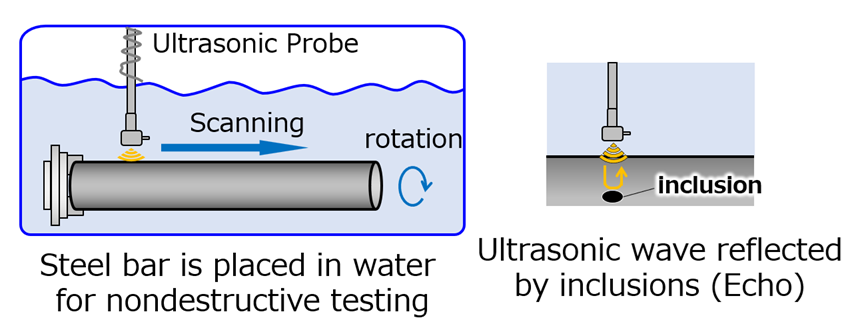
Fig.10 NSK Micro-UT Overview
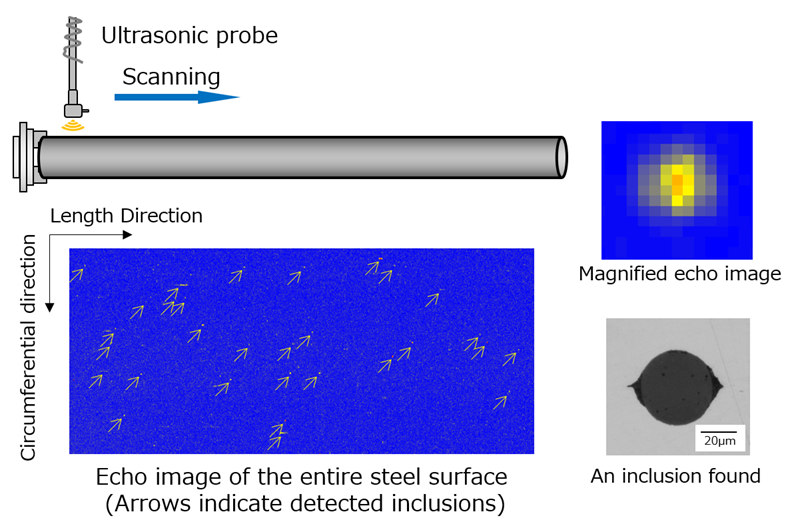
Fig.11 Echo image of the entire steel surface and magnification
of the inclusion detection area
To evaluate steel cleanliness more accurately, it is necessary not only to detect inclusions but also to estimate the size of each one and obtain statistical data such as histograms. However, the intensity and area of the detected echoes do not necessarily correspond to the size of the inclusion. For example, if the depth where an inclusion is detected differs, there will be a difference in the displacement from the ultrasonic focus position and attenuation, and the echo will change even if the inclusions are the same size. Therefore, NSK has developed a method to accurately estimate the size of inclusions from echo images by combining the analysis of each individual echo image with a substantive investigation of the inclusion. NSK Micro-UT refers to a series of methods that not only detect micro-sized inclusions using the UT method but also estimate the size of the inclusion from the echo image.
Fig.12 shows the result of cleanliness evaluation by applying NSK Micro-UT to a bearing steel (called Steel A), with a histogram of inclusion size. The evaluated volume is equivalent to several thousand small size bearings. Compared to the conventional method using a microscope, a much larger volume can be evaluated in a fraction of the time. NSK Micro-UT is being deployed at NSK Global Technology Centers, and we NSK are working to build a system that can quickly evaluate the cleanliness of bearing steel locally.
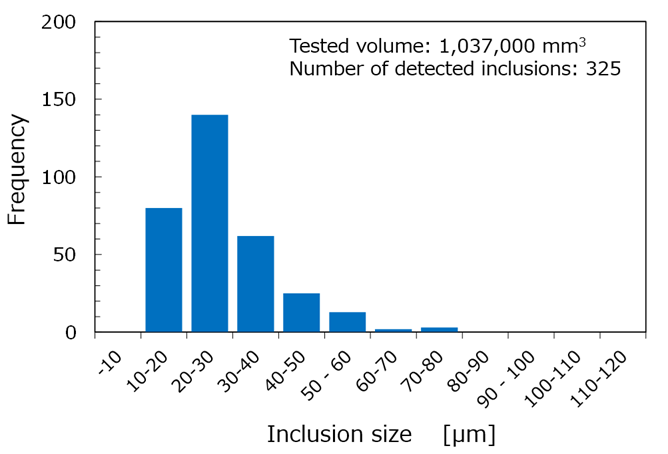
Fig.12 Inclusion size histogram obtained by NSK Micro-UT
7. Highly Accurate Prediction Method for Inclusion-Initiated Spalling Life
Now, the two technical challenges for predicting inclusion-initiated spalling life have finally been solved. Then, we will explain how to predict the life using the new life equation and the NSK Micro-UT.
Fig.12 shows a histogram of the inclusion size in steel A. Simply put, the data in Fig.12 can be converted to life variation by substituting it into the Eqs. (5) - (7). However, not every single inclusion size corresponds to every single bearing. Therefore, a statistical method called Extreme Value Statistics is used to convert the histogram of inclusion sizes into values that can be substituted into the life formulas. The Extreme Value Statistics is a method to predict what the maximum and minimum values will be in data following a certain distribution. Applying this to the size of inclusions, the maximum size of inclusions in a certain range (e.g., the volume of one bearing) can be predicted from data with a distribution like Fig.12. For example, if thirty ball bearings 6206 are manufactured from steel A, the maximum size of inclusions in each of the thirty bearings can be obtained. By substituting these estimated thirty inclusion sizes into Eqs. (5) - (7), the life values for each of the bearings are calculated. Fig.13 shows the life prediction results assuming that thirty ball bearings 6206 were manufactured using steel A and subjected to endurance testing.
To verify the accuracy of the life prediction, endurance tests were conducted using thirty ball bearings 6206 actually manufactured from steel A under the same conditions for the life prediction. The basic rating life (L10) and the endurance test results are shown in Fig.13. Since there are various factors affecting the variation in spalling life, the predictions and the experimental results do not exactly match to the shape of the Weibull plot, but the predictions were verified to be very accurate.
The new life prediction method introduced here calculates life values for thirty (or more) bearings, so that a Weibull plot of life can be predicted without performing many endurance tests on the bearings, just by evaluating the steel cleanliness with the NSK Micro-UT for a few hours.
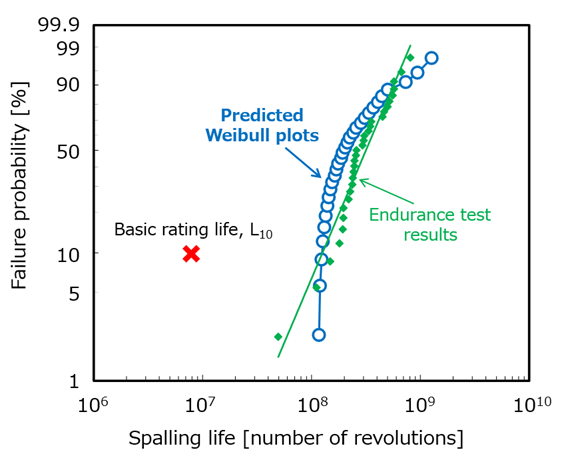
Fig.13 Comparison of Weibull plot prediction of spalling life and endurance test results
8. Conclusion
In this article, we have introduced “Establishing a Spalling Life Prediction Method for Rolling Bearings utilizing NSK Micro-UT”. This technology enables highly accurate prediction of bearing life, making it possible to recommend more appropriate bearings to customers according to their applications (specific application methods for will be introduced in another article).
The history of rolling bearing endurance life research is long, just about 100 years. During that time, various superior life theories have been published, including the L-P theory, and bearing life calculation formulas have evolved. In addition to steel cleanliness, there are various factors that affect spalling, and the type of spalling varies accordingly. NSK will continue to conduct deeper research on bearing life and contribute to the realization of a safe, secure society and carbon neutrality.
In addition, References 8) through 12) describe in detail the information presented in Chapters 5 through 7. We hope you will refer to them.
References
1) Bearing Troubleshooting (Bearing Doctor)
NSK Web site:https://www.nsk.com/tools-resources/troubleshooting/
2) ISO 281 (2007), “Rolling bearings - Dynamic load ratings and rating life”
3) Mitamura N, “Rolling Contact Fatigue of Rolling Bearings and the Research Trend”, Tribologist, 53-10 (2008), 641–646 (in Japanese)
4) NSK Online Catalog, NSK Web site:https://www.nsk.com/catalogs-and-cad/
5) Murakami Y, “Metal Fatigue Effects of Small Defects and Nonmetallic Inclusions” (2019), Elsevier
6) Okazaki S (et. al.), “A practical expression for evaluating the small shear-mode fatigue crack threshold in bearing steel”, Theor. Appl. Fract. Mech. 73 (2014), 161-169
7) ASTM Standards E588-03, “Standard practice for detection of large inclusion in bearing quality steel by the ultrasonic method”
8) Komata H (et. al.), “Proposal of Rolling Contact Fatigue Crack Growth Test Using a Specimen with a Small Artificial Hole”, Transactions of the JSME A, 78-793 (2012), 1250-1265:https://doi.org/10.1299/kikaia.78.1250 (in Japanese)
9) Komata H (et. al.), “Effect of Size and Depth of Small Defect on the Rolling Contact Fatigue Strength of a Bearing Steel SUJ2”, Trans. of the JSME A, 79-803 (2013), 803-961:https://doi.org/10.1299/kikaia.79.961 (in Japanese)
10) Hashimoto S (et. al.), “Effect of small defect on the flaking strength of rolling bearings (Part 1)”, Trans. of the JSME, 83-852 (2017):https://doi.org/10.1299/transjsme.16-00584 (in Japanese)
11) Hashimoto S (et. al.), “Effect of small defect on the flaking strength of rolling bearings (Part 2)”, Trans. of the JSME, 83-852 (2017):https://doi.org/10.1299/transjsme.16-00585 (in Japanese)
12) Komata H (et. al.), “Spalling Life Prediction for Rolling Bearings Using a Model with Stress Intensity Factor and Statistical Evaluation of Non-Metallic Inclusions”, Tribol. Online, 19-6 (2024), 547-559:https://doi.org/10.2474/trol.19.547