
Extending the Basic Rated Life (Calculated Life) of Rolling Bearings: Practical Application of “High-Precision Life Prediction Using NSK Micro-UT™”Enhances Basic Dynamic Load Ratings of Rolling Bearings
March 2026
Smart Design Promotion Office
Industrial Machinery Technology Development Center
1. Introduction
In modern society, rolling bearings support rotating shafts across diverse fields—including transportation equipment such as automobiles and railway vehicles, industrial machinery like machine tools and industrial robots, and energy sectors like wind power generation1-5). They contribute significantly to stable machine operation by reducing energy consumption through lower friction, suppressing wear, and preventing seizure.
2. Rolling Bearing Life and Calculation Methods
When rolling bearings rotate in response to loads,raceway surfaces of inner/outer rings and rolling surfaces of rolling elements receive loads repeatedly without cessation. This leads to damage—spalling, where small pieces of bearing material are split off from the smooth surface—which occurs due to fatigue and results in the surface peeling off in a scale-like form. A total count (or time) of rotation till this first debonding is generated is called rolling fatigue life.
Spalling mechanisms are categorized based on the defect type that serves as the initiation site. The most representative mechanism is internal-origin spalling, in which subsurface inclusions act as the starting point of crack initiation (Figure 1).
This type of spalling occurs when non-metallic inclusions that inevitably exist in the bearing material serve as sites of stress concentration.
Therefore, cleanliness (meaning content amount and sizes of non-metallic inclusions) of bearing steel is known to affect bearing life significantly, and NSK, together with steel manufacturers, has been making efforts to reduce steel-contained oxygen and organizing a system that can always continue to supply materials (high cleanliness steel) containing few inclusions. In recent years, bearing steel is extremely excellent in terms of cleanliness, and rolling bearing life has improved remarkably6-7).
According to a life calculation method for rolling bearings, which is specified in the ISO standard (ISO 281:2007), influences which sizes and amounts of non-metallic inclusions have on lives are not taken into consideration, an actual rolling fatigue life is significantly a long life as compared with a life calculation value according to the ISO standard, which has resulted in a large discrepancy, as shown in Figure 2. Generally, when bearings are selected, it has been confirmed that on a basis of information on their usage environments, that they have sufficient life, and bearings low in risks of spalling generation are selected, but predicted lives calculated by a technique according to the ISO is provided with excessive safety margins in some cases. For example, a case where a bearing larger than that of a truly optimal bearing size or higher in spec than that of an optimal specification has been selected is present. When bearings that have sufficient safety margins for practical purposes and have neither surplus nor deficit in functionality, they can be selected, energy to be consumed for manufacturing as well as materials can be curtailed, which leads to more contribution to the realization of a carbon-neutral society.
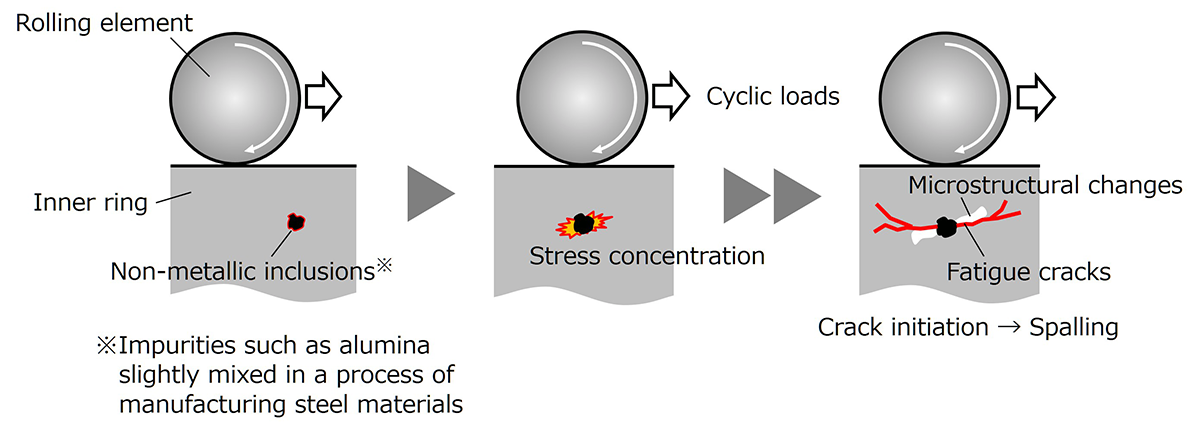
Fig.1 Mechanism of spalling from non-metallic inclusion
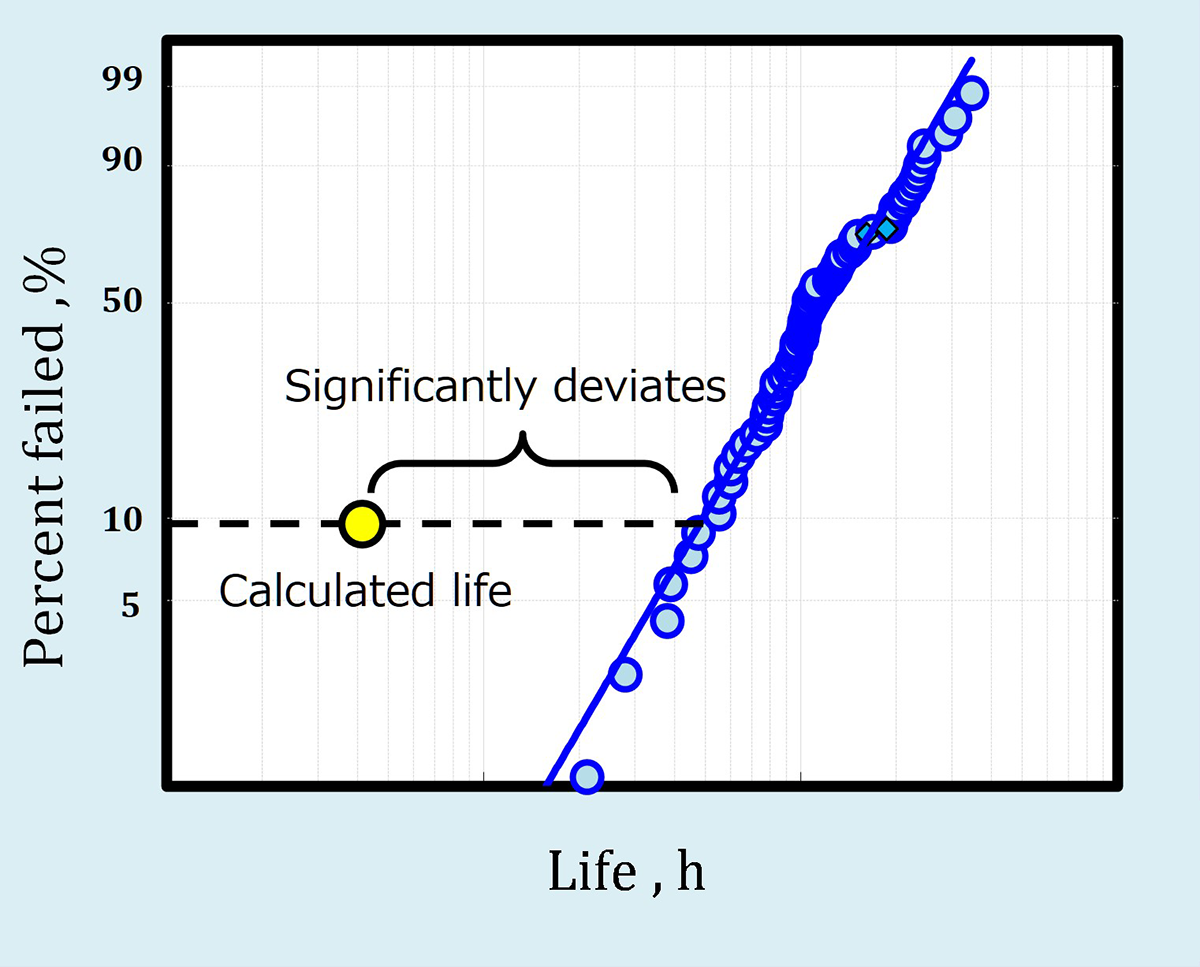
Fig.2 Actual rolling fatigue life compared with life calculated by ISO standards
3. Highly Accurate Life Prediction Technology for Quantifying High Reliability
As mentioned earlier, material cleanliness plays a crucial role in the life performance of rolling bearings. Quantifying this factor is key to solving critical technical challenges. Against this background, NSK has established a highly accurate technique for predicting spalling life originating from non-metallic inclusions. This technique is based on statistical data on the size and amount of non-metallic inclusions in steel, measured using NSK’s proprietary detection technology; endurance life tests conducted with minute artificial defects; and simulation analysis of these test results.
Next, we will introduce an ultrasonic testing technology called NSK Micro-UT™, for detecting internal defects (non-metallic inclusions) and a new life prediction technology that incorporates the principles of fracture mechanics.
3.1 NSK’s proprietary material evaluation technology: NSK Micro-UT
Traditionally, non-metallic inclusions in steel have been evaluated using direct observation with an optical microscope, as shown in Figure 3. Since this method is to directly evaluate the size and amount of inclusions, it has been highly effective in determining the level of material cleanliness.
However, from the perspective of parameters used for spalling life prediction, it had limitations due to the small evaluation volume relative to the total volume of the product bearing and the significant resources required for evaluation. Additionally, there was no industrially available inspection technology capable of detecting micro-sized non-metallic inclusions, which serve as the initiation points for damage. To address this, we developed an ultrasonic detection technique that can detect micro-sized non-metallic inclusions and is suitable for industrial applications, which we have named NSK Micro-UT.
As shown in Figure 4, NSK Micro-UT involves placing a steel bar (with a diameter of several tens of millimeters and a length of several hundred millimeters) in a water tank for ultrasonic testing. Previously, ultrasonic detection methods for detecting minute non-metallic inclusions were only feasible at the laboratory level. However, through extensive testing and verification, including the optimization of detection conditions and actual size measurement of numerous non-metallic inclusions, we successfully developed a method capable of accurately detecting inclusions smaller than 100μm, which were previously difficult to detect using conventional industrial ultrasonic detection methods. This has allowed for the rapid evaluation of large volumes and the acquisition of highly reliable statistical data on the distribution of nonmetallic inclusions.
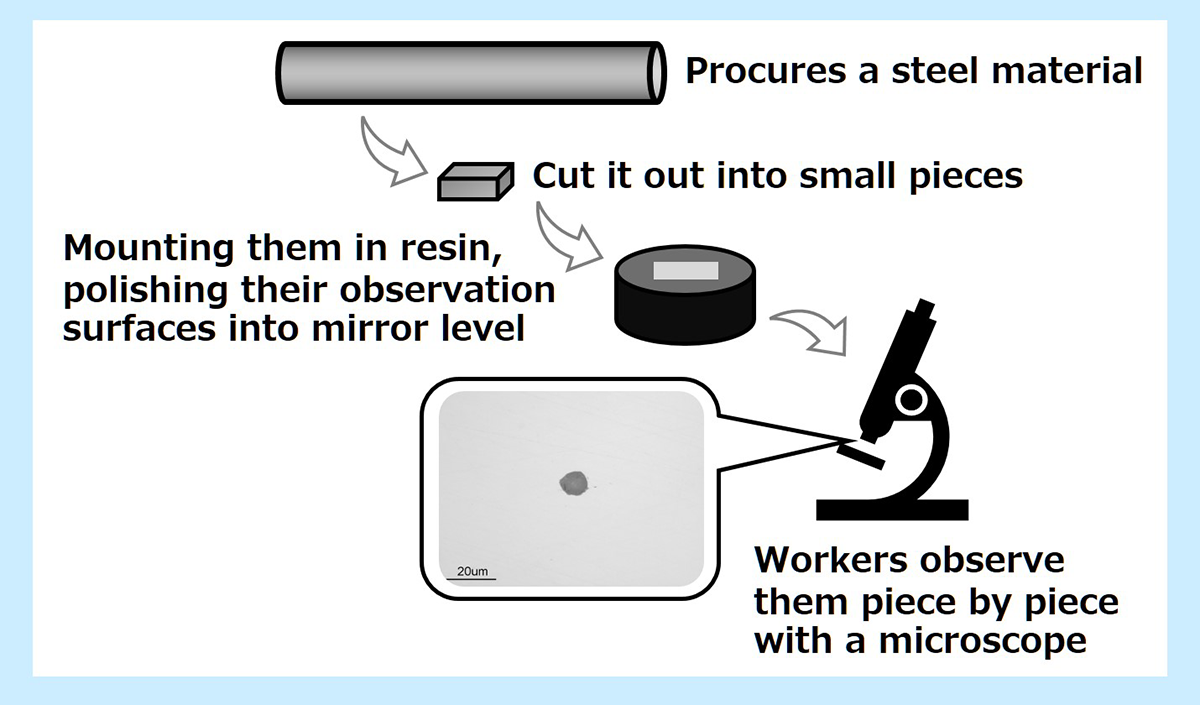
Fig.3 Example of conventional method to evaluate material cleanliness
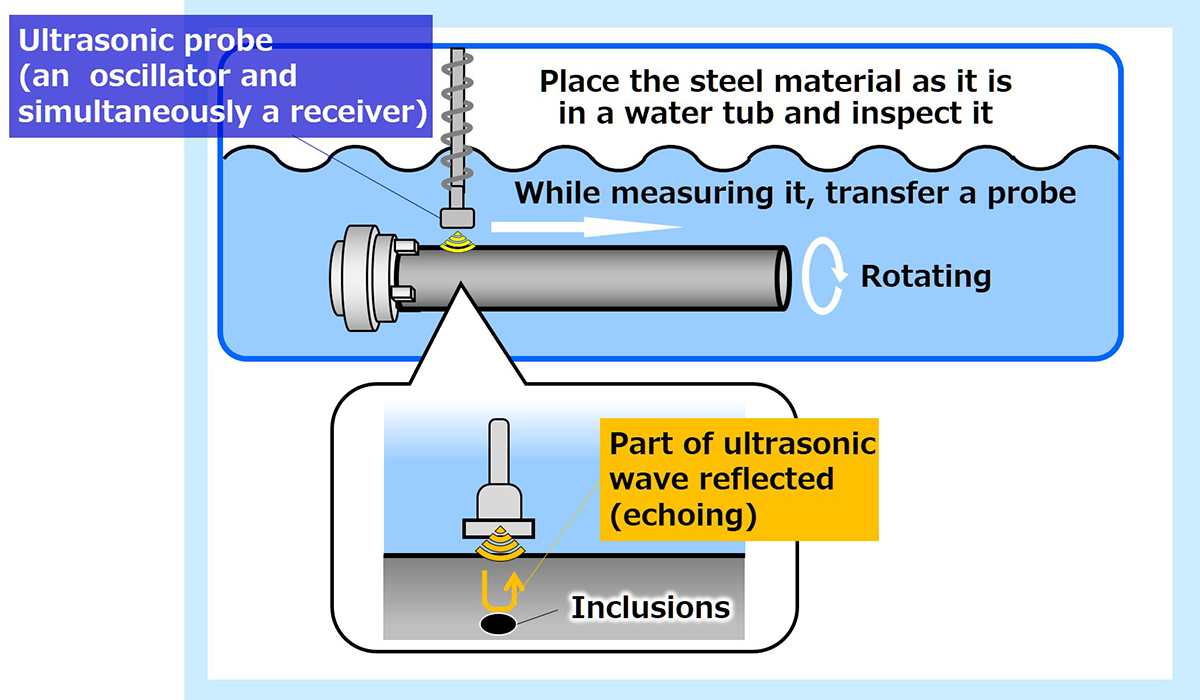
Fig.4 NSK Micro-UT method
3.2 Highly accurate life prediction technology
The use of high-cleanliness steel can extend the spalling life of rolling bearings. This fact was generally known, but until now there had been no means to estimate it using a formula accurately. Therefore, alongside the development of NSK Micro-UT technology, we have also worked on developing a method to predict spalling life by using numerical data on the size and amount of non-metallic inclusions obtained through NSK Micro-UT.
To overcome these challenges, we developed a method that introduces minute drill holes in the raceway ring as artificial defects to simulate inclusions and subsequently conducts endurance evaluation tests. When using this method, cracks initiate at the edges of the drill hole, grow, and ultimately lead to spalling. As shown in Figure 5, this method successfully reproduces spalling similar to that caused by non-metallic inclusions. This breakthrough has allowed for the quantitative evaluation of how defect size and location influence the spalling process in rolling bearings.
Furthermore, as shown in Figure 6, we conducted a finite element method (FEM) analysis to evaluate the stress around the artificial defects from a mechanical perspective. Previous studies have shown that the crack growth process governs the majority of spalling life.
Therefore, we analyzed spalling life using the stress intensity factor, a fracture mechanics parameter that allows for the quantitative evaluation of crack growth.
Since the stress intensity factor includes both defect size and stress as variables, it serves as an index for evaluating their effects simultaneously. The lifetime data obtained from the endurance tests proved to be consistently correlatable using the stress intensity factor. The life data obtained from the aforementioned durability tests was confirmed to be uniformly organized using the stress intensity factor, enabling quantitative prediction of spalling life using the stress intensity factor8-9).
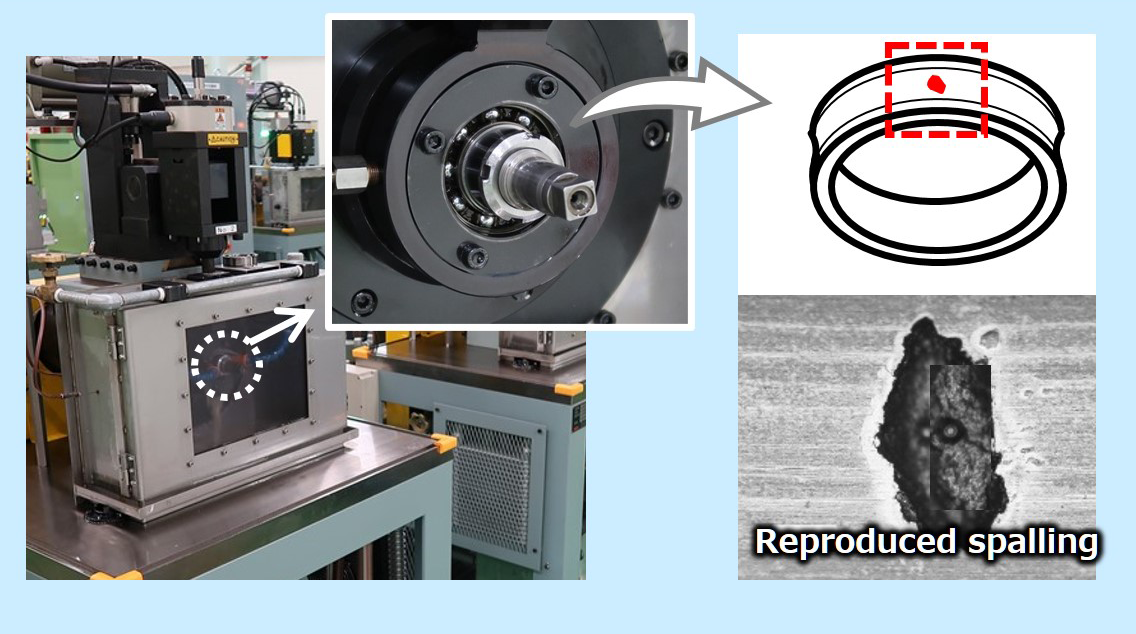
Fig.5 Fatigue test using artificial defects
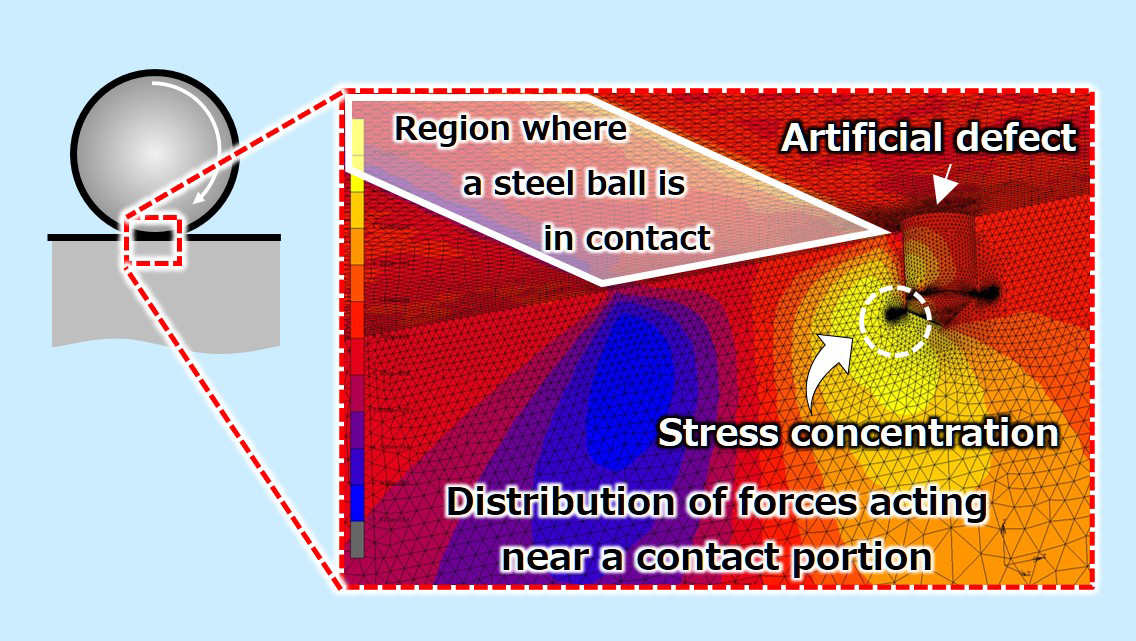
Fig.6 Simulation and analysis of stress near defect
4. Visualization of High Reliability
4.1 Dynamic Load Capacity = Review of Basic Dynamic Rated Load C
In recent years, the cleanliness of bearing steel has improved significantly, resulting in rolling bearing lifetimes that far exceed the ISO life calculation values (Figure 7).
For spalling life that significantly exceeds the ISO standard life calculation values, as described previously, spalling life can be predicted using statistical data on non-metallic inclusions in steel obtained through NSK Micro‑UT technology in combination with the spalling‑life calculation formula presented earlier (Figure 8). As a result, it is now possible to select the optimal bearing.
Furthermore, applying this technology has made it possible to reassess and optimize the basic dynamic load rating C, a key parameter used in general bearing life calculations.
Specifically, the predicted spalling life obtained using this newly developed technology is compared with the results from conventional calculation methods. Based on this comparison, the basic dynamic load rating (C) is recalculated and revised to account for the safety factor. Figure 9 illustrates an example of this process.
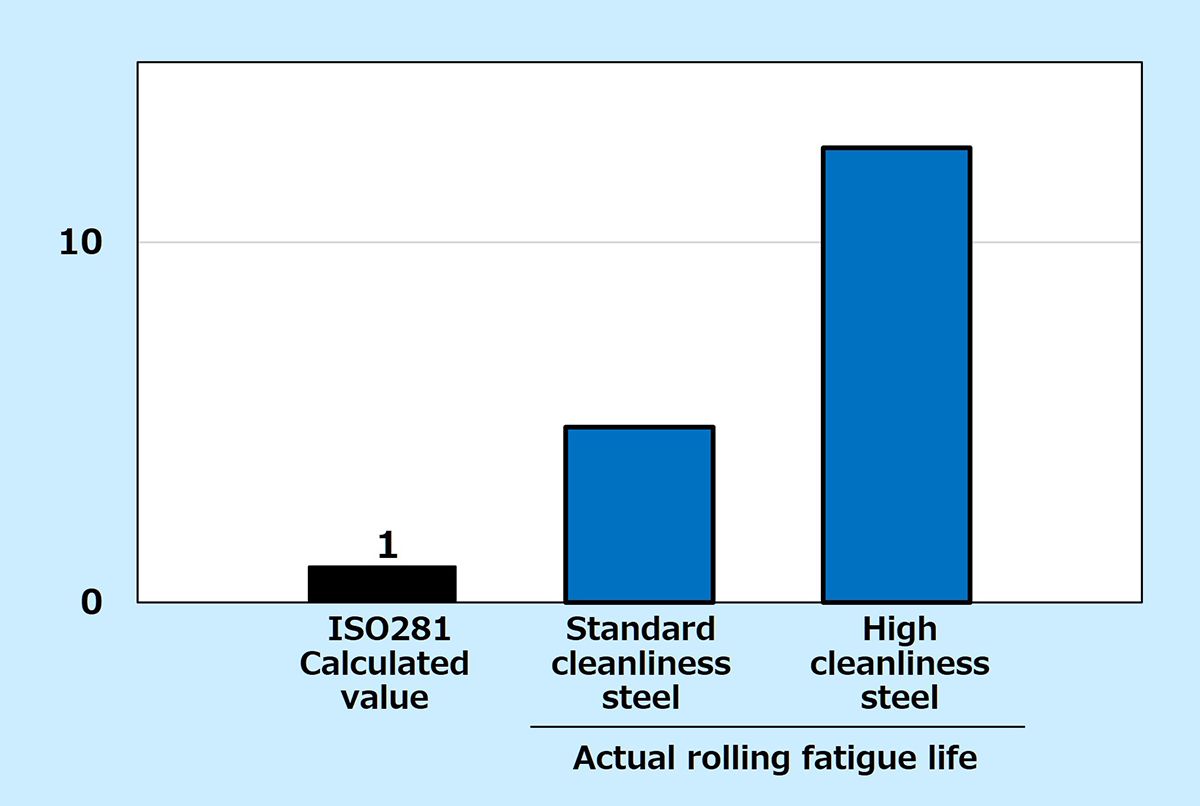
Fig.7 Relationship Between ISO Calculated Values and Actual Rolling Fatigue Life
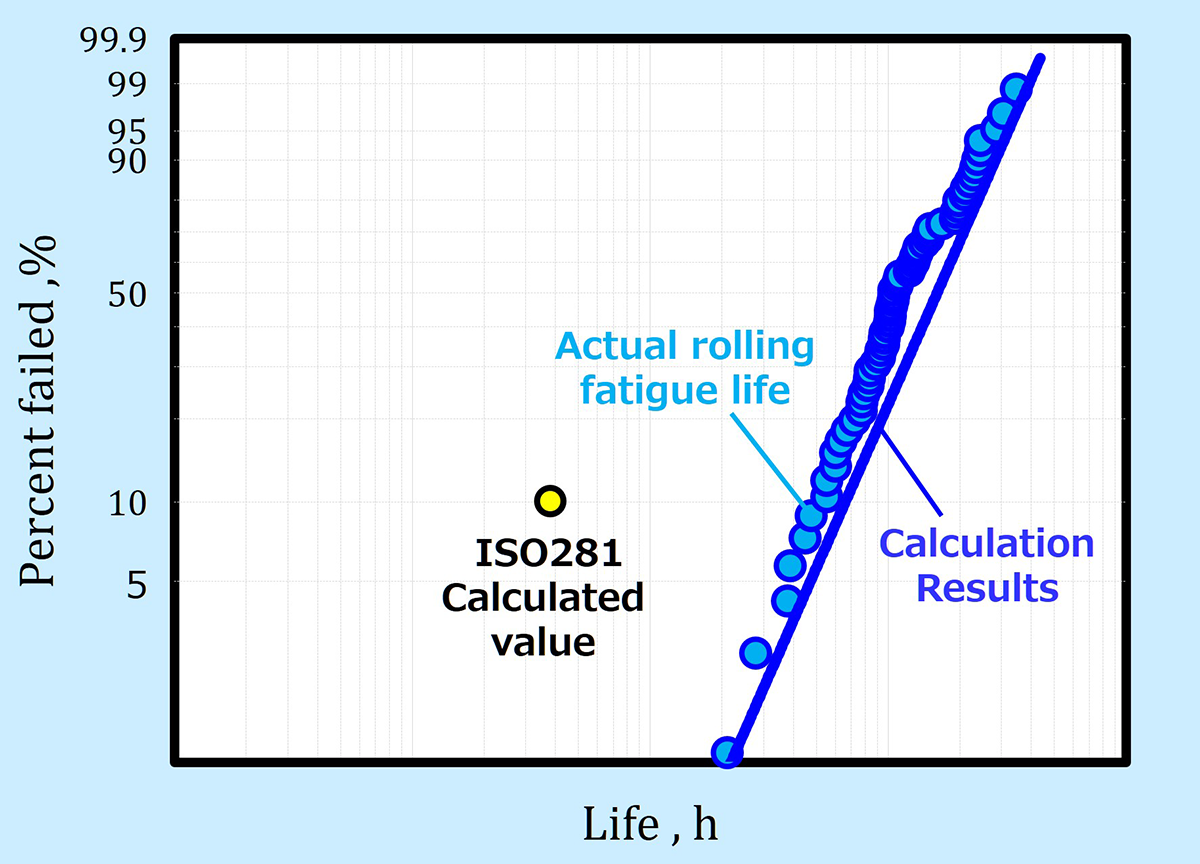
Fig.8 Life calculation results using high-precision life prediction technology
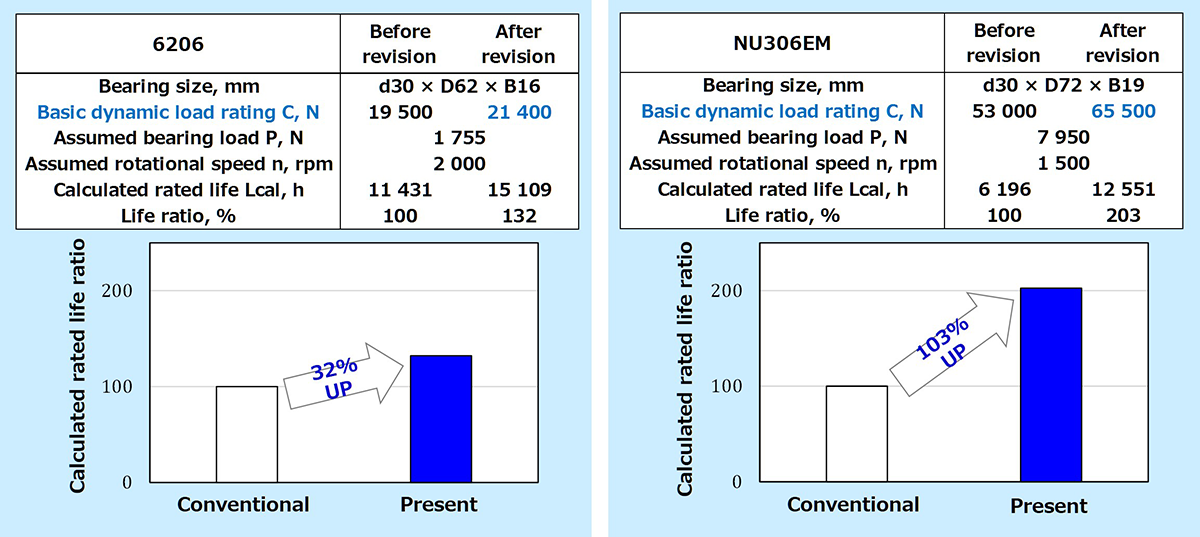
Fig.9 Calculated life after revisions of basic load ratings (deep groove ball and cylindrical roller bearings)
4.2 Target Bearing type
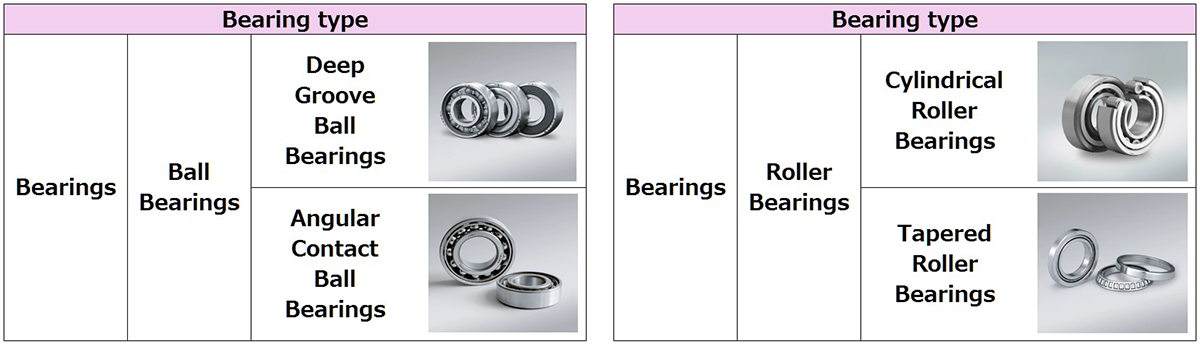
5. The value NSK provides through this technology
By using the basic dynamic load rating C, which reflects the high reliability of NSK bearings, a longer spalling life calculation value can be obtained compared with previous methods.
This enables users to operate NSK bearings with greater peace of mind for longer periods than before. Furthermore, when performing scheduled maintenance based on calculated service life values, the frequency of such maintenance can be safely reduced. It also allows for the selection of smaller bearings than previously required (optimized design), contributing to machine downsizing and higher speeds. These advancements contribute to energy and resource conservation, as well as the realization of a carbon-neutral society.
5.1 Miniaturization and Weight reduction
Increasing the basic dynamic load ratings of bearings enables their use in higher-load environments, allowing existing bearings to be replaced with smaller ones.
For example, the tapered roller bearing HR32306J can be replaced with the smaller HR33206J, achieving downsizing (bearing outer diameter: approx. 14%, bearing assembly width: approx. 13%) and weight reduction (bearing weight: approx. 38%) (Figure 10).
5.1 Miniaturization and Weight reduction
Increasing the basic dynamic load ratings of bearings enables their use in higher-load environments, allowing existing bearings to be replaced with smaller ones.
For example, the tapered roller bearing HR32306J can be replaced with the smaller HR33206J, achieving downsizing (bearing outer diameter: approx. 14%, bearing assembly width: approx. 13%) and weight reduction (bearing weight: approx. 38%) (Figure 10).
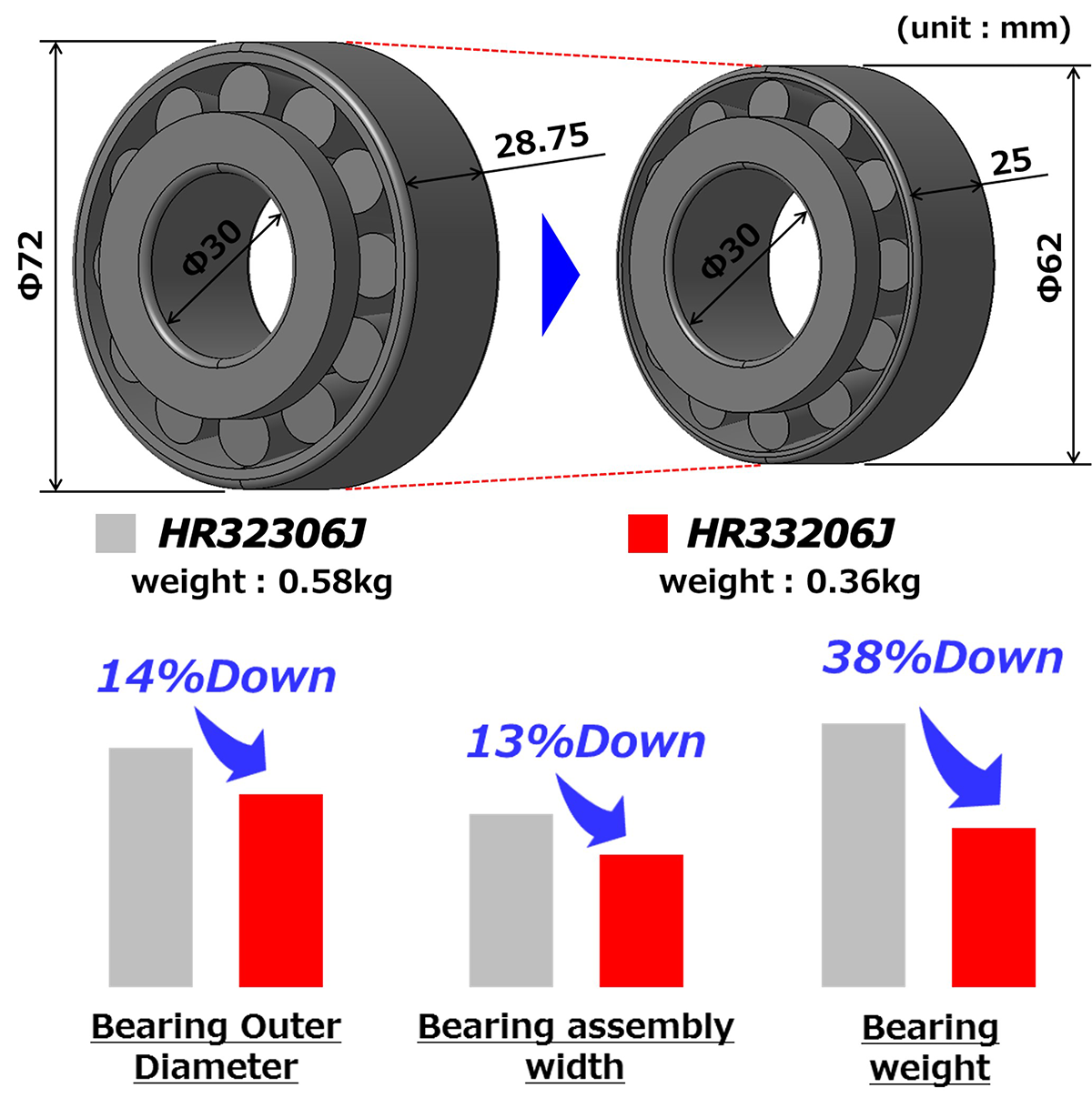
Fig.10 Effect of replacing HR32306J with HR33206J in tapered roller bearings
5.2 Resource Saving, Low torque, CO2 Reduction
Increases in the basic dynamic load rating facilitate the replacement of existing products with smaller bearings, thereby reducing the amount of material and energy required during manufacturing. In addition, using smaller bearings results in lower bearing torque than before, leading to reduced power consumption and lower CO2 emissions during the product use phase.
For example, the tapered roller bearing HR32306J can be replaced with the smaller HR33206J, which reduces bearing torque and power consumption by approximately 18%. During product use, this corresponds to an annual energy reduction of about 48 kWh—equivalent to a CO2 reduction of approximately 22 kg (Figure 11).
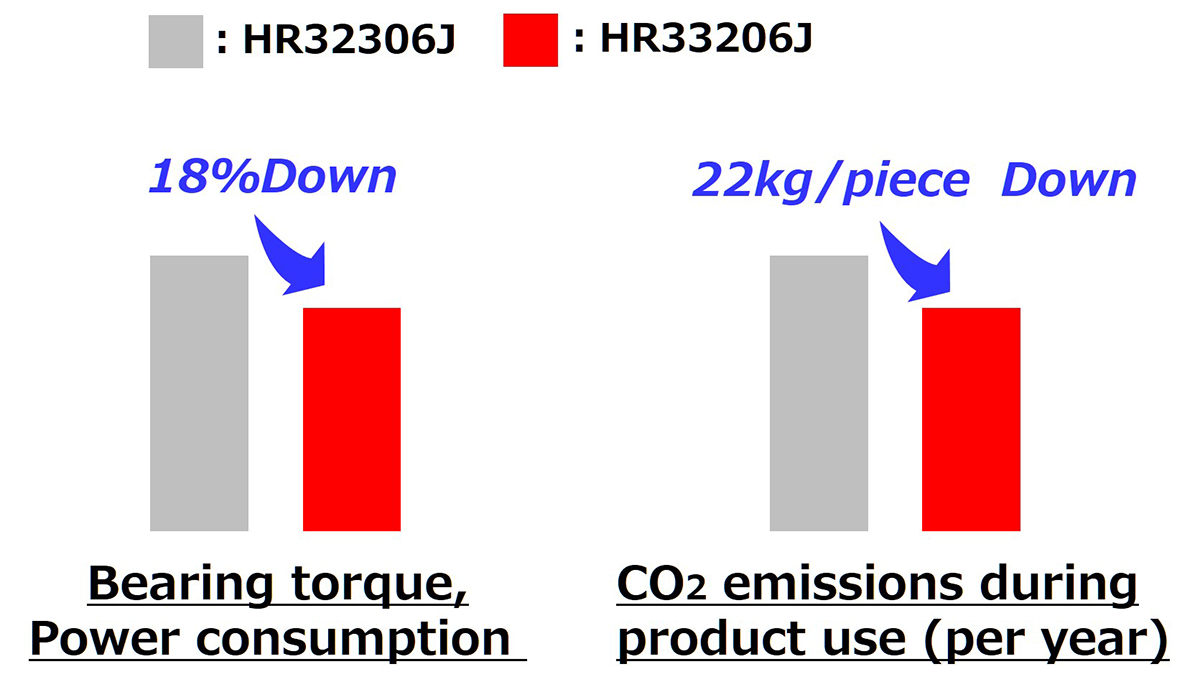
Fig.11 Effect of replacing HR32306J with HR33206J in tapered roller bearings
(All calculations are based on our standards)
6. Conclusion
This article introduced an ultrasonic detection technology, named NSK Micro-UT, for detecting non-metallic inclusions, as well as a novel life prediction technology that incorporates principles of fracture mechanics.
By utilizing the basic dynamic load rating C, which reflects the high reliability of NSK bearings, it is possible to achieve longer spalling life estimates compared to conventional methods. As a result, customers can use NSK bearings for longer periods with greater confidence, safely reducing the frequency of periodic maintenance.
Additionally, this technology enables the selection of smaller bearings, contributing to compact machine design, energy and resource conservation, and the realization of a carbon-neutral society.
NSK Online Catalog
Products Information: https://www.oss.nsk.com/products.html
References
1) K. Yamamoto, Monthly Tribology, No. 405 (2021), pp. 22–26.
2) M. Kameko, Y. Shirosaki, and S Endo, NSK Technical Journal, Vol. 691 (2019), pp. 39–45.
3) Y. Maeda, Monthly Tribology, No. 431 (2023), pp. 12–14.
4) H Ishiguro, NSK Technical Journal, Vol. 691 (2019), pp. 13–18.
5) K. L. Lee, NSK Technical Journal, Vol. 691 (2019), pp. 19–27.
6) K. Kawakami, Sanyo Technical Report, Vol. 14, No. 1 (2007), pp. 22–35.
7) H. Nishimori, T. Masuda, K. Kawakami, K. Furumura, and K. Hashizume, Journal of the Japan Institute of Metals, Vol.32, No. 6 (1993), pp. 441–443.
8) S. Hashimoto, H. Komata, and H. Matsunaga, Transactions of the Japan Society of Mechanical Engineers, Vol. 83, No. 852 (2017), Paper No. 16-00584.
https://doi.org/10.1299/transjsme.16-00584
9) S. Hashimoto, H. Komata, and H. Matsunaga, Transactions of the Japan Society of Mechanical Engineers, Vol. 83, No. 852 (2017), Paper No. 16-00585.