
Study on the Implementation of Original Alumina-Based Ceramic Ball for Rolling Bearings
September 2026
Technology Research & Development Office 1
Core Technology R&D Center
Technology Development Division Headquarters
This article is a re-edited version of content originally published in the Proceedings of the Tribology Conference 2025 Autumn Hakodate, reproduced with permission from the Japanese Society of Tribologists. For more details, please see the bottom of this article.
1. Introduction
Toward the realization of carbon neutrality and a sustainable society, electrification of automobiles is being actively promoted. As operating voltages continue to increase to achieve higher functionality and greater efficiency, electrical corrosion damage in motor support bearings has been reported. Ceramic ball bearings have a proven track record as an effective countermeasure against electrical corrosion, and silicon nitride (Si3N4) is commonly used as the ceramic material. Since silicon nitride exhibits rolling fatigue life and load-carrying capacity equal to or greater than those of bearing steel, it has been widely adopted as a ceramic material for rolling bearings. However, silicon nitride presents several challenges. Its raw materials are expensive, strict atmosphere control is required during the sintering process, and its high hardness compared with bearing steel results in longer machining times. Consequently, there are issues related to productivity, and shortages in supply have also become a concern due to the rapidly growing demand for EVs.
Among ceramic materials, alumina (Al2O3) is widely used in industrial applications because of its excellent raw material availability and superior productivity. However, in the bearing field, its application has been limited to certain corrosion-resistant and extremely light-load applications where silicon nitride cannot be used, owing to its inferior rolling fatigue properties. The authors have previously developed an oxide-based ceramic rolling element that combines functionality and productivity by compositing alumina with zirconia (ZrO2)1). However, zirconia undergoes phase transformation in high-temperature environments of approximately 100–200℃, resulting in strength degradation caused by cracks generated through the accompanying volume expansion. Therefore, heat resistance remained a challenge2). In this study, focusing on alumina-based ceramics with high productivity, the heat resistance was improved to enable application to a wider range of uses. Various performance evaluations, including load-carrying capability, were conducted to investigate the feasibility of applying the material as a rolling element for rolling bearings.
2. Experimental Methods
2.1 Test Materials
The test materials used in this study were an alumina-zirconia composite consisting of alumina as the base material with dispersed zirconia, and silicon nitride. Table 1 shows the material properties of the test materials. Hardness measurements were conducted in accordance with JIS R 1610. A Vickers indenter was applied under a load of 196 N with a holding time of 30 s, and measurements were performed three times for each material. Fracture toughness values were measured in accordance with JIS R 1607 using the indentation fracture (IF) method. A Vickers indenter was applied under the same conditions as those used for hardness measurements, and measurements were performed with n=3 for each material.
2.2 Evaluation of Rolling Fatigue Properties
To evaluate rolling fatigue properties, thrust-type life tests were conducted. Table 2 shows the test conditions. The test bearing was a 51305 thrust ball bearing (outer diameter: φ52 mm, inner diameter: φ25 mm). Hardened and tempered SUJ2 bearing steel was used for the raceways, while alumina-zirconia composite balls were used as the rolling elements.
2.3 Evaluation of Wear Resistance
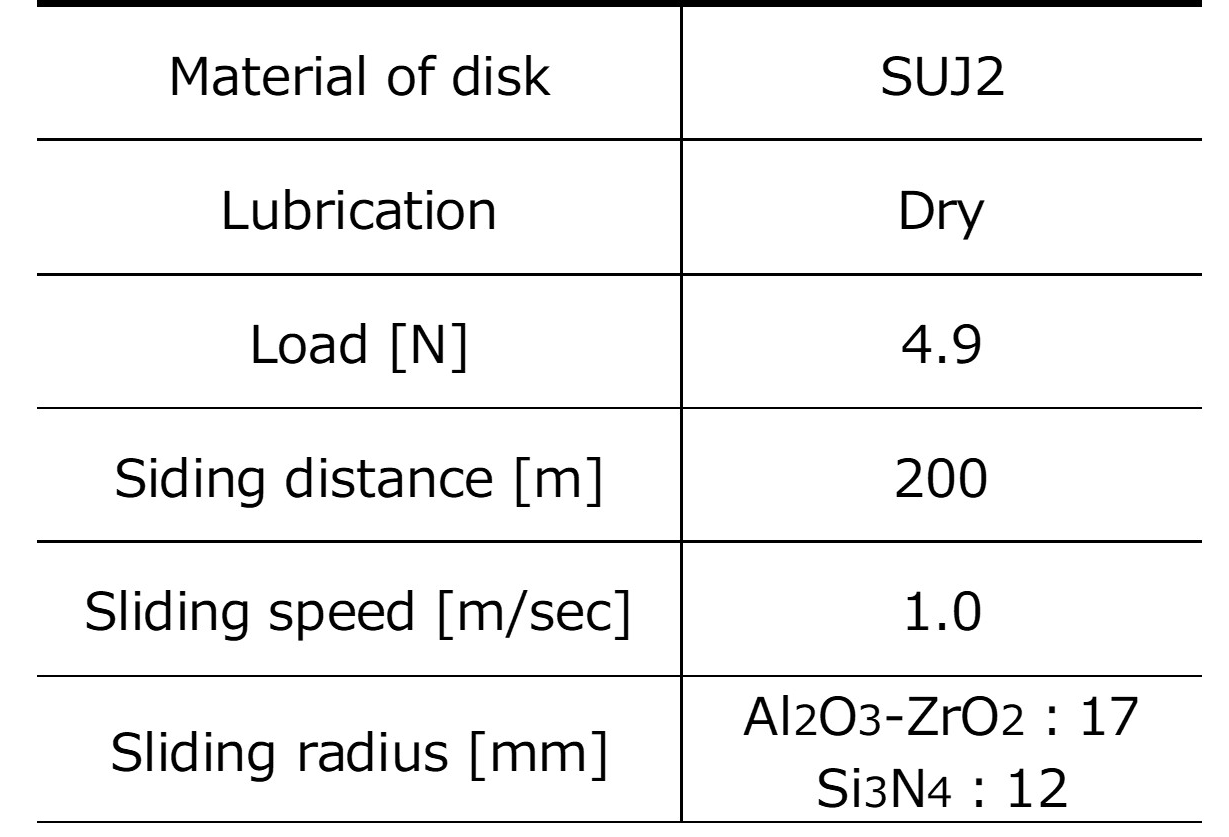
A ball-on-disk test was conducted to evaluate wear resistance. Table 3 shows the test conditions. Wear volumes of both the balls and disks were measured using a laser microscope. The wear volume of the disk was calculated from 2πrA, where A is the average cross-sectional area measured at four locations along the wear track and r is the sliding radius.
2.4 Evaluation of Corrosion Resistance
A 49% hydrofluoric acid solution was used to evaluate corrosion resistance. To accelerate corrosion, the solution temperature was maintained at 60℃ and the immersion duration was set to 24 h. Surface roughness of the rolling elements was measured at three locations before and after corrosion testing, and the arithmetic mean height, Sa, was determined.
Table 1 Material properties of sample ceramic
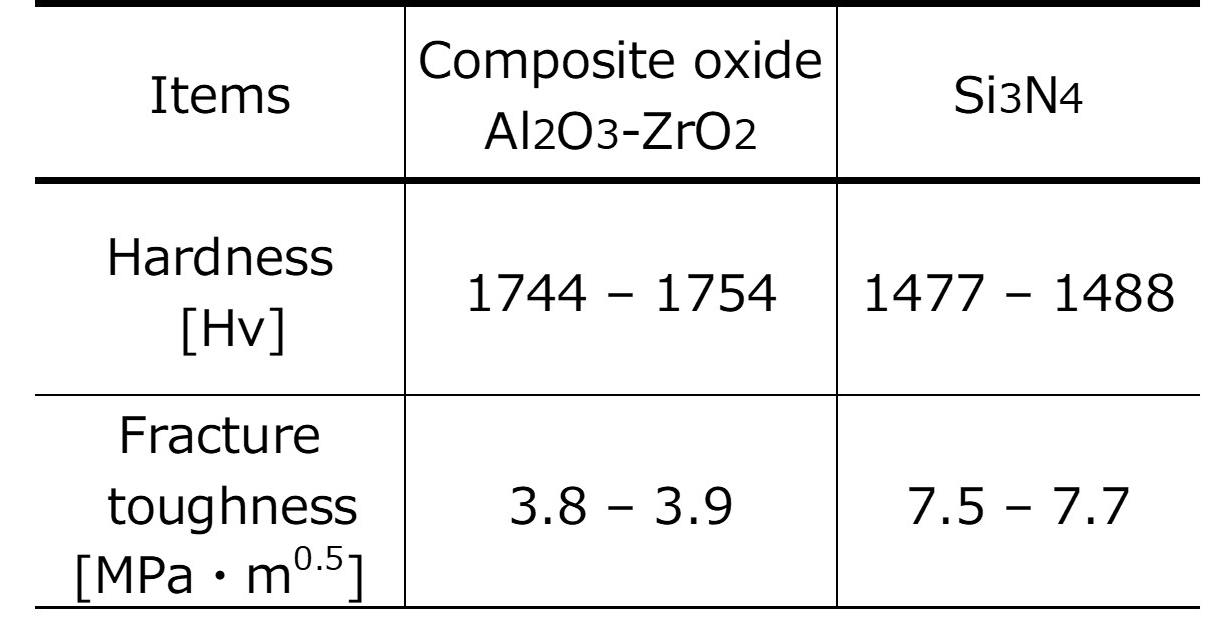
Table 2 Fatigue life test condition
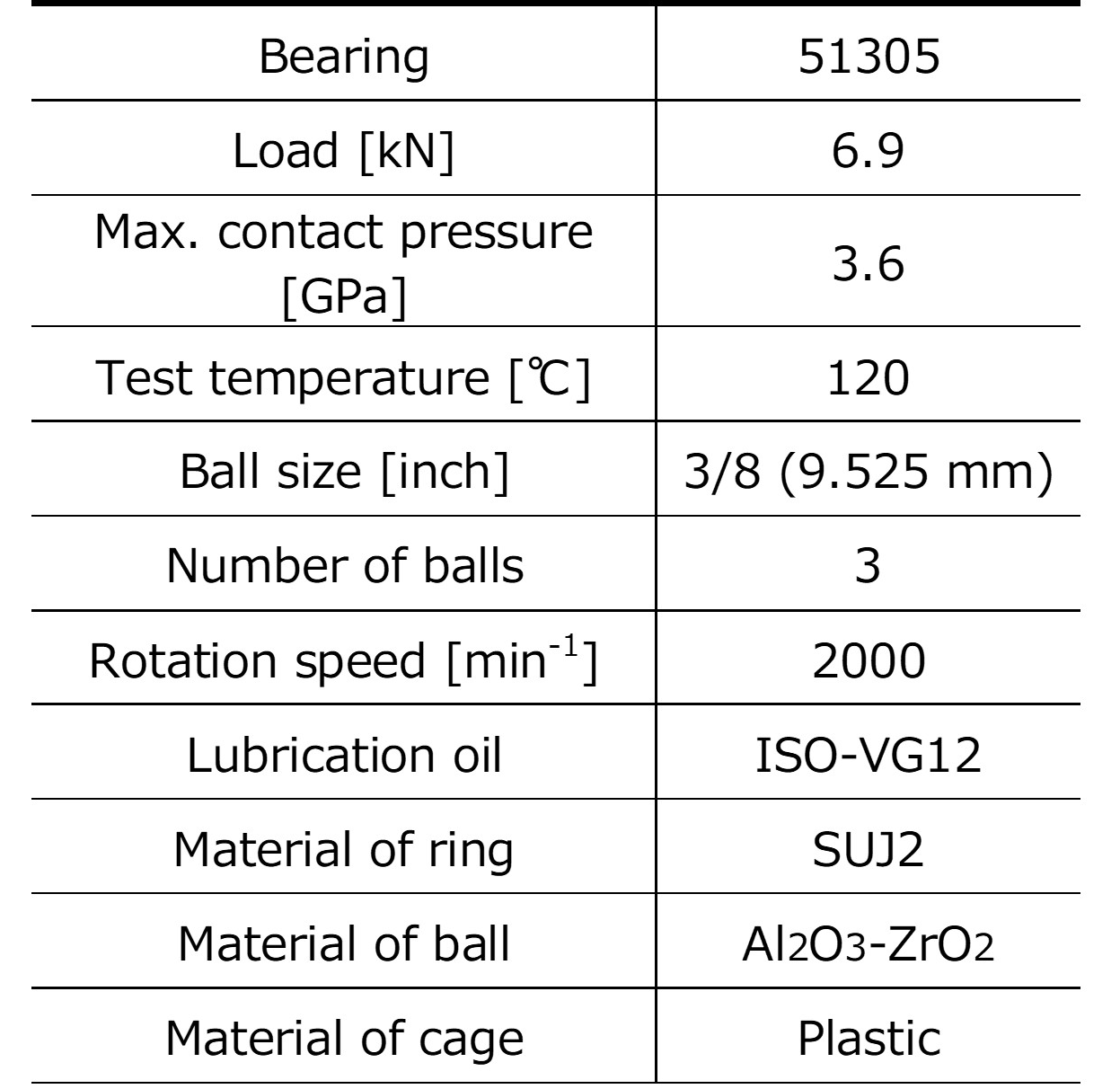
Table 3 Ball-on-disk test condition
3. Results and Discussion
3.1 Rolling Contact Fatigue Life
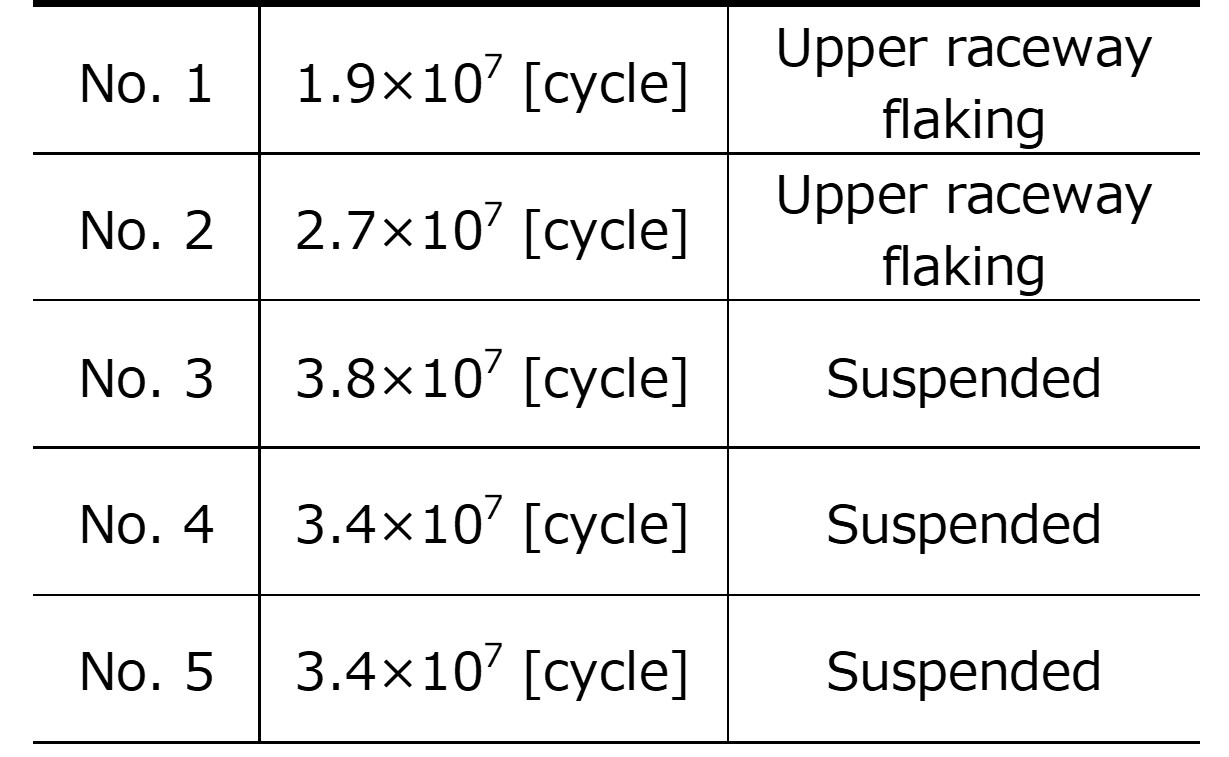
Table 4 presents the test results. The calculated life (Lcal) for this test was approximately 1.1 × 10⁷ cycles. Among the five test bearings, raceway flaking occurred in two bearings, while the remaining three were suspended after reaching approximately 3 times Lcal. Observation of the ball surfaces revealed that even under a contact pressure of 3.6 GPa, no particle pull-out or chipping, which is typically observed in damage of monolithic alumina1), was detected, and no damage was confirmed. The fatigue properties of the alumina-zirconia composite are considered to be influenced by grain refinement resulting from compositing1) and by the effect of compressive residual stress caused by the difference in coefficients of thermal expansion between alumina and zirconia3). It is presumed that the same life-extending effect was exhibited in the present ceramic balls. Furthermore, since the test was conducted in a high-temperature environment of 120℃, no strength degradation attributable to zirconia phase transformation was observed. In the present material, it is presumed that reducing the zirconia content and uniformly dispersing zirconia within the alumina matrix made yttria segregation less likely, thereby suppressing the phase transformation of zirconia4).
Table 4 The result of rolling fatigue test
3.2 Wear Volume After Ball-on-Disk Testing
Figure 1 shows the wear volumes of the balls and disks. The wear volume of the bearing-steel disks was nearly identical for both ball materials. However, the wear volume of the alumina-zirconia composite balls was significantly smaller than that of the silicon nitride balls, indicating superior wear resistance of the alumina-zirconia composite. It is presumed that this result is influenced by the higher hardness of alumina compared with silicon nitride, as well as its higher Young's modulus, which leads to a smaller contact area between the ball and disk.
3.3 Appearance and Surface Roughness Changes After Corrosion Testing
Figure 2 shows photographs of the ceramic balls before and after corrosion testing, and Figure 3 shows the arithmetic mean height (Sa) before and after corrosion testing. The alumina-zirconia composite exhibited only slight changes in appearance and surface roughness, whereas silicon nitride showed significant deterioration. It is known that alumina exhibits high corrosion resistance against hydrofluoric acid, whereas zirconia has relatively poor resistance. Since the change in surface roughness of the alumina-zirconia composite was small, it is presumed that most of the alumina remained uncorroded and that only the zirconia was corroded, resulting in the observed deterioration in surface roughness.
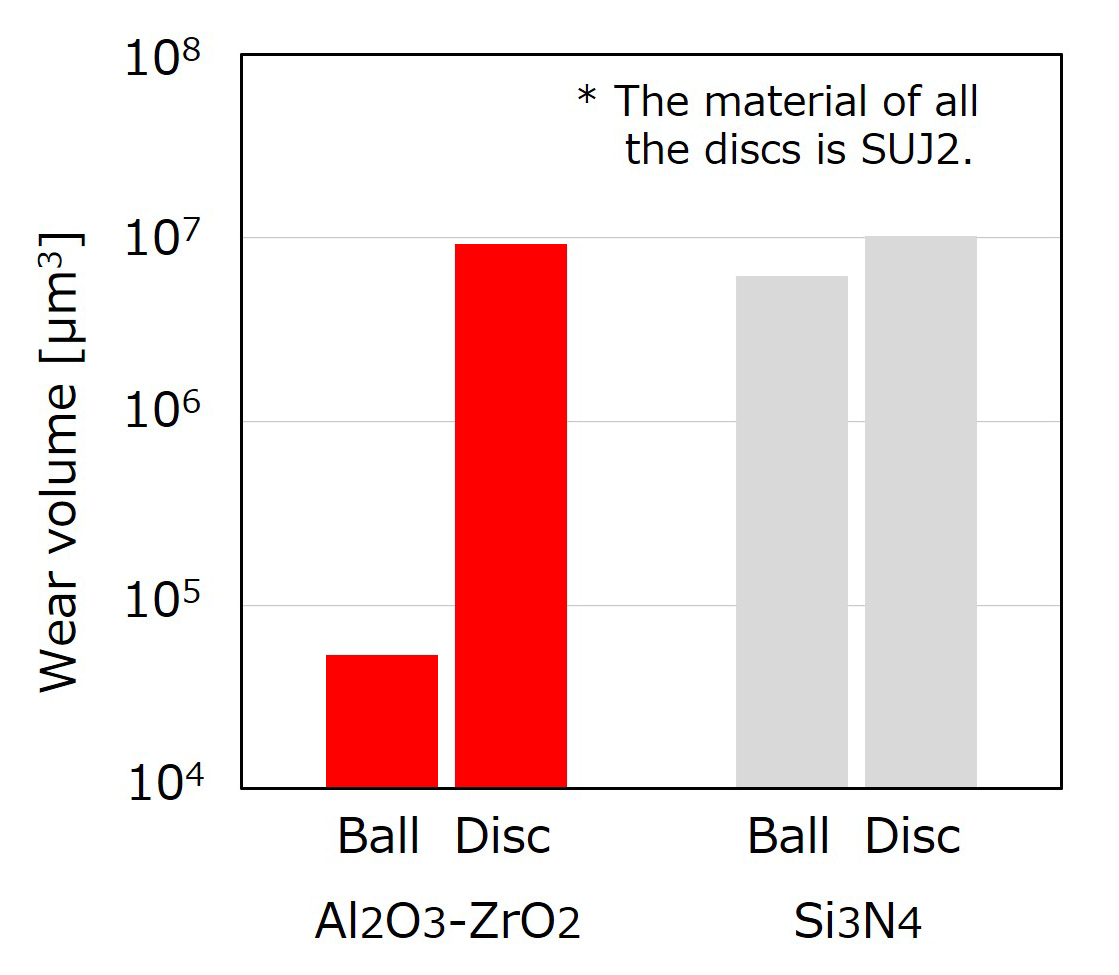
Fig.1 The result of ball-on-disk test
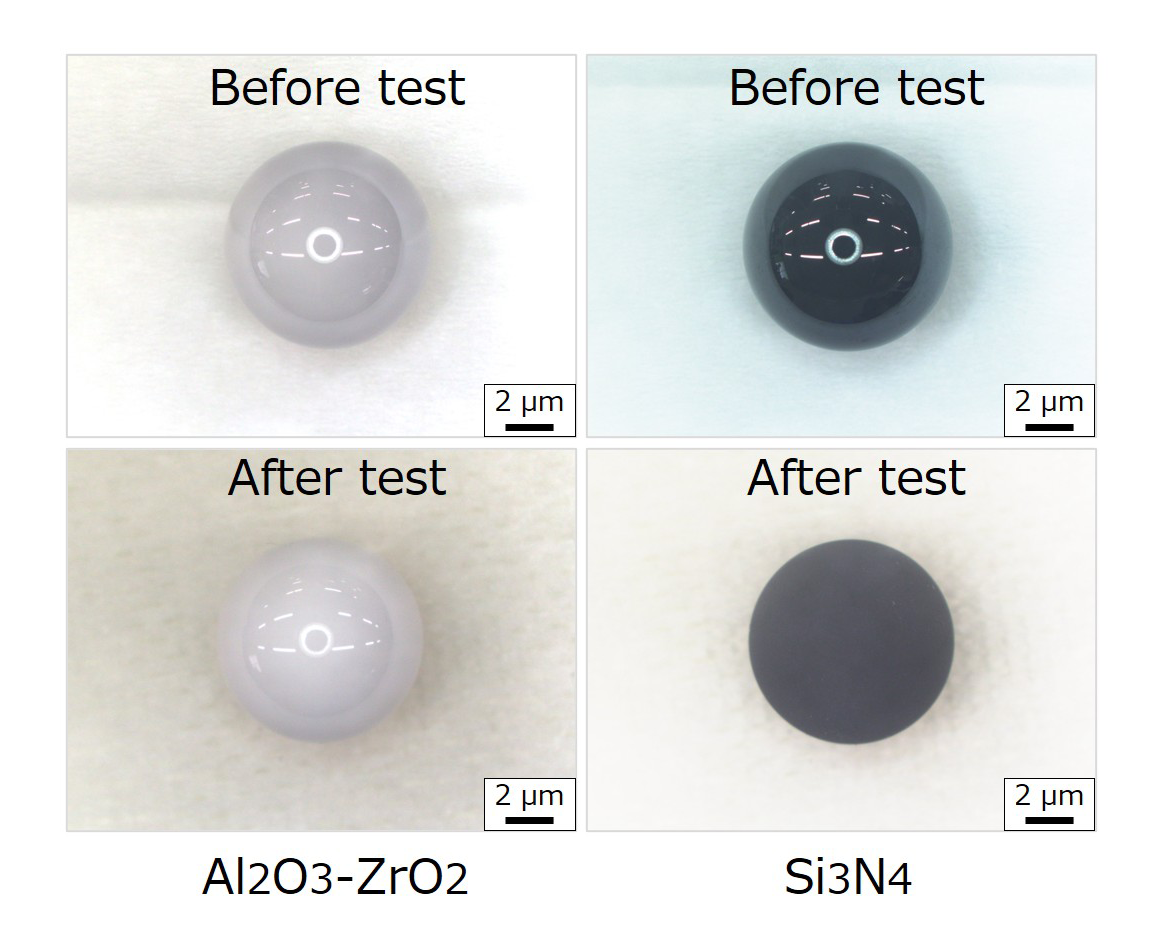
Fig.2 The result of ball condition by HF soaking test
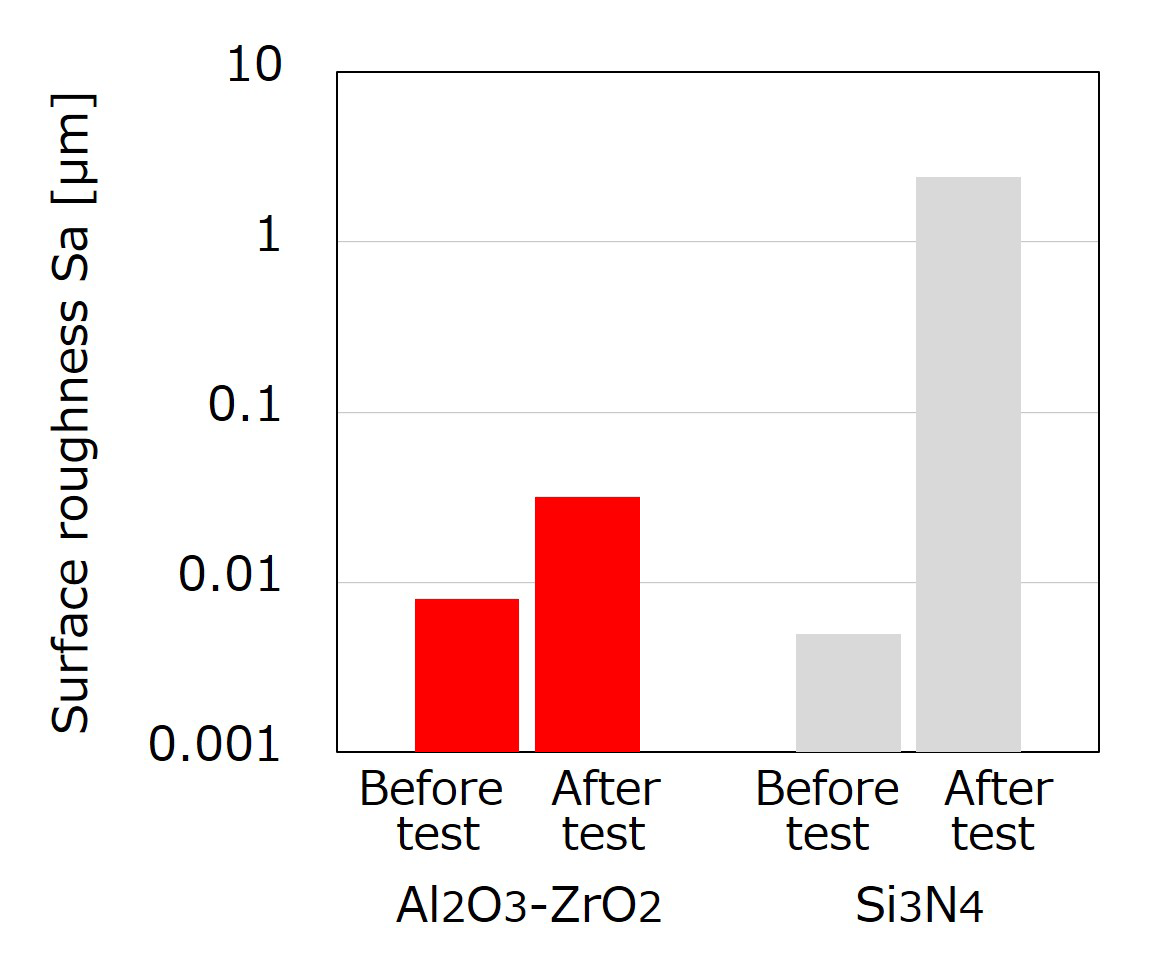
Fig.3 The result of surface roughness by HF soaking test
4. Conclusions
As a result of investigating the applicability of alumina-based ceramic balls to rolling bearings, the following conclusions were obtained:
① Alumina-zirconia composite balls exhibit excellent rolling fatigue properties under a high-temperature environment of 120℃ and a contact pressure of 3.6 GPa.
② Ball-on-disk test results demonstrated that alumina-zirconia composite balls possess superior wear resistance compared with silicon nitride balls.
③ In hydrofluoric acid immersion testing, the alumina-zirconia composite balls exhibited less deterioration in surface roughness than silicon nitride balls, indicating superior corrosion resistance.
References
1) Y. Endo, K. Ueda, Y. Shimizu, and N. Mitamura, “Rolling Contact Fatigue Property of Composite Oxide Ceramic Material”, Proceedings of the Tribology Conference 2015 Spring Himeji, (2015) F17, 430 - 431
2) T. Masaki, “Mechanical Properties of Y-TZP After Aging at Low Temperature”, Int. J. High. Tech. Ceram., 2(1986) 85-98
3) K. Tanaka, M. Matsui, R. Shikata, and T. Nishikawa, “X-Ray Measurement of Triaxial Residual Phase Stress in Zirconia-Alumina Composite Ceramics”, J. Soc. Mat. Sci., Japan, 41, 464(1992) 593-599
4) K. Matsui, “Production Method of Zirconia Powder for Fine Ceramics”, J. Jpn. Soc. Powder Powder Metallurgy, 68(2021) 103-110
Source Information
This article is a revised version for publication in the NSK Technical Review, based on content originally published in the proceedings listed below.
| Conference: | Tribology Conference 2025 Autumn, Hakodate |
| Presentation Number: | G47 |
| Proceedings Pages: | 640 - 641 |
| Japanese Title (in Japanese): | 新アルミナ系セラミック球の転がり軸受への適用検討 |
| English Title: | Study on the Implementation of Original Alumina-Based Ceramic Ball for Rolling Bearings |
| Authors : | Yuta Sakai (NSK Ltd.) Hiroyuki Uchida (NSK Ltd.) Kouji Ueda (NSK Ltd.) Jun Moteki (Niterra Co., Ltd.) Ryousuke Ano (Amatsuji Steel Ball Co., Ltd.) |