
MT-Frix™ Low-Friction Ball Screws for Machine Tools
May 2026
BS Technology Office
Linear Motion Product Technology Department
Industrial Machinery Technology Development Center
1. Introduction
Today, ball screws are utilized in a wide variety of applications, including machine tools, semiconductor manufacturing equipment, injection molding machines, transport systems, and automotive parts. As the scope of their applications grows, the functions required of ball screws have become increasingly diverse and sophisticated. Every day, NSK is working hard on research and development to meet these demands. This article introduces one fruit of these efforts: the “MT-Frix™”, a low-friction ball screw designed for machine tools.
2. Ball Screw Heat Generation
Ball screws are widely used as the core components of feed systems in machine tools because they possess high efficiency and rigidity as rolling element parts and can convert motor rotation into high-precision linear motion due to their high lead accuracy. However, when converting rotational motion to linear motion, a certain amount of energy loss occurs within the ball screw, and it is known that the majority of this is friction loss generated as the balls roll along the grooves. This friction loss affects the ball screw in the form of heat. Specifically, a temperature increase of 1℃ per meter causes an expansion of approximately 12 μm, which degrades the lead accuracy of the ball screw and adversely affects the positioning accuracy of the machine tool.
Furthermore, when a ball screw generates heat, that heat is transferred to the machine bed and surrounding components, causing deformation and contributing to deteriorated machining accuracy. Therefore, in applications and equipment where ball screw heat generation is a primary factor in accuracy degradation, forced cooling measures are often implemented to suppress temperature rise. Forced cooling methods include hollow shaft cooling, where coolant flows through the ball screw shaft to suppress temperature rise, and nut cooling, where coolant channels are formed in the nut. Both methods are highly effective countermeasures against heat generation. On the other hand, forced cooling presents challenges regarding cost and maintenance, as it requires the setup of piping routes and dedicated equipment to circulate the coolant.
To address this, NSK used its accumulated analytical technologies to perform a detailed analysis of friction loss during ball rolling under 2-point contact preload. This analysis led to the development of the MT-Frix™ low-friction ball screw, which significantly reduces friction loss during rolling compared to conventional models and contributes to lower heat generation.
3. Features of MT-Frix
The first feature of MT-Frix is the reduction of dynamic preload torque relative to rigidity. Dynamic preload torque refers to the dynamic friction torque generated when a preload is applied to drive the ball screw. Preload is applied to ball screws to improve rigidity and suppress backlash; however, the higher the preload, the higher the rigidity, but also the higher the dynamic preload torque. It is well known that increased dynamic preload torque increases heat generation, so excessive preloading negatively affects heat management.
MT-Frix makes it possible to significantly reduce dynamic preload torque when rigidity is kept equal to conventional specifications, or conversely, to improve rigidity when the dynamic preload torque is kept equal to conventional specifications. Fig.1 shows the theoretical and experimental results of the relationship between rigidity and dynamic preload torque for conventional specifications and MT-Frix. This shows that MT-Frix reduces dynamic preload torque by approximately half compared to conventional specifications when rigidity is the same. In other words, while preload is applied to improve rigidity, the resulting friction loss can be reduced significantly compared to conventional specifications. Similarly, Fig.1 shows that if the dynamic preload torque is kept the same as conventional specifications, rigidity can be improved by approximately 25%.
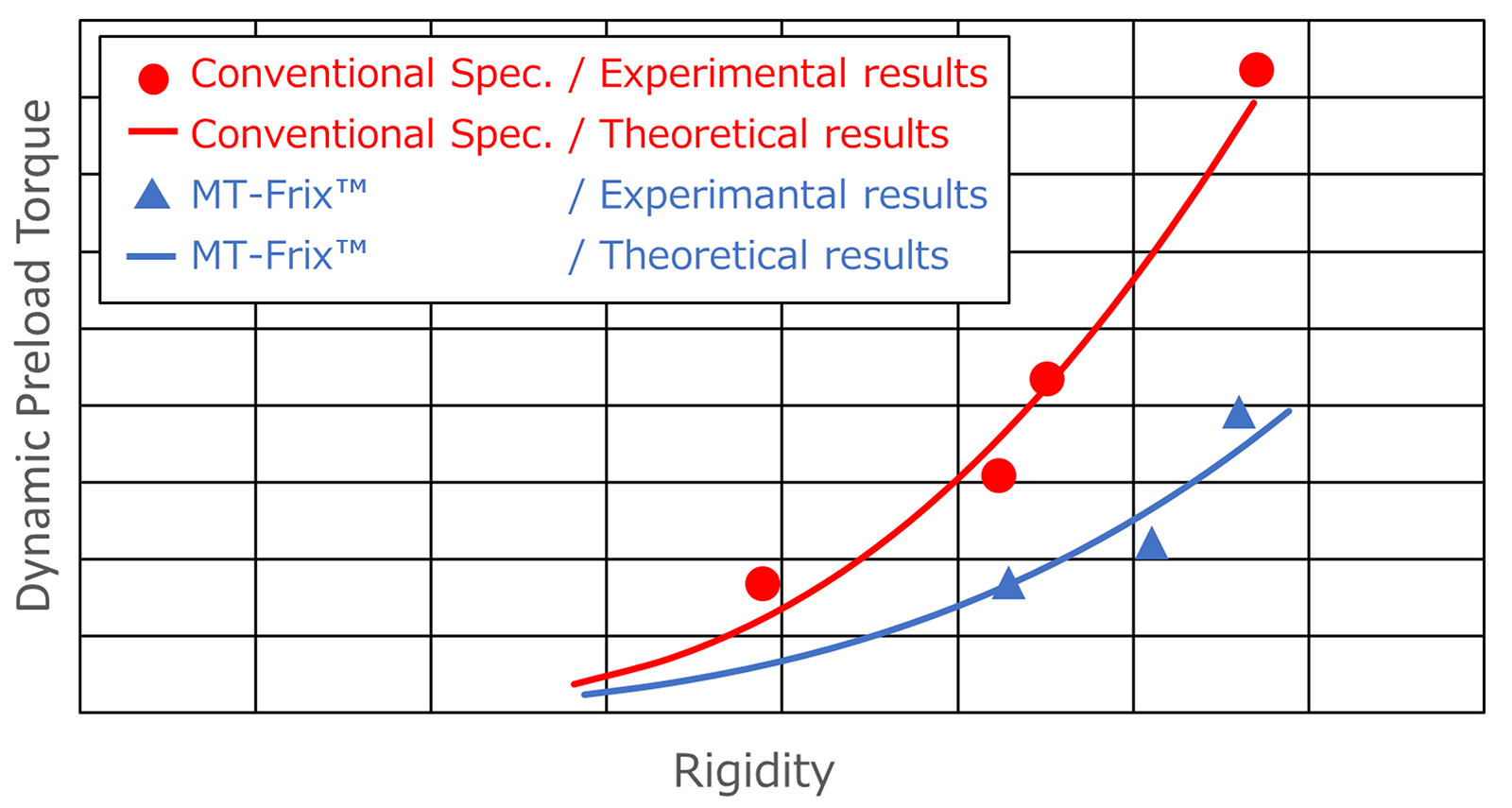
Fig.1 Relationship between rigidity and preload dynamic torque: conventional specifications vs. MT-Frix
The second feature of MT-Frix is reduced heat generation. Fig.2 shows the results of time-series changes in the nut outer diameter temperature during reciprocating operation in a horizontal position for both conventional specifications and MT-Frix with equivalent rigidity. It shows that MT-Frix reduces the amount of heat generation by approximately 40% compared to conventional specifications. This means that, despite maintaining the same rigidity as conventional specifications, friction loss and heat generation can be significantly reduced.
Fig.3 shows images of the ball screws taken with an infrared thermography camera during the comparison test. These images clearly show that the conventional specification generates significantly more heat than the MT-Frix and that heat is being transferred from the ball screw to the table fixed by the nut. As such, MT-Frix is expected to be effective in reducing the thermal deformation of the table in addition to reducing the loss of lead accuracy caused by shaft expansion.
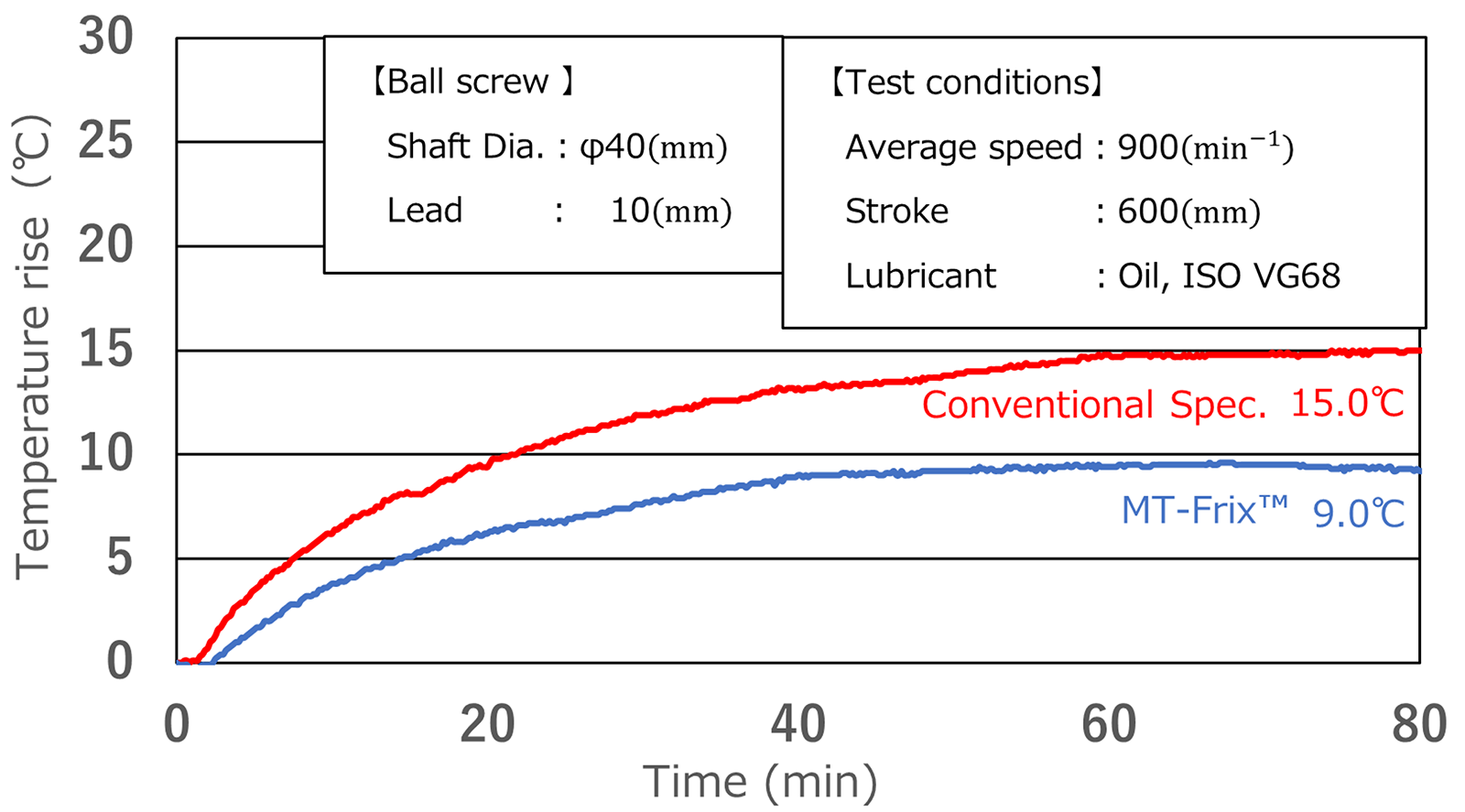
Fig.2 Heat generation test results for conventional specification vs MT-Frix on horizontal axis
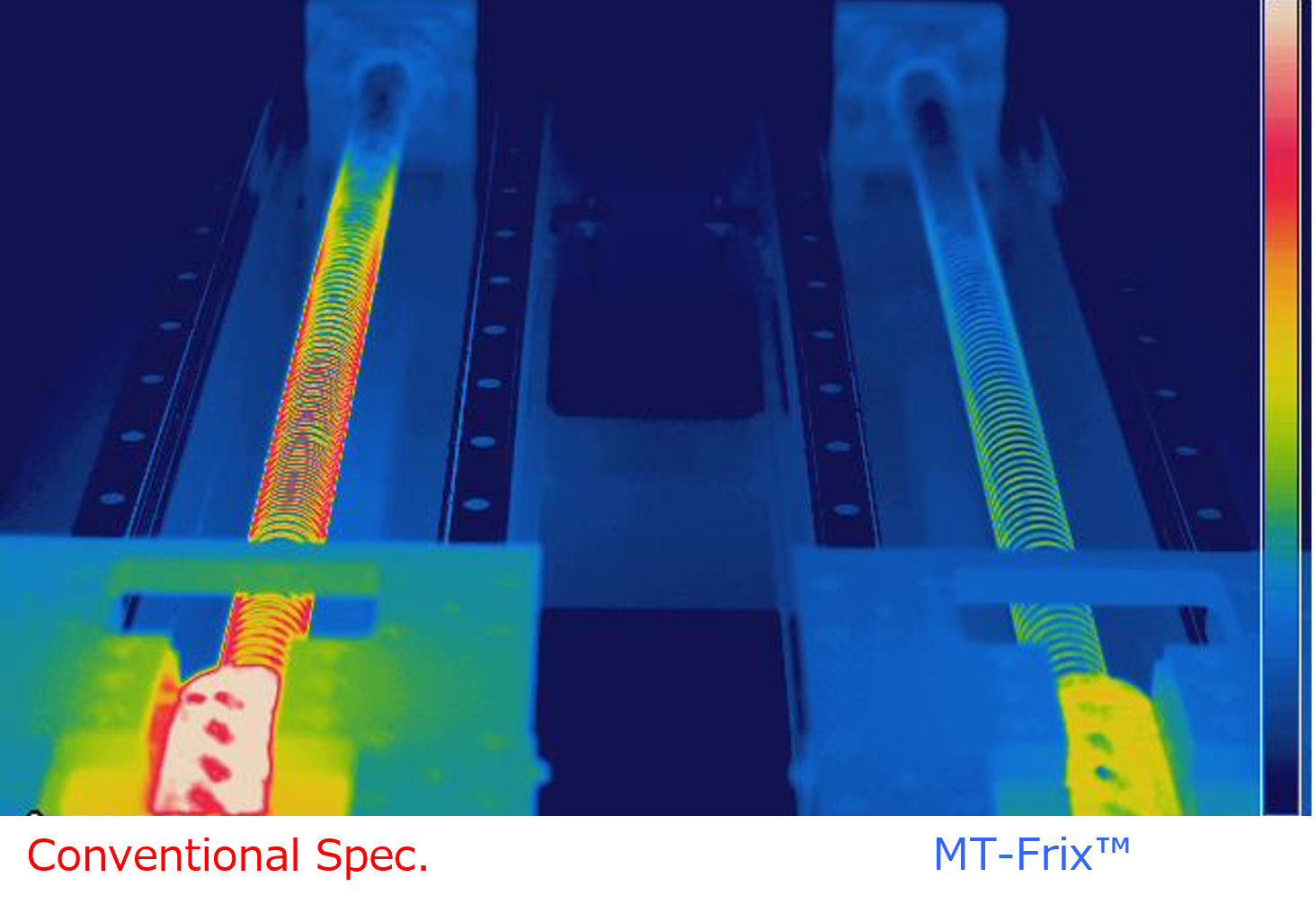
Fig.3 Infrared thermography camera images of heat generation test: conventional specifications vs. MT-Frix
In ball screws used in actual machine tools, in addition to dynamic preload torque, dynamic friction torque generated by the application of a load also causes heat. To evaluate this, a single-axis table was arranged vertically as shown in Fig.4, simulating the vertical (Z-axis) movement of a spindle in a vertical machining center. Reciprocating operation was performed with a weight fixed to the table to apply an axial load to the ball screw, and the heat generation was evaluated.
Fig.5 shows the time-series temperature changes of the nut outer diameter for conventional specifications and MT-Frix when rigidity is equal. The weight for the axial load was set so that the rated life would be 20,000 hours, which is a general guideline for machine tool ball screws. MT-Frix reduced heat generation by approximately 33% compared to conventional specifications. This confirms the heat reduction effect even under conditions where dynamic friction torque is constantly generated by a load, such as in the vertical axis of a machine tool. Consequently, heat reduction effects can be expected under conditions such as vertical axis use where the weight of the spindle unit is applied, or horizontal axis use with frequent acceleration/deceleration where inertial forces frequently apply axial loads to the ball screw.
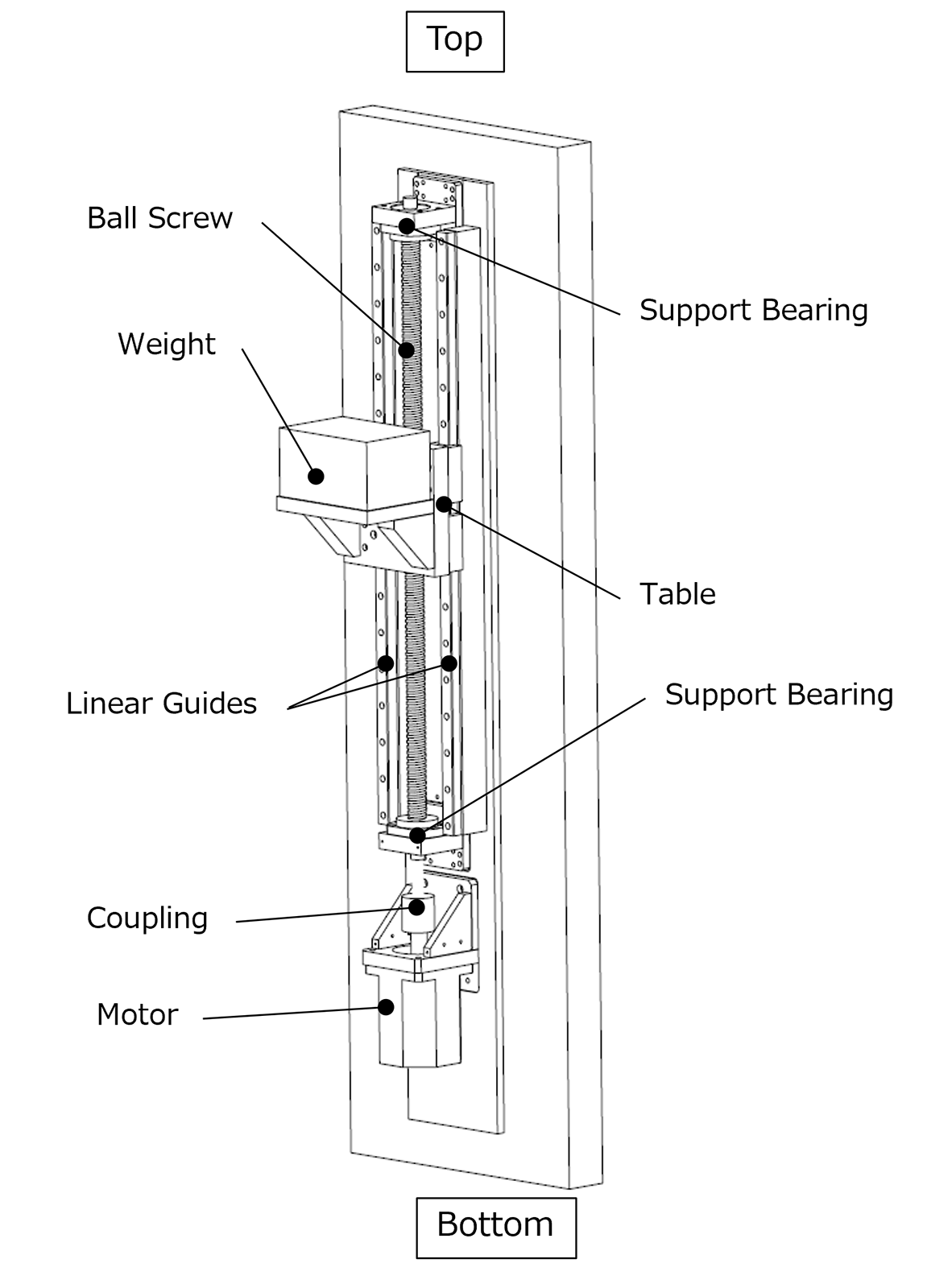
Fig.4 Vertical-axis testing table outline
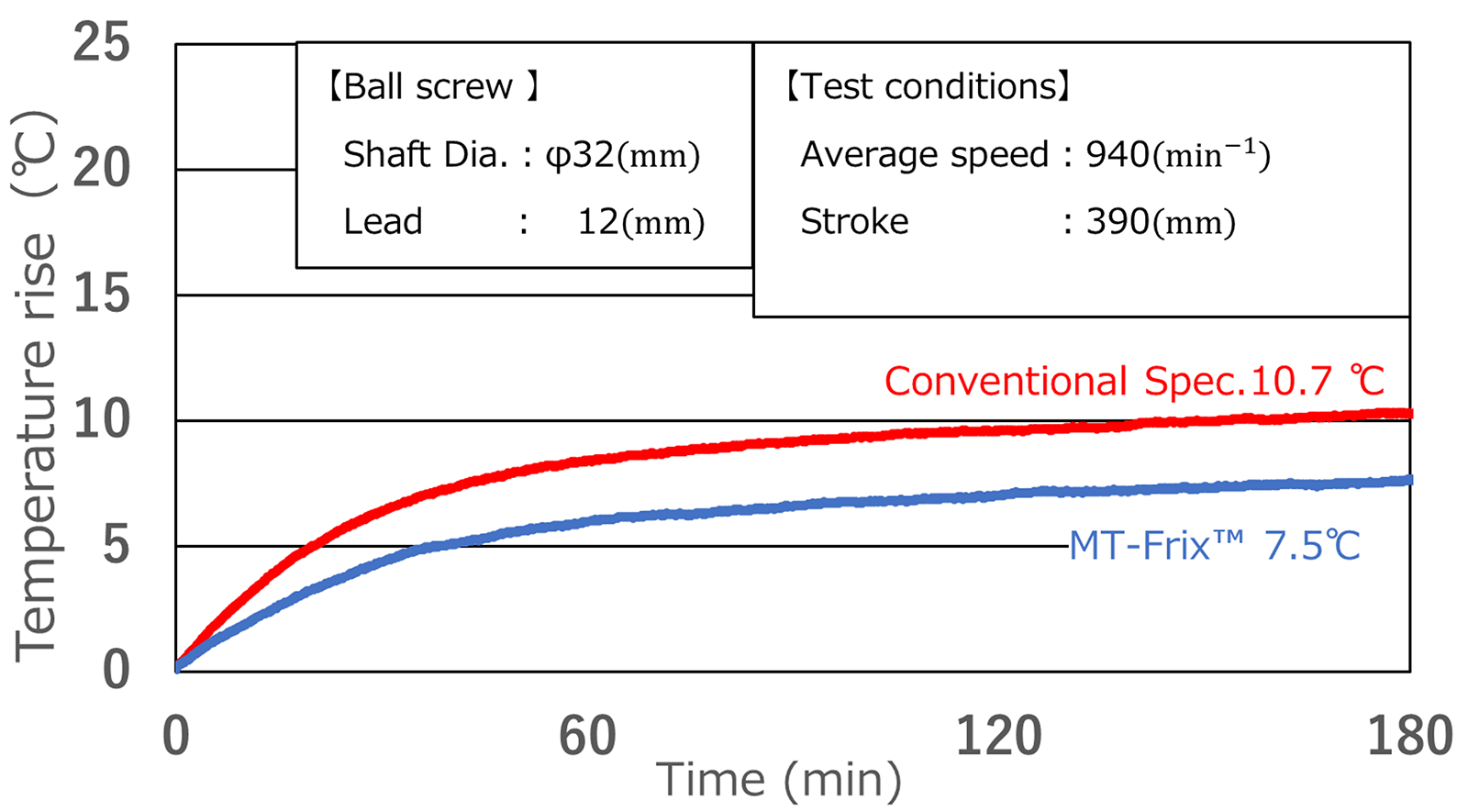
Fig.5 Heat generation test results for conventional specification vs MT-Frix on vertical axis
4. Conclusion
The MT-Frix low-friction ball screws for machine tools significantly reduces friction and subsequent heat generation while maintaining nut rigidity at conventional specifications. This reduces the degradation of accuracy caused by heat in machine tools, whereby helping to maintain and improve machining precision.