
Lubrication Life Formula (Lubrication Pentagon Theory)
March 2026
Core Technology R&D Center (Stationed at Institute of Science Tokyo)
Technology Development Division Headquarters
1. Introduction
Against the backdrop of SDGs (Sustainable Development Goals) and carbon neutrality, rolling bearings are required to achieve even lower torque. Consequently, there is a demand for lower viscosity and reduced amounts of lubricant used in bearings. However, such approaches mean that the oil film in the contact area of the rolling bearing becomes thinner, leading to various types of damage (wear, seizure, and flaking) due to oil film breakdown, which ultimately results in the end of service life.
As shown in Fig.1, it is necessary to achieve both lower torque and longer life than conventional bearings simultaneously. At present, there is no theoretical prediction formula for the service life of rolling bearings. Therefore, NSK defines "lubrication life" as the time until the oil film in the contact area of a rolling bearing breaks and is working to derive a theoretical lubrication life formula. The following section explains the outline of the Lubrication Pentagon Theory, which is essential for deriving this formula (Fig.2).
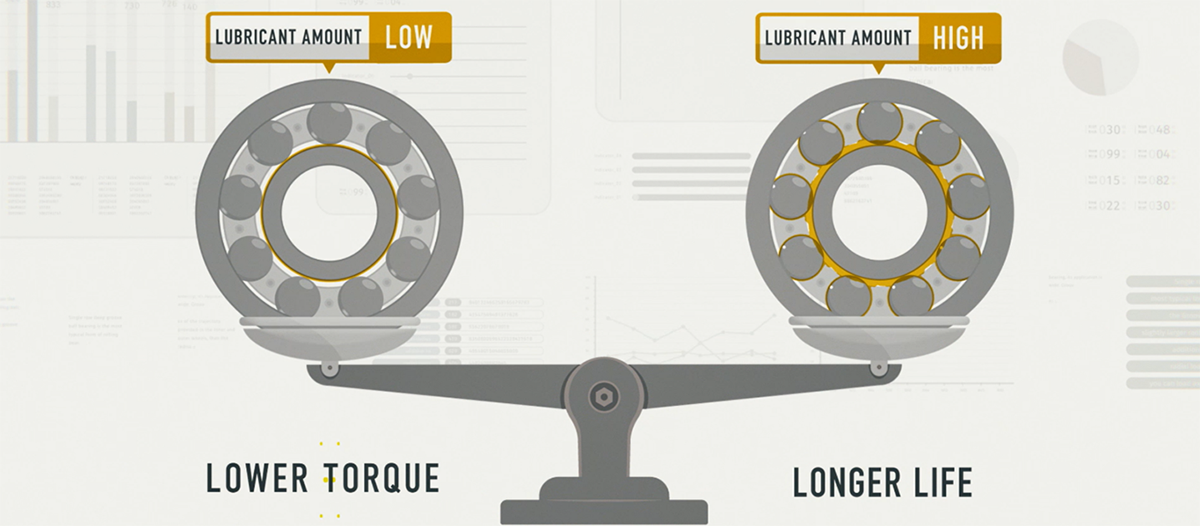
Fig.1 Achieving both low torque and long life

Fig.2 Lubrication Pentagon Theory
2. Lubrication Pentagon Theory
The lubrication life Formula consists of five prediction equations, which include the bearing torque prediction equation, the lubricant temperature prediction equation, the lubricant degradation prediction equation, the viscosity prediction equation, and the oil film thickness prediction equation under starved lubrication1), as shown in Fig.3. NSK refers to this as the Lubrication Pentagon Theory (Video: https://www.youtube.com/watch?v=_-bTzQnbFjI). By repeatedly calculating these five parameters in a clockwise manner, it is possible to predict how the oil film thins over time, which NSK believes will make it possible to derive a lubrication life formula. As shown in Fig.3, this lubrication life formula takes bearing torque into account, enabling the derivation of a theoretical optimal solution for the two key functions required of bearings: low torque and long life.
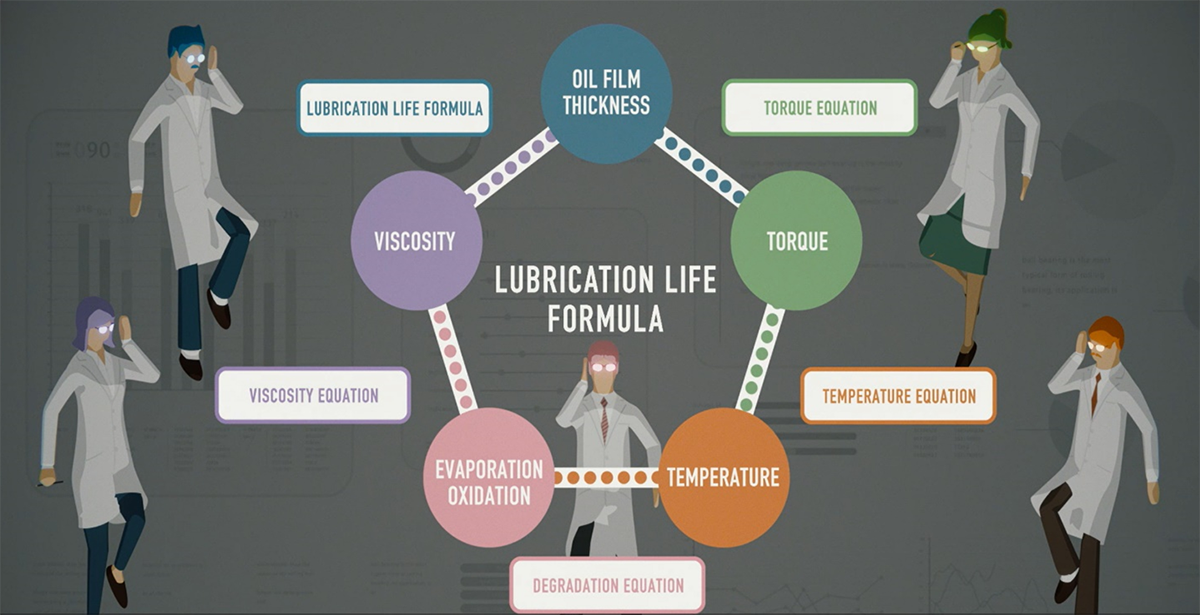
Fig.3 Configuration of the Lubrication Life Formula
3. NSK's Original Visualization Techniques
To verify the accuracy of the five prediction formulas mentioned above, techniques to visualize the lubrication condition of rolling bearings are also vital (Video: https://www.youtube.com/watch?v=VrNQ5K9QRMk&t=4s). NSK has developed original visualization techniques such as the Electrical Impedance Method (EIM)2)-5), which can simultaneously monitor the oil film thickness and the breakdown ratio of oil films in the bearing contact area, and Electrical Impedance Spectroscopy (EIS)6), which enables diagnosis of the degradation of the lubricant used in the bearing. By utilizing these advanced visualization techniques, NSK is working toward the derivation of a highly accurate lubrication life formula.
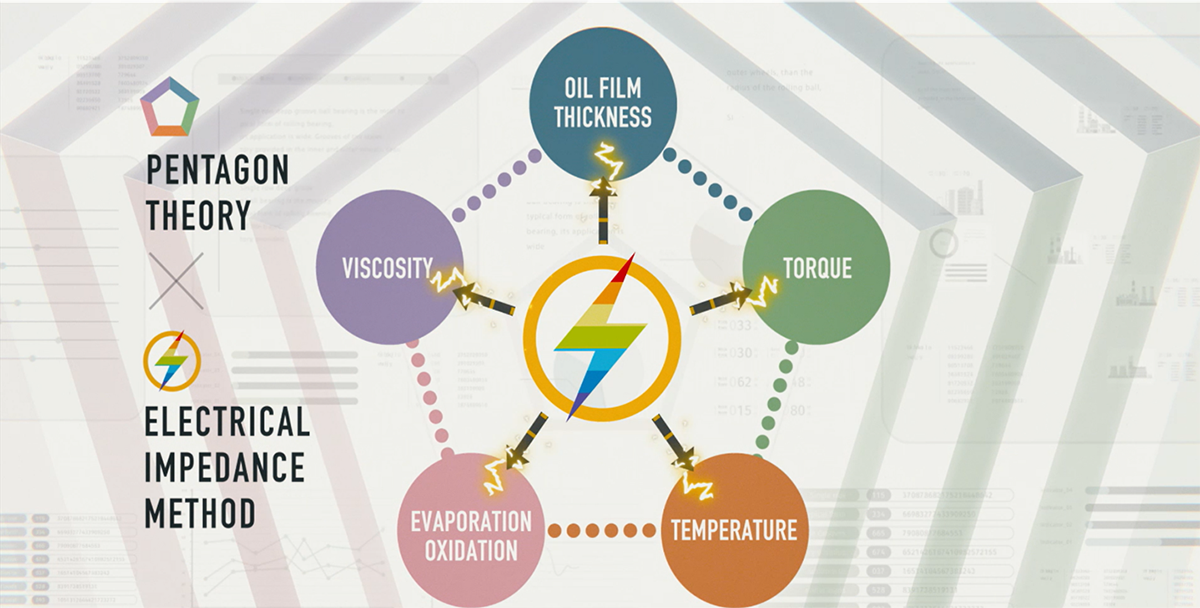
Fig.4 Verification of theory using NSK’s visualization techniques
4. NSK and Institute of Science Tokyo Establish Research Cluster on Suzukakedai Campus
Deriving a lubrication life formula based on the Lubrication Pentagon Theory requires knowledge from an extremely wide range of academic fields, making it difficult for NSK to tackle this challenge alone. Therefore, in December 2023, NSK established the "NSK Tribology Collaborative Research Cluster (commonly known as N-TRIBO, Fig.5)" on the Suzukakedai Campus of the Institute of Science Tokyo to address this challenge through industry–academia collaboration (Laboratory website: https://nsktrib.labby.jp/). The term "tribology" in the cluster's name refers to the science that elucidates contact phenomena (lubrication, friction, wear, seizure, etc.) between two moving objects. At this cluster, NSK aims to further strengthen its tribology technologies through collaboration with the university and to build a research environment that continuously generates innovative technologies based on the Lubrication Pentagon Theory. Furthermore, leveraging the advantage of being located on campus, the center actively collaborates with laboratories in other fields and focuses on developing human resources capable of leading advanced basic research. NSK will continue to provide new value to society through its world-leading tribology technologies.

Fig.5 Logo of the NSK Tribology Collaborative Research Cluster
References
1) Maruyama T. and Saitoh T., “Relationship between supplied oil flow rates and oil film thicknesses under starved elastohydrodynamic lubrication”, Lubricants, 3, 2 (2015) 365. doi.org/10.3390/lubricants3020365:
https://www.mdpi.com/2075-4442/3/2/365
2) Maruyama T. and Nakano K., “In situ quantification of oil film formation and breakdown in EHD contacts”, Tribol. Trans., 61-6 (2018) 1057-1066.
doi:10.1080/10402004.2018.1468519:
https://www.tandfonline.com/doi/full/10.1080/10402004.2018.1468519
3) Maruyama T., Maeda M., and Nakano K., “Lubrication condition monitoring of practical ball bearings by electrical impedance method”, Tribol. Online, 14 (5) (2019) 327–338. doi:10.2474/trol.14.327:
https://www.jstage.jst.go.jp/article/trol/14/5/14_327/_article
4) Maruyama T., Radzi F., Sato T., Iwase S., Maeda M., and Nakano K., “Lubrication condition monitoring in EHD line contacts of thrust needle roller bearing using the electrical impedance method”, Lubricants, 11 (2023) 223.
doi:10.3390/lubricants11050223:
https://www.mdpi.com/2075-4442/11/5/223
5) Maruyama T, Kosugi D, Iwase S, Maeda M, Nakano K and Momozono S, “Application of the electrical impedance method to steel/steel EHD point contacts”, Front. Mech. Eng., (2024) 10:1489311. doi: 10.3389/fmech.2024.1489311:
https://www.frontiersin.org/journals/mechanical-engineering/articles/10.3389/fmech.2024.1489311/full
6) Iwase S., Maruyama T., Momozono S., Maegawa S. and Itoigawa F., “Studies on dielectric spectroscopy of oxidatively degraded poly (α-olefin)”, Front. Mech. Eng., (2024) 10:1504347. doi: 10.3389/fmech.2024.1504347:
https://www.frontiersin.org/journals/mechanical-engineering/articles/10.3389/fmech.2024.1504347/full