
Low-Friction Hub Unit Bearing
March 2026
Chassis Bearing Technology Department
Automotive Technology Development Center
1. Introduction
In recent years, the need for improved automotive fuel efficiency has grown due to social factors such as decarbonization and soaring fuel costs. Hub unit bearings are components that support the vehicle body and enable wheels to rotate smoothly; reducing their friction is expected to improve fuel economy. Furthermore, because they are installed near the tires, they are exposed to harsh environments—such as being splashed with muddy water during driving—requiring high resistance to muddy water. By developing new seal technologies that balance low friction with resistance to muddy water, NSK has achieved a significant friction reduction of 40% compared to conventional products.
2. Configuration, Structure, and Specifications
Hub unit bearings support the vehicle body and facilitate smooth wheel rotation. To prevent the ingress of muddy water, seals are installed on both the inboard and outboard sides (Fig.1).
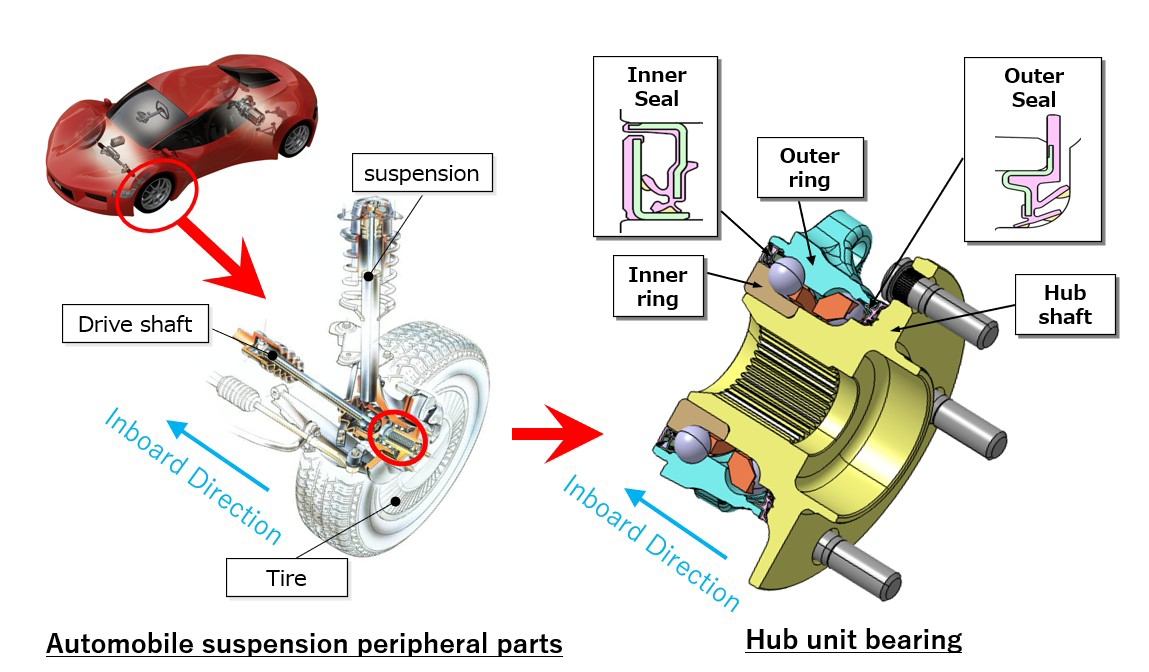
Fig.1 Configuration of hub unit bearing
3. Features of the Developed Product
Three new seal technologies were developed to achieve both low friction and muddy water resistance (Fig.2).
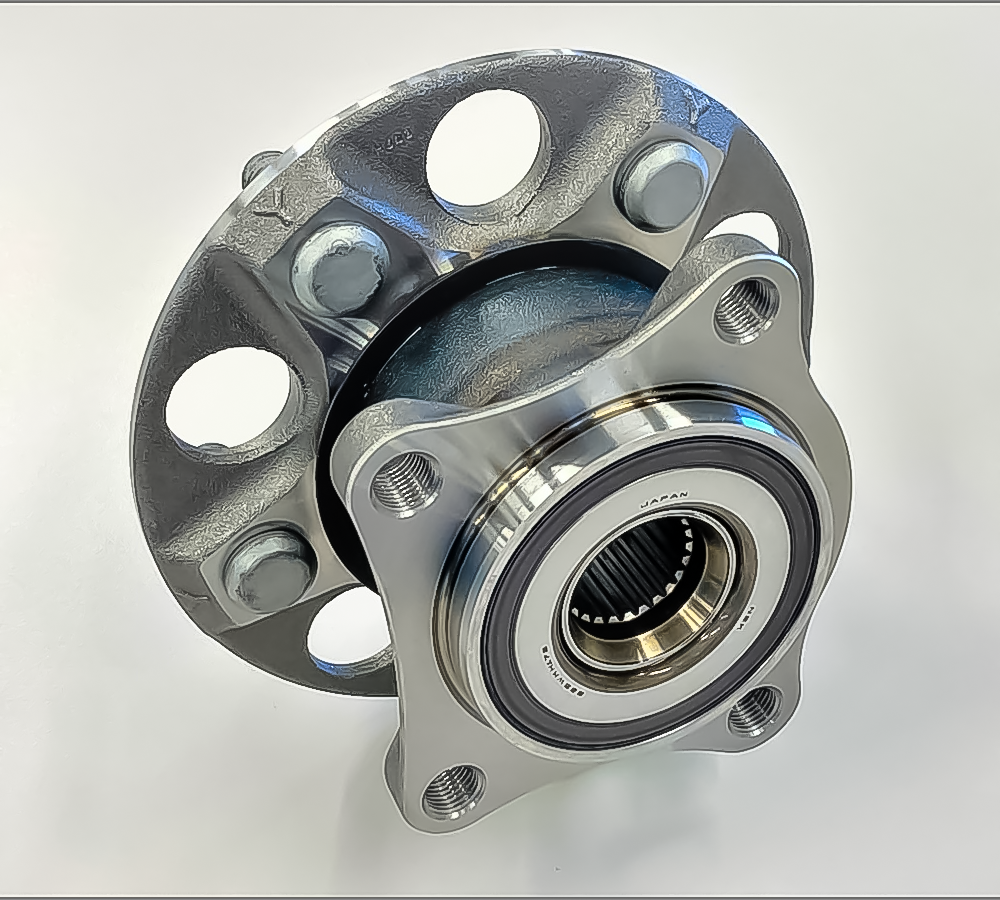
Fig.2 New hub unit bearing
3.1 New Technology: “Development of Seal Shape”
By leveraging NSK's tribology and analysis technologies, an optimal seal shape was created to reduce friction while maintaining muddy water resistance (Fig.3).
Friction Reduction:
- Number of lips: Reduced the number of contact lips from three to one.
- Lip tip bending: Curving the lip tip reduces the contact width between the lip and the slinger.
Improved Muddy Water Resistance:
- Slinger shape: Using NSK's analysis technology, a U-shaped slinger with high drainage performance was developed.
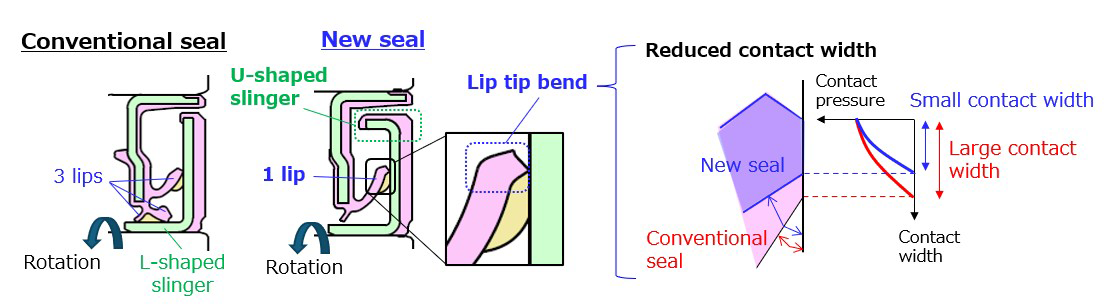
Fig.3 Seal shape
3.2 New Technology: “Development of Seal Grease”
Friction reduction was achieved by utilizing NSK's tribology expertise to lower the base oil viscosity of the seal grease. To maintain muddy water resistance, a polymer was added as a reinforcing agent to keep the grease oil film at an appropriate thickness (Fig.4).
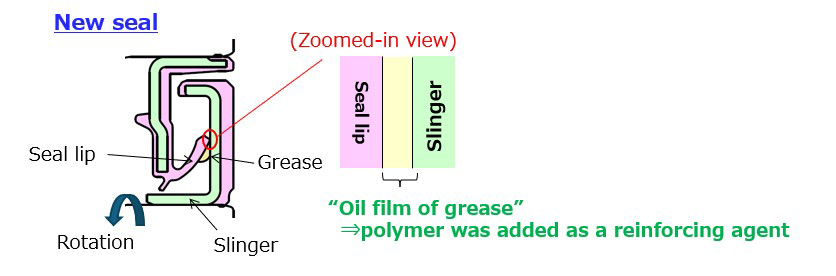
Fig.4 Seal grease
3.3 New Technology: “Development of Seal Sliding Surface”
Laser processing was adopted for the manufacturing method of the seal sliding surface, making the most of NSK's tribology expertise. By reducing the surface irregularities (texture) of the sliding surface, further friction reduction was realized (Fig.5).
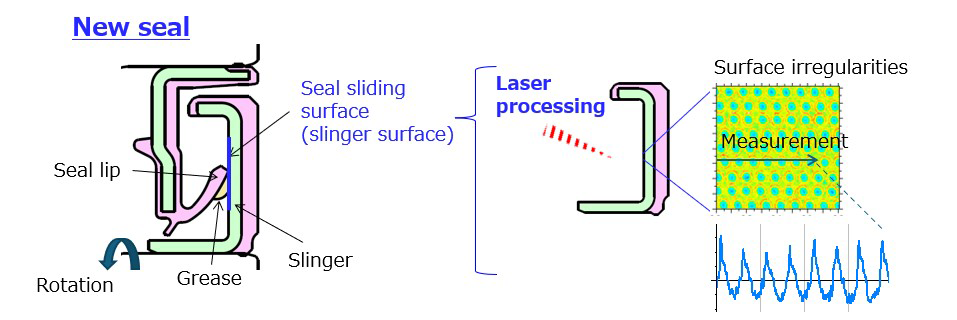
Fig.5 Seal sliding surface
4. Benefits of the Newly Developed Product
The developed product delivers a 40% reduction in friction compared to conventional products. Vehicles using this new product can expect an improvement in fuel efficiency of approximately 0.5%. For electric vehicles (EVs), the cruising range per charge is extended by approximately 4 kilometers.
*Based on NSK internal calculations.