
Gear Fault Diagnosis AI for Efficient Operation of Rotating Machines: A Physics-informed Approach
March 2026
Product Lifecycle Management Technology Department
Industrial Machinery Technology Development Center
1. Introduction
Inside rotating machines such as wind turbines, not only rolling bearings but also gears continue to rotate without rest. If gear damage occurs and the rotating machine keeps operating without anyone noticing it, the damage can lead to sudden shutdowns and severe consequences. However, when operating conditions such as the rotational shaft speed change, the vibrational characteristics of gears also change. Under such conditions, conventional vibration-based and AI-based diagnostics have sometimes struggled to make reliable decisions. NSK therefore studied an AI model that also learns the physical phenomena underlying vibration signals and examined whether it can stably diagnose gear damage even under previously unseen operating conditions.
This article is based on the academic paper1), which resulted from a joint research project with the Gear Research Center (FZG) at the Technical University of Munich. We have reorganized its content for a broader readership.
2. Background – Why NSK works on gear fault diagnosis
Many rotating machines such as wind turbines include a mechanism for power transmission called the drivetrain. In a drivetrain, gears and rolling bearings receive rotational motion and convert it into the required speed and torque before transmitting it to the next shaft or device.
In this drivetrain, gears and bearings are the main components that often cause trouble. When damage occurs on gear teeth or on the rolling elements and raceways of rolling bearings, vibration and noise increase. In the worst case, this can lead to the shutdown of the equipment or to catastrophic breakdown. For equipment installed in remote locations or offshore, such as wind turbines, once a shutdown occurs, recovery can require a large amount of time and cost.
NSK is working to improve the reliability of rotating machines as a whole. For real industrial rotating machines, it is important not only to monitor rolling bearings but also to understand the condition of the entire drivetrain and to perform diagnostics that also include gears. For this reason, we conducted this research on a diagnostic AI model that targets gears.
3. Challenge – Why diagnosing gears and rolling bearings from vibration is difficult
When gears or rolling bearings are damaged, the vibrational characteristics change. For example, if pitting occurs on a gear tooth, a small shock occurs every time that tooth meshes. As a result, a sequence of periodic shock vibrations appears on top of the normal meshing vibrations of the gear. If flaking occurs on a rolling bearing, shock vibrations also appear with a characteristic periodicity synchronized with the rotation of the shaft.
In conventional diagnostics, experts extract features such as the gear mesh frequency from vibration signals and judge the damage condition using rules derived from theory and data. This approach can be very powerful, but designing features to extract and constructing rule sets require deep expertise and a significant amount of time.
In recent years, methods that use deep learning to train diagnostic AI models directly from “raw acceleration waveforms” have become more widespread. These methods allow AI models to automatically learn features from data, but they also have the following challenges:
- A diagnostic AI model can perform well on the data used for training, but may not function well on previously unseen data.
- As a result, the model may show high accuracy under some operating conditions but degraded performance under different conditions.
- Each site or machine may require separate tuning of the diagnostic AI model, which increases operational cost.
In the condition monitoring of rotating machines, the structure and operating conditions differ from site to site, and the vibrational characteristics also change. Therefore, it is important for diagnostic AI models to maintain stable diagnostic performance even when conditions change.
4. Idea – An AI model that learns from physical phenomena
In this study, NSK tried an approach in which the diagnostic AI model learns not only the patterns in vibration signals but also the physical quantities that underlie those vibrations. We use a technique called multi-task learning, where a single AI model learns multiple related tasks at the same time.
More specifically, we train the diagnostic AI model on the following three tasks simultaneously:
- The primary diagnostic classification task of distinguishing whether the gear is damaged or not
- An auxiliary task that estimates the rotational shaft speed from vibration signals
- An auxiliary task that estimates the gear mesh frequency from vibration signals
If the diagnostic AI model can correctly infer the rotational shaft speed and the basic periodicity of the gear mesh from the vibration signals, we can consider that it has learned to extract “physical information” about how the gear is rotating. On top of that, if we train the model to classify the condition as “healthy/damaged,” we can expect it to focus on physical features that remain stable even when operating conditions change.
We implement this idea using an AI architecture called a transformer. It was originally developed for machine translation and processes sequences of tokens in a sentence. It computes “which token is related to which other token” by using self-attention. We apply this mechanism to gear vibration signals by treating acceleration waveforms as time-series data. In this way, the model learns “which periodic patterns in the vibration signals contribute to gear damage classification and rotational shaft speed estimation” at the same time. An architectural overview of the proposed gear diagnostic AI is shown in Figure 1.
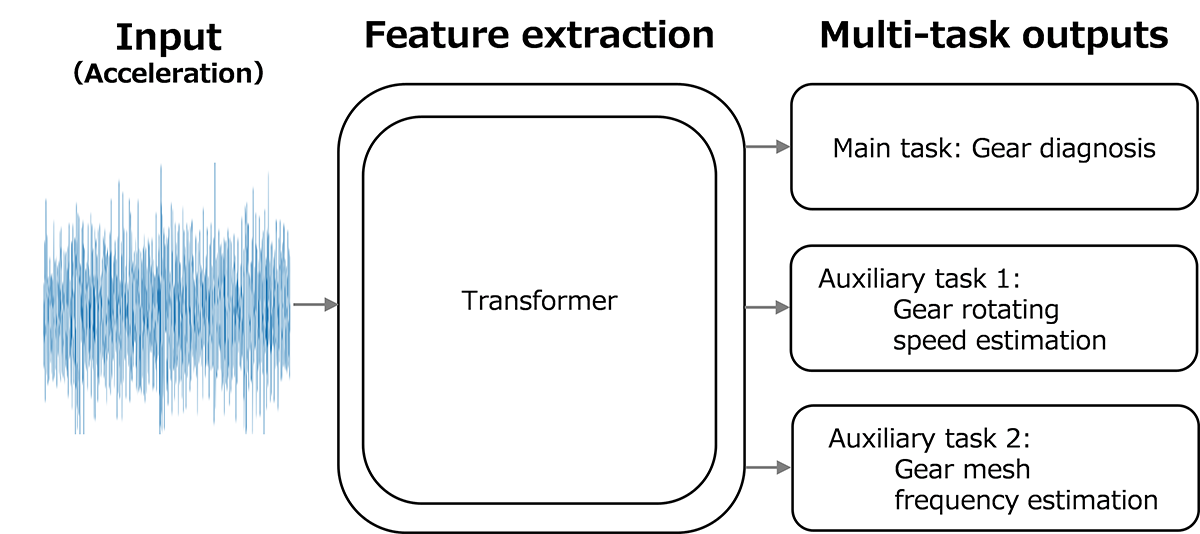
Fig.1 Architectural overview of the proposed gear diagnostic AI
To illustrate this idea, consider the situation of remembering the route to a place you have never visited before. If someone only tells you “go to A’s house,” it is easy to get lost. But if you first remember the locations of landmarks such as a supermarket, a bus station, or a large intersection along the way, it becomes much easier to find your way. The proposed diagnostic AI model works in a similar manner. It learns two tasks at once: estimating “landmarks” such as the rotational shaft speed and the basic gear mesh rhythm from vibration signals, and diagnosing the “destination,” namely the presence or absence of gear damage. By training these tasks together, the model is designed to maintain diagnostic performance more easily even when operating conditions change.
5. Evaluation method – Diverse datasets
To examine whether the new idea is effective, we evaluated the model using datasets collected under various conditions.
- Public datasets:
We combined several public datasets that anyone can access and used them for evaluation. These datasets consist of acceleration data from different test rigs, rotational shaft speeds, loads, and artificially induced gear damage. - In-house gear damage dataset:
In addition to the public datasets, we used an in-house dataset including naturally occurring gear damage obtained by the Gear Research Center (FZG) at the Technical University of Munich. The data were collected using an FZG standard test rig that complies with international standards. The dataset includes acceleration data measured under different combinations of rotational shaft speed, load, and damaged gears.
Using these datasets, we carried out the following evaluation procedure:
- We trained the AI model using only a subset of the rotational shaft speed and load conditions.
- We then evaluated the diagnostic performance on data from “previously unseen operating conditions” that were not used for training.
This evaluation method allows us to check how well the AI model can perform gear fault diagnosis when it encounters new operating conditions in the field.
6. Results – Effectiveness under previously unseen conditions
For performance comparison, we evaluated the proposed method against several representative diagnostic methods. These baseline methods include conventional models that use manually designed features based on expert knowledge, and deep learning models that take raw acceleration waveforms as input.
The results show that the proposed multi-task diagnostic transformer model, which learns physical information and diagnostic labels simultaneously, achieved the highest diagnostic performance across many operating conditions. We also confirmed that removing key components of the proposed multi-task learning architecture leads to degraded diagnostic performance. These findings indicate that the proposed multi-task learning scheme is effective for gear fault diagnosis under previously unseen operating conditions. The performance evaluation results of the proposed gear diagnostic AI are shown in Fig.2. For detailed numerical results and comparison tables, please refer to the original paper listed at the end of this article.
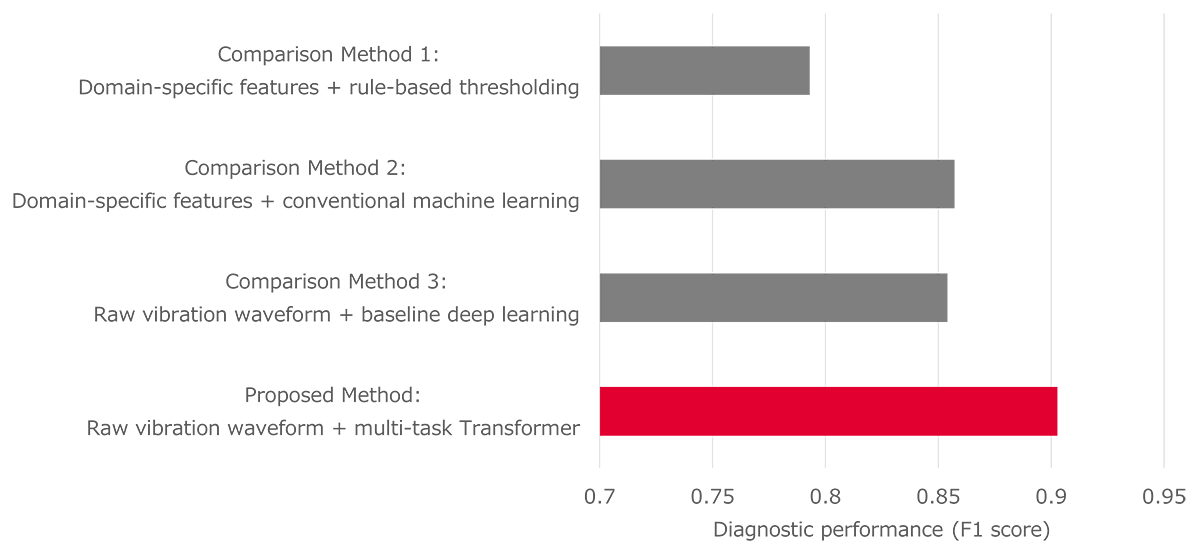
Fig.2 The performance evaluation results of the proposed gear diagnostic AI
We also wanted to understand why such performance differences arise. For this purpose, we applied explainable AI (XAI) methods that visualize which parts of the input acceleration waveforms most strongly influence the model’s decisions.
The analysis revealed the following tendencies:
- The proposed multi-task diagnostic transformer model tends to focus on a broad pattern that includes both the periodic shock vibrations induced by gear damage and the subsequent decaying vibration.
- In contrast, a model trained without multi-task learning sometimes reacts strongly only to very narrow time segments containing large shocks and hardly responds to the remaining parts of the waveform.
These differences suggest that physics-informed multi-task learning helps the model extract fault vibration features that can change across conditions in a more flexible way. As a result, multi-task learning that follows the physical phenomena encourages the diagnostic AI model to focus on more fundamental vibrational patterns, which makes it more likely that the diagnostic performance will remain stable even when operating conditions change.
7. Outlook – Value and expectations in the field
If a “gear fault diagnosis AI model that understands physical phenomena” like this can be put into practical use, it is expected to improve the operational efficiency of rotating machines in the field. If gear damage can be detected reliably and at an early stage, it becomes easier to plan when, and with what timing, to replace components. This leads to better use of maintenance resources. It also helps to avoid operational downtime and costs associated with sudden shutdowns or catastrophic breakdowns. Improvements can therefore be expected not only in productivity but also in safety.
For equipment such as wind turbines, where every inspection is costly, the value of “avoiding unplanned shutdowns” is very high. In production plants as well, a failure in a single gearbox can sometimes affect the entire production line.
The proposed method also has the potential to be applied to rotating machines other than gears. It can be extended to rolling bearings, belt drives, and other power transmission components, and can be combined with different types of sensors such as current or acoustic sensors. In this way, it may enable broader condition monitoring applications for industrial equipment.
8. Conclusion
The gear fault diagnosis AI model presented in this article is an attempt to build a diagnostic model that is robust under previously unseen operating conditions by learning not only the rotational shaft speed and gear mesh frequency from vibration signals, but also the diagnostic labels at the same time. The study shows that combining a transformer–based model with multi-task learning that predicts physical phenomena yields a diagnostic AI model that outperforms conventional methods across various operating conditions.
However, this research does not end with “AI algorithms” alone.
- It relies on mechanical and materials engineering knowledge that explains the physical behavior and damage mechanisms of gears and rolling bearings.
- It uses experimental and data acquisition know-how to design test rigs and collect data under various conditions.
- It requires data science and machine learning skills to handle large amounts of vibration data and to design training and evaluation procedures for AI models.
Only by combining these elements can we make the idea of a “gear fault diagnosis AI model that can be used in the field” concrete.
In addition to digging deeper into the AI model itself, it is important for practical industrial applications to connect domain expertise with data and with the data acquisition environment. Choices such as where to place which sensors and under which operating conditions to collect data have a strong impact on the AI models that can ultimately be built. Such design decisions, accumulated over time, support diagnostic technologies that can be trusted in the field.
For readers who would like to know more about the technical details and evaluation results, we recommend consulting the original paper1) (open access, in English).
Supplement
What is a transformer?
A transformer is a deep learning model architecture first proposed by researchers at Google in 2017. It processes sequences of tokens, such as words in a sentence, and uses a mechanism called self-attention to compute “which token is related to which part of the sentence.” This allows the model to flexibly capture important information across long time spans in the sequence.
In this study, we use a transformer encoder that takes acceleration waveforms instead of text as inputs. The model acts as a “set of eyes” that looks along the time axis of the signal and finds features that relate to gear damage. Previous studies have shown that transformers are effective not only for text but also for images and time-series sensor data.
What does it mean to use physical knowledge in AI learning?
In recent years, there has been growing interest in approaches where we do not only provide AI models with labels such as “healthy/damaged,” but also incorporate physical laws and engineering knowledge as hints during learning. Such approaches are often called physics-informed methods. In more rigorous settings, physical knowledge can be given in the form of partial differential equations, as in physics-informed neural networks (PINNs).
In our gear fault diagnosis study, we adopt a related idea. We train the model to estimate:
- the rotational shaft speed
- the gear mesh frequency
as auxiliary tasks, in addition to the main diagnostic task. These physical quantities lie behind the vibration characteristics of gear damage. By training the model to estimate them together with the diagnostic labels, we aim to make the AI model focus more easily on “features that are consistent with the physics.”
This kind of approach is considered promising for stabilizing learning when only limited data are available and for building models whose performance remains robust even when operating conditions change.
Reference
1) O. Yoshimatsu, E. Knoll, S. Sendlbeck, M. Otto, K. Stahl, “Transformer for gear fault diagnosis enhancing robustness through physics-informed multi-task learning,” Forschung im Ingenieurwesen, (2025), DOI: 10.1007/s10010-025-00875-2(CC BY 4.0):
https://link.springer.com/article/10.1007/s10010-025-00875-2
This article is an adaptation and reorganization of the above paper for a general readership, prepared by NSK.
This article reuses and adapts the original work under the terms of the Creative Commons Attribution 4.0 International License
(https://creativecommons.org/licenses/by/4.0/).