

Teaching a Machine to Walk
Humanoid robots have to adapt to an environment that wasn't designed around their capabilities or limitations. Unlike a rocket, which is engineered for anticipated operating conditions, a humanoid has to respond to changing surroundings, unpredictable human movement, unexpected physical contact, and shifting loads while maintaining balance, precision, and safe movement.
They walk across surfaces built for human feet, navigate spaces built around human dimensions, handle objects with precision, and interact safely with people who move unpredictably. They need to maintain balance when pushed, recover from impacts, and move with enough agility and efficiency to do useful work, not just demonstrate what is possible.
Meeting these challenges requires more than sophisticated control systems and powerful actuators. Every component in the motion system has to perform under competing requirements, often within strict limits on size, weight, and energy consumption.
Bearings sit close to the center of it all.
The Competing Requirements Inside a Single Joint
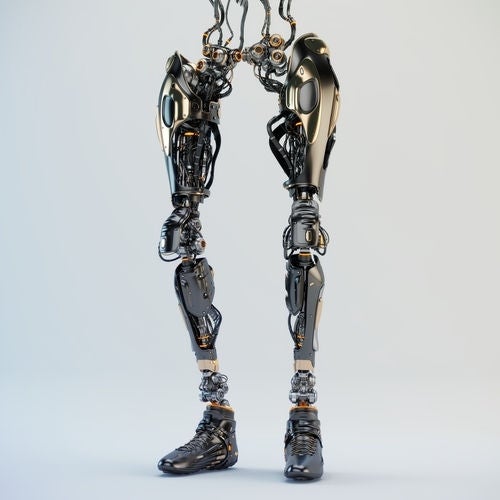
Every major joint in a humanoid robot depends on a highly optimized actuator. Each actuator must deliver strength, precision, responsiveness, durability, efficiency, and safety at the same time.
The challenge is that these requirements don't always align. For example, increasing stiffness can improve positioning accuracy, but a humanoid joint also needs to respond appropriately to external forces. Reducing mass can improve agility and energy efficiency, but the actuator still has to withstand the loads generated during movement. Each decision affects the larger system's performance, making actuator development an exercise in balancing competing priorities.
The knee illustrates these competing demands particularly well.
A human knee handles a remarkable range of forces and movements without conscious effort. Mechanically reproducing that is one of the most difficult challenges facing humanoid developers.
Consider what happens during a single step. The foot strikes the ground, sending impact loads up the leg. Direction changes introduce additional dynamic forces and moments. The joint needs enough stiffness to maintain positioning accuracy, yet it must also absorb shock and respond safely when the robot encounters unexpected forces.
The bearings inside that actuator have a direct role in meeting those requirements. They must support high radial and axial loads, resist overturning moments, and maintain precision under dynamic conditions. Their friction characteristics also affect the actuator's overall efficiency.
Bearings don't solve every challenge in a joint, but their performance affects how well the complete actuator meets its requirements.
Why Small Component Improvements Matter
Bearing selection becomes particularly consequential in humanoid robotics because the effects of individual component decisions accumulate across the platform.
- Reducing friction can lower energy losses.
- Reducing mass can help the robot move more efficiently.
- Increasing stiffness can support precise positioning.
- Managing compliance can help the joint respond to external forces.
These are not independent objectives, and improving one characteristic may introduce trade-offs elsewhere. The goal is to find the right balance for the application rather than maximize a single parameter in isolation.
The cumulative effect matters, too.
A humanoid platform may incorporate roughly 30 actuators throughout its body, with another 50 just in its hands. When you repeat a component improvement across dozens of actuators and many joints, even a modest gain can affect the system's overall performance.
Those gains can have practical implications for a humanoid robot's performance. Actuator-level improvements can affect how long a robot operates between charges, how accurately it manipulates objects, how readily it responds to disturbances, and how effectively it performs its intended tasks.
That makes bearing selection a strategic part of actuator development, not simply a matter of choosing a component that meets minimum specifications. The right choice depends on what the robot needs to accomplish and how the complete motion system must perform.
Why Industrial Robot Thinking Does Not Transfer Directly
Traditional industrial robots have largely been optimized around precision, rigidity, and repeatable movement in controlled environments. Many operate within defined workspaces or behind safety barriers, executing motions that can be planned in advance.
Humanoid robots face a different set of conditions.
They operate in environments that were not built around their mechanical limitations. They may encounter uneven surfaces, unexpected contact, shifting loads, and people whose movements cannot be predicted. They need to absorb and respond to those forces without losing balance, stability, or control.
These requirements have led developers to explore different actuator architectures, each with implications for the bearings and other components inside the joint.
Some developers are pursuing lower gear reductions to improve back-drivability, allowing external forces to move the actuator more readily, and to support more compliant behavior. Others are prioritizing higher-reduction systems to increase torque output relative to actuator size and support demanding payload requirements.
Neither approach is universally preferable. Each creates a different combination of benefits and constraints.
Lower-reduction architectures place particular importance on how the actuator responds to external forces, including friction and resistance within the transmission. Higher-reduction architectures introduce additional considerations around stiffness, efficiency, shock loading, and the demands placed on supporting components.
That is why bearing requirements have to be evaluated in the context of the actuator architecture. Friction, load capacity, stiffness, and durability all matter, but their relative importance depends on the actuator configuration, operating conditions, and intended behavior of the joint.
There is no single bearing solution that fits every humanoid actuator. The engineering challenge is to understand the application well enough to identify the right combination of characteristics.
Understanding the Machine, Not Just the Component
Working effectively with humanoid developers means looking beyond the bearing's individual specifications.
How does the bearing affect overall actuator efficiency?
How does it influence joint stiffness and compliance?
What happens when the robot experiences an impact?
How do loads travel through the joint during walking, running, lifting, and balancing?
How do those component-level effects influence the performance of the complete robot?
These questions require a system-level understanding of your application.
Advanced simulation and application-level analysis help you assess how bearing technologies will perform within your robotic platform before production. By evaluating bearing behavior within the complete actuator, you can identify potential limitations, weigh performance trade-offs, and make informed component choices to meet specific requirements.
At NSK Engineering, we work with you to assess bearing technologies in the context of your application, connecting component performance with the requirements of the complete actuator and robotic platform.
The objective is not simply to select a bearing that meets a list of specifications. We help you understand how that bearing contributes to the machine you’re building.
The work is not about bearings in isolation. It is about building better robots.
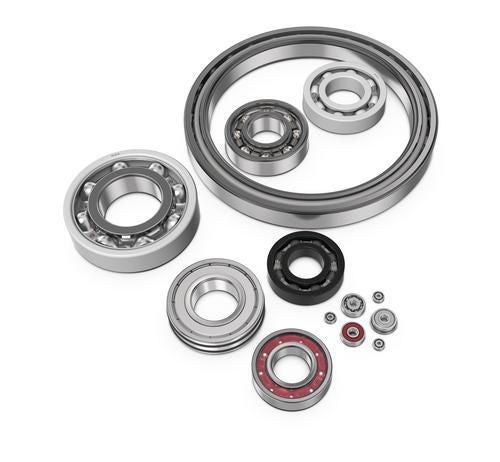
From Prototype Performance to Production at Scale
As humanoid robotics advance, your engineering challenges extend beyond the performance of individual prototypes. You must also determine how to manufacture your systems consistently at production volumes.
That transition introduces a different set of requirements.
As you move toward production, you need a bearing manufacturing partner that understands both your motion system and the realities of industrialization.
We are here to support you as you develop advanced robotic platforms, extending our work beyond product development to address industrialization requirements.
Building the Next Generation of Motion Systems
As you develop the next generation of humanoid robots, you'll face new demands for the components that make movement possible. You'll need to solve problems that don't yet have standard answers, work across disciplines, and translate new ideas into machines that can perform reliably outside the lab.
Are you developing an actuator for a humanoid robot? Contact us about your bearing requirements and the demands of your application.
Share