

No Second Chance
Ask what it takes to put a rocket into space, and most answers arrive quickly: powerful engines, advanced electronics, sophisticated software, guidance systems that work.
All true.
But beneath it all is a much longer list of components that must perform flawlessly in conditions with no ground equivalent. Bearings are among the most heavily challenged, and they carry functions that can determine whether a mission succeeds.
Space is different because there are no second chances.
A component that fails in a passenger vehicle gets repaired. A component that fails in industrial equipment gets scheduled into the next maintenance window. A bearing that fails after a launch, or after a satellite has reached orbit, gets nothing.
There is no opportunity to repair it, replace it, or bring the system back for another attempt. It works correctly the first time, every time, or the mission is over.
That constraint changes how we must approach the solution. We can't treat reliability as an end-of-process check.
It has to be part of the engineering from the beginning.

The Conditions
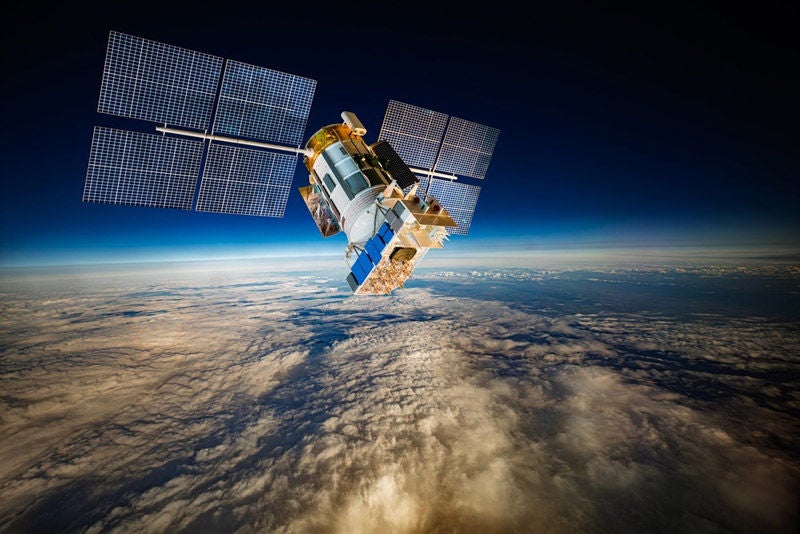
A bearing operating in space may face temperatures ranging from extreme heat to extreme cold, and cycle between them repeatedly.
It may operate in a vacuum, where conventional lubrication is no longer possible.
Depending on the application, it may also face launch vibration, acceleration, and other environmental conditions that place additional demands on the bearing.
In some applications, the lubricant must function at cryogenic temperatures, or the cryogenic fluid itself serves as the lubricant. In others, the bearing must operate with little or no lubrication.
Each condition pushes against a different discipline: materials science, tribology, lubrication technology, precision manufacturing, and design. In space applications, these disciplines often have to work together because changing one part of the solution can affect everything else.
The challenge is not simply finding a material that can withstand a particular temperature or a lubricant that can operate in a vacuum.
In a mission where there is no opportunity to repair or replace a bearing, understanding those interactions before launch becomes critical.
The Part That Can’t Be Solved in a Laboratory
There is a bigger issue behind the conditions themselves.
Many of these operating environments cannot be fully replicated on Earth. As a result, some scenarios can’t be simulated or tested at all. Testing does provide critical data, but it cannot reproduce every condition a bearing may encounter.
Beyond a certain point, the remaining risk cannot be resolved by running another test. It also has to be understood through accumulated practical experience.
When there are limits to what can be tested, experience helps fill the gaps. Decades of work in demanding applications reveal how materials and components behave under conditions that cannot always be fully reproduced. Over time, that knowledge becomes part of the engineering process.
Knowing how a material behaved in a comparable environment fifteen years ago can be valuable when evaluating how it may behave in a new application. Knowing what worked, what did not, and what engineers learned from those applications can help identify risks before they become problems.
That experience does not replace testing or analysis. It adds to them.
Technology leadership of this kind is not created in a product cycle. It accumulates one project, one challenge, one mission at a time. Each application adds to the body of knowledge that engineers can draw from when the next challenge shows up.
What Bearings Actually Do Up There
The functions are more central than most people assume.
Bearings support the reaction wheels and flywheel systems that allow a satellite to hold its orientation and position itself accurately. They sit inside deployment mechanisms that open solar panels and antennas after launch, often with only one opportunity to operate correctly.
They contribute to the stiffness, precision, damping, and stability that complex systems depend on across many years of continuous operation.
These are not minor supporting functions. Bearing performance can directly affect how critical spacecraft systems operate and continue to perform over the life of a mission.
The tolerance for deviation is correspondingly small.
- A minor shift in performance.
- An unexpected increase in friction.
- A slight reduction in precision.
Any one of those can compromise a system worth hundreds of millions of dollars and a mission representing years of work by thousands of engineers and scientists.
As requirements in these environments continue to grow, the margin for error shrinks.
Engineering Beyond the Component
Meeting these conditions requires more than a product. It takes an understanding not only of how a bearing performs, but why it performs that way, how its performance may change under different conditions, and where its limits lie.
It also depends on engineers who understand the technical challenges, know how to minimize risk, and can account for conditions that cannot be fully tested in advance.
That means working at the system level rather than the component level: how the bearing behaves inside the spacecraft, not just on its own. It means understanding the loads, speeds, temperatures, lubrication conditions, and other factors the bearing will encounter, as well as how its performance affects the rest of the system.
Advanced modeling, specialized test methods, decades of accumulated application knowledge, and close collaboration with the customer's own engineers all become part of that process.
The goal is not simply to prove that a bearing meets a specification. The goal is to understand how the bearing will perform in the application and reduce risk.
NSK bearings are currently in service across a wide range of space applications, including launch vehicles, satellites, reaction wheel assemblies, deployment mechanisms, and cryogenic systems.
That means NSK bearing technology is operating hundreds or thousands of miles above Earth, performing functions that spacecraft depend on, including:
- Holding spacecraft in orientation.
- Deploying solar panels.
- Supporting guidance systems that have to remain precise for years.
- Quietly enabling missions that began as concepts on a drawing board.
When There Are No Second Chances
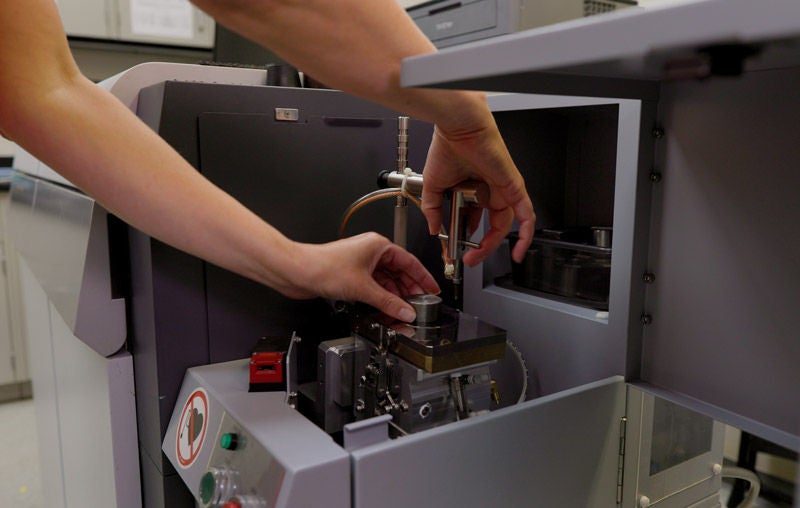
Space is an unforgiving environment. Engineers know the conditions a spacecraft will face, but no laboratory can perfectly reproduce everything a bearing may experience once a mission is underway.
That is why testing, engineering analysis, and accumulated experience all matter. When there is no second chance, understanding how a bearing will perform before it ever leaves the ground is part of the engineering.
See how NSK applies that same approach to bearings designed for extreme environments, where performance, reliability, and experience matter most.
Share