

A Bearing Is Never Just a Bearing
In most mechanical assemblies, the bearing represents a small fraction of the total system. Yet it is often among the most heavily loaded and most severely challenged components.
That imbalance is at the heart of our engineering approach.
A bearing does far more than enable rotation. It carries the load while handling the demands of speed, temperature, and operating conditions. And in doing so, it quietly determines characteristics that matter to everyone who touches the machine afterward:
- Performance
- Reliability
- Efficiency
- Durability
- Maintenance intervals
- Service life
The Scope of Bearing Engineering
A useful way to understand the scope of bearing engineering is to look at the extremes it has to reach.
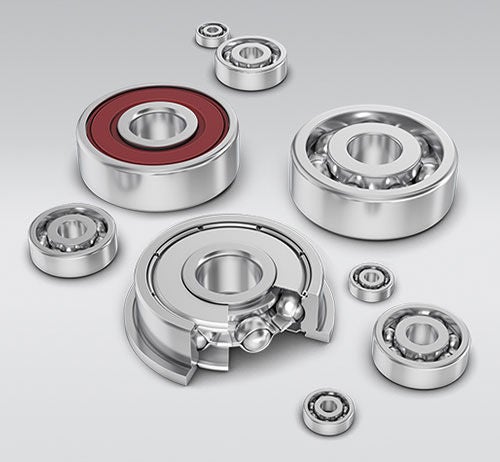
At one end are miniature precision bearings a few millimeters in diameter, enabling the smooth, accurate operation of dental tools, surgical equipment, sensors, and precision instruments.
At the other end are bearings measuring more than two meters across and weighing several tonnes, supporting mining, construction, industrial, and infrastructure equipment.
Between those two points are bearings used in an enormous range of applications. They move people safely in vehicles, help robots walk, balance, and interact with the world, and support everything from factory automation and semiconductor manufacturing to aerospace systems and renewable energy generation.
Applications may differ widely in scale, loads, speeds, and operating environments from one machine to the next. But the fundamental engineering question remains the same:
What does this component need to do within the system, and what does it take to make that happen?
From a component that fits on a fingertip to one that requires a crane to position, someone is counting on the machine to perform. And someone is counting on the engineering behind its bearings to make that performance possible.
Engineering Begins Before the Bearing
We don’t stop at the specification. Engineering at NSK starts with understanding what the customer is trying to achieve, beginning with a few questions:
- What are they building?
- What problem are they solving?
- What performance are they trying to unlock?
- What is impossible today that has to become routine tomorrow?
Those questions are not a courtesy. They are part of the working method. A specification tells you what the customer has asked for, but it rarely tells you the whole story. It does not explain what success looks like, why the target matters, or which requirements are truly non-negotiable.
The bearing requirement comes from understanding the customer’s application and the challenges they need to solve. The better you understand the reasoning behind it, the more opportunities you have to find the right answer.
So the work begins by challenging assumptions. Investigating root causes. Exploring what else is possible.
Looking for the solution in materials, lubrication, tribology, internal geometry, manufacturing processes, simulation methods, and testing technologies — wherever it happens to be.
Many of the problems that arrive look impossible at first, with sets of requirements that seem to contradict each other. The component needs to be smaller but carry the same load. Lighter, but still capable of delivering the required performance. More efficient, without compromising reliability.
Those competing requirements are often where the most interesting engineering begins.
Translating the Mission Into a Component
The practical value of this approach shows up in the translation.
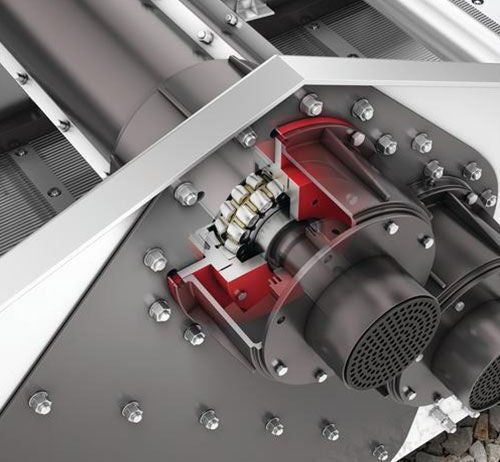
Customers work in system-level terms: vehicle range, uptime, payload capacity, cycle time, cost of ownership, certification. Bearings are specified in a different language entirely: loads, speeds, geometries, tolerances, materials, lubrication regimes.
Turning the first into the second is the engineering contribution.
Performance targets become bearing requirements. Machine requirements become technical specifications. Application challenges become places where something new can be developed.
Then the loop runs. Analyze. Model. Test. Validate. Learn. Improve. Repeat.
The result is not simply a component that meets a specification on paper, but a bearing solution developed with the actual machine and its requirements in mind.
That matters because the bearing does not operate in isolation. Its behavior is influenced by the surrounding system, and the system is affected by the bearing's performance.
That loop is also why this work is rarely done in isolation. The most effective solutions come from combining the customer's application expertise with our deep knowledge of motion, tribology, materials, testing, and bearing technology. The customer understands the machine and the mission. The bearing engineer understands the component and the variables that affect its behavior.
Neither side has the whole picture. Working together brings the full set of requirements into view.
Why We Call It Care
The best engineering has never been produced by drawings, calculations, and specifications alone. It is produced when someone cares enough about a customer's problem to understand it properly — including the requirements that may not be obvious.
Care for the challenge.
Care for the people who will eventually operate the machine.
Care about building something better than what existed before.
Great design begins with an understanding of the end user or customer.
Great engineering begins with an understanding of the end user or customer's objectives.
That understanding is what separates:
- Selecting a product from developing an engineered solution.
- Fulfilling a requirement from understanding what the application truly demands.
- Supplying a component from solving the customer’s underlying problem.
It is also, admittedly, the sort of thing any supplier could say about itself.
So the rest of this series is the evidence.
Bearings that have to work the first time in orbit, with no possibility of repair.
Bearings inside a humanoid knee, absorbing impact thousands of times a day.
Bearings in aerospace systems, where every gram can affect both performance and economics.
Bearings that failed in the field, and what those failures revealed about why.
And the material science inside the steel that most specifications never mention.
Engineering begins with understanding the mission.
Stick around as we explore what it takes when requirements get difficult, consequences get significant, and the bearing has to perform as part of a much larger system.
We start with the application where getting it wrong is not recoverable.
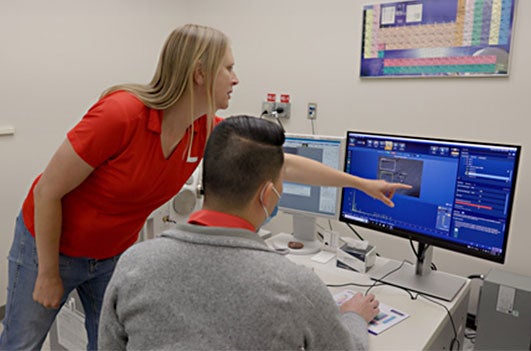
If you are working through a bearing requirement that does not fit neatly into a catalog specification, talk to one of our application engineers. The conversation starts with the application, the requirements, and what you need to accomplish.
Share