

Everything Moves. Almost Nothing Gets Noticed.
Spend an hour in a conference room and you will interact with more precision engineering than you are likely to notice in a week.
Look at what is actually in the room.
- Chairs that roll.
- A ventilation system moving air.
- Pumps circulating fluid to hold temperature.
- Motors driving the building's systems.
- A camera that tracks whoever is speaking.
- Servers in a closet down the hall keeping the meeting connected to everyone who dialed in.
Nothing on that list looks like industrial machinery.
All of it depends on bearings — dozens in the room itself, and more once you count what is running behind the walls.
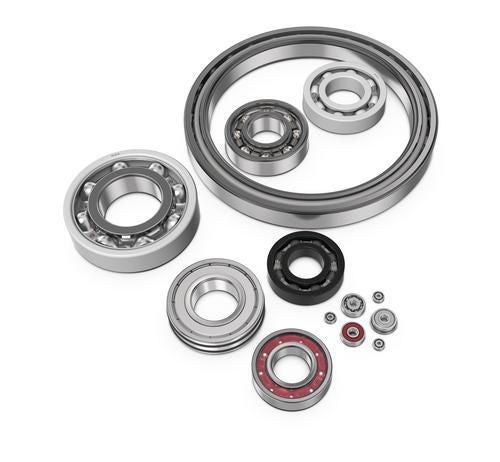
Bearings play a fundamental role in making motion possible.
We see the motion, but rarely think about the components that make it possible. Wherever something rotates, guides, positions, transports, accelerates, or precisely controls motion, a bearing is helping make it happen. Without it, motion can become inefficient, unreliable, or even impossible.
Bearings are among the most ubiquitous engineering components ever created, yet people rarely notice them.
The Same Story, Higher Stakes
A bearing may need to handle the required load and movement while fitting into a tightly constrained space and adding as little weight as possible.
Those requirements do not always point in the same direction. A bearing that can handle the load may be too large. A smaller solution may not provide the required capacity. A solution that meets the mechanical requirements may add too much weight to the system. And in a highly integrated machine, changing one component can affect the design around it.
Take a robotic arm. It needs enough strength to perform its task, but it also needs to move freely and efficiently. Adding unnecessary weight to a joint can increase the demands on the actuator and affect the performance of the entire arm. The bearing has to carry the load and enable the required movement without becoming a limitation elsewhere in the design.
This is where bearing selection becomes an engineering challenge rather than a catalog exercise. The question is not simply which bearing fits. It is: Which bearing solution can meet the application's requirements while working within the physical, weight, performance and operating constraints of the complete system?
Where It Gets Difficult
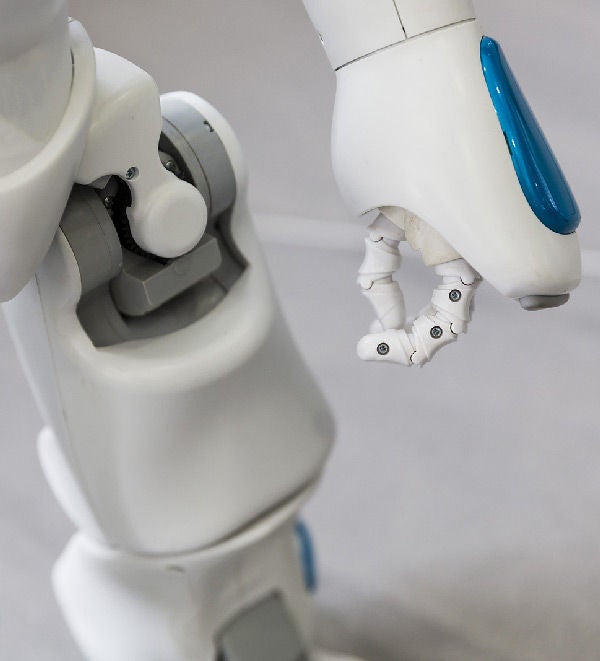
A humanoid robot is built to reproduce movements people perform without thinking. Walking. Balancing. Lifting. Grasping. Positioning. Sensing and interacting with an environment that was
designed for humans, not machines.
Every joint in the robot contains an actuator generating movement. A typical humanoid has roughly 30 of them, plus another 50 for the hands alone. Each actuator relies on multiple bearings to support rotational elements, manage loads, and hold accurate positions. Across arms, legs, torso, neck and hands, hundreds of precision bearings work together to produce motion that has to look and behave like something natural.
Those bearings are not isolated components. Their size, weight, friction, stiffness, load capability and precision can all influence the actuator and the robot around it. The engineering challenge is to balance those requirements within the overall system.
The pattern holds: the more advanced the machine, the greater the demands placed on the technologies that move it.
One Requirement, Every Industry
Wherever motion exists, there is a bearing enabling it.
And behind that bearing is an engineer who designed it, developed it, or selected it for that specific application, someone who understands the loads, speeds, environment, and consequences of getting it wrong.
Robotics. Aerospace. Medical devices. Advanced manufacturing. Semiconductor equipment. Advanced air mobility. The next generation of intelligent machines.
The requirements are different. The purposes are different. The definitions of success are different. But underneath all of them is one shared need: motion that is reliable, efficient, precise, and durable.
In these industries, the bearing can become a critical design constraint. Available space may be limited. Weight may be tightly controlled. Loads and speeds may be demanding. Precision may be essential. The bearing still has to deliver the required movement and service life.
That is why solving the bearing requirement often requires understanding how a bearing will behave within the application, evaluating different approaches, simulating field performance, and resolving potential issues before building a prototype.
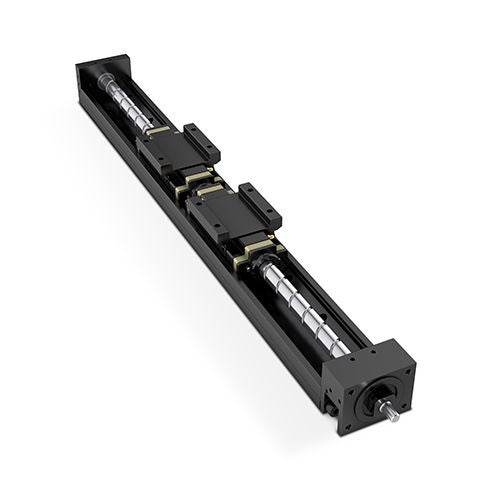
For NSK Engineering, that is where our role begins. We work with your engineers to understand the application and the design challenge behind the bearing requirement. We provide application and simulation assistance and can support prototype development, helping you evaluate whether a solution works before you commit further into the design process.
The goal is not simply to provide a bearing that meets a specification on paper. It is to help you develop a solution that works within the complete machine.
Over the next seven posts, we will look at what engineering actually contributes at NSK: how a customer's mission becomes a set of bearing requirements, what happens when bearings have to work in vacuum or inside a robot's knee, how a failed bearing is read like evidence, and what is happening inside the steel itself.
It begins with a claim that sounds simple and turns out to be: a bearing is never just a bearing.
The Engineering Behind the Motion
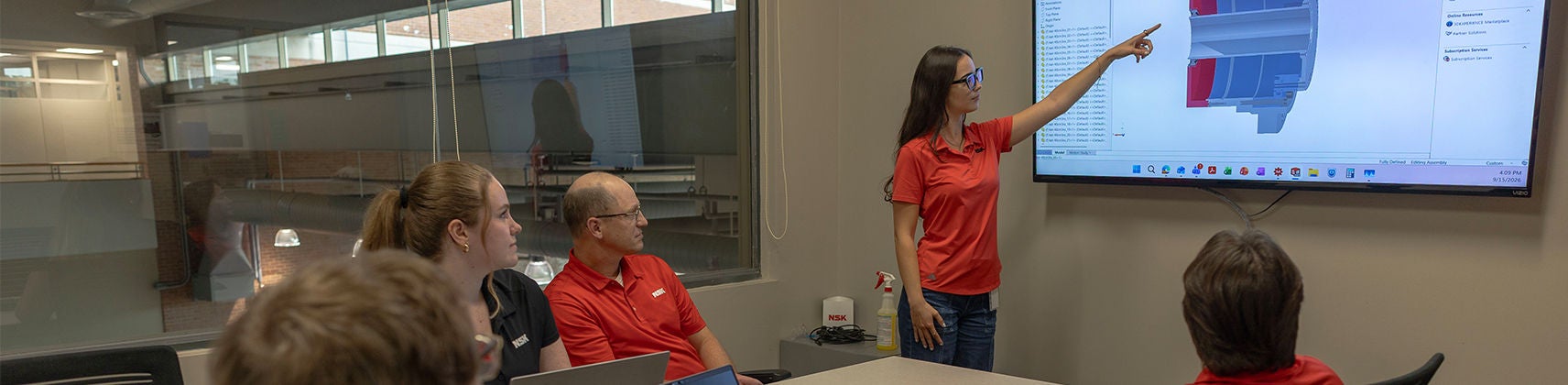
You’re developing the next generation of high-tech systems and need more than a list of available products. You need a partner who understands how bearing technology behaves inside the application and can help you identify potential issues before they become prototype problems.
NSK Engineering brings bearing expertise together with application support, as well as simulation and prototype assistance to help engineers work through those challenges.
Because the goal is not simply to find a bearing that fits. It is to help you solve the motion challenge that stands between a promising design and a working machine.
Share